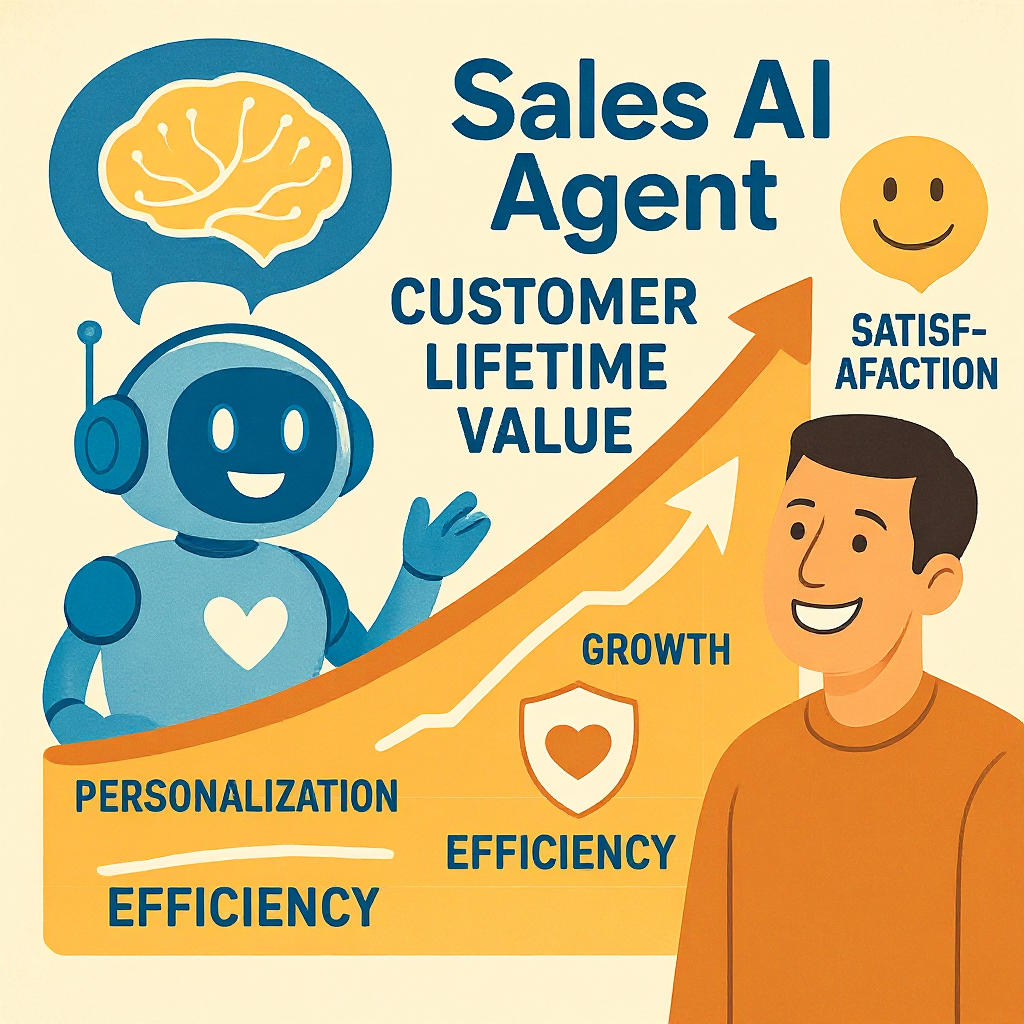
Why a Sales AI Agent Improves Customer Lifetime Value

Customer Lifetime Value (CLV) is a critical metric for sustainable business growth, measuring the total revenue generated from a customer over their entire relationship with a brand. Traditional sales and automation tools often fall short in maximizing CLV due to limited adaptability and personalization. A Sales AI Agent transforms this dynamic by leveraging AI, machine learning, and natural language processing to deliver personalized engagement, predictive upselling, churn prevention, and omnichannel consistency at scale. It continuously learns from customer interactions, optimizes strategies in real time, and enhances post-purchase experiences—turning one-time buyers into loyal advocates. By integrating AI agent development into sales and retention strategies, businesses can boost CLV, reduce churn, and gain a lasting competitive advantage.

AI Development vs Software Development: What’s the Difference?

In today’s digital economy, distinguishing between traditional software development and AI development is crucial for businesses aiming to innovate and stay competitive. While software development is deterministic and rule-based, AI development—particularly agentic AI—is probabilistic, data-driven, and adaptive. This blog explores the fundamental differences between the two, from their philosophical underpinnings and data dependencies to development lifecycles, team structures, tooling, deployment strategies, and user interaction models. It also highlights the unique challenges and ethical considerations of AI systems and demonstrates how agentic AI introduces a new paradigm where systems can plan, learn, and act autonomously. Understanding these distinctions helps organizations choose the right development strategy, align teams, and maximize ROI from their technology investments.