
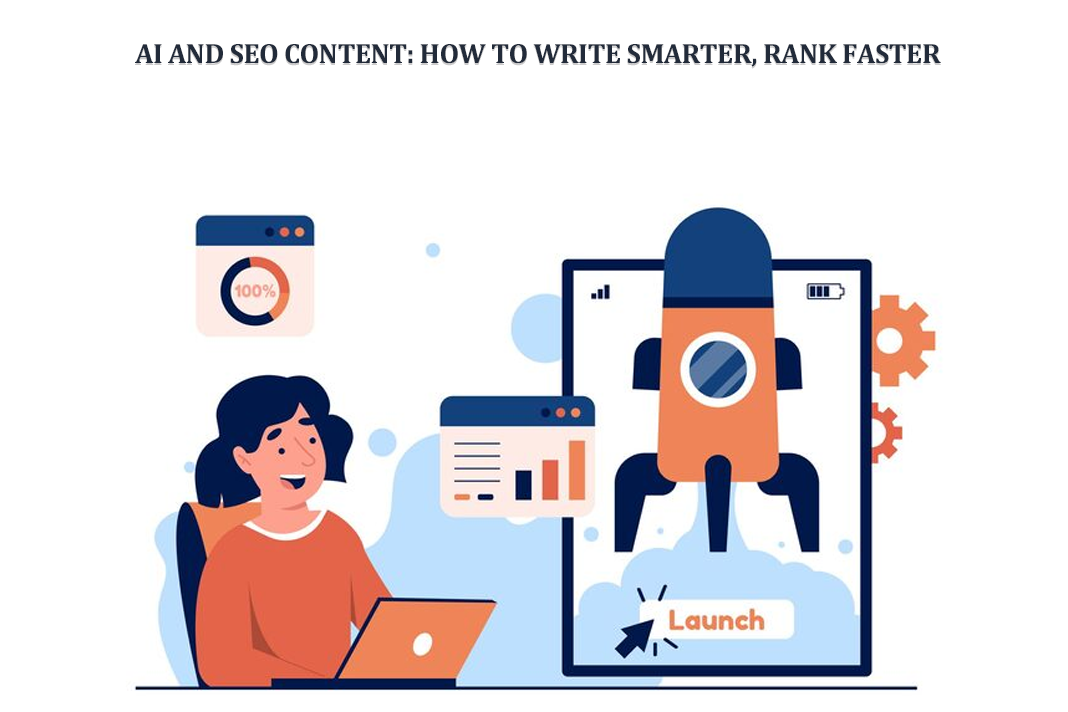
Ever wondered why some websites rise fast in search results while others stay stuck, no matter how hard they try? The answer, most of the time, is simple. Smart content. Not more content.
AI is reshaping how we write, plan, optimize, and publish. It isn’t magic. But it makes the writing process lighter. Cleaner. Faster. When you use it with SEO in mind, the results can feel unreal. Search engines love clarity. Readers love clarity. And AI helps you create both.
This guide walks you through how to use AI for SEO without losing your voice. You’ll see how to create content that ranks faster, stays natural, and keeps readers hooked. Let’s dive in.
Why AI Matters in SEO Today
Search engines have changed. Old tricks faded. Shortcuts died. Google now rewards helpful content written with real intent. Not keyword stuffing. Not robotic paragraphs. Not spam.
AI helps bridge the gap between writing for humans and writing for algorithms. It gives structure. Ideas. Flow. And if you guide it right, it turns long writing tasks into neat drafts you can shape into something strong.
It also helps you avoid writer’s block. You get instant topic ideas, outlines, and even tone adjustments. This means your focus moves from fighting the blank page to improving the message.
Understanding AI’s Role in Content Creation
AI is your assistant. Not your replacement. It works best when you already know your audience, your niche, and your brand style. Here’s what AI can do well:
- Generate topic ideas
- Build content outlines
- Suggest keywords
- Expand sections
- Rewrite paragraphs for clarity
- Improve readability
- Spot SEO gaps
And here’s what you must still do:
- Add experience
- Add truth
- Add real examples
- Correct mistakes
- Shape the message
When you combine both, your content becomes fast to produce and easy to rank.
Finding Topics That Actually Rank
SEO starts long before you type the first word. You need topics people search for. AI tools can help you speed up this step. AI then lists topics along with short descriptions. You can quickly pick the ones that match your goals.
Matching Topics with Search Intent
This is where SEO wins or fails.
If someone wants a guide, give them a guide.
If someone wants steps, give them steps.
If someone wants a quick answer, don’t give them a novel.
AI helps identify intent by analyzing patterns in similar keywords. It enables you to make sure your content aligns with what searchers expect.
Creating Outlines That Search Engines Love
Outlines give your article structure. They also make writing smoother. AI can create outlines that highlight:
- Main points
- Subheadings
- Questions readers ask
- Areas where examples fit
- Keywords to include
With a solid outline, your writing feels natural. And search engines understand your content better. Good outlines reduce confusion. They prevent messy sections. They keep you focused.
Writing with AI While Keeping Your Voice
Most people fear AI writing because they don’t want robotic text. Fair. But you can avoid that.
Here’s how:
1. Guide the AI clearly
Tell it in your tone. Simple. Warm. Direct.
Tell it the style. Smooth. Human-like.
Tell it to your audience. Beginners. Owners. Creators.
AI responds based on your prompts.
2. Add your own words
A small personal touch change everything.
Drop a story. A moment. A memory.
Share a lesson your audience can feel.
AI can’t replicate lived experience.
3. Edit for flow
Read the article out loud.
Fix awkward lines.
Shorten long phrases.
Make it sound like something you would say.
That’s how you keep your voice intact.
Using AI to Improve On-Page SEO
Once the writing is done, AI becomes your SEO helper.
AI Can Suggest:
- Meta titles
- Meta descriptions
- Header refinements
- Internal linking ideas
- Readability adjustments
- Keyword placement
- Missing semantic phrases
You choose the best suggestions and shape them to fit your brand.
Keyword Balance Without Stuffing
AI helps maintain a natural keyword spread. You never want to overload your article. Instead, place keywords in:
- Title
- First 100 words
- Subheadings
- Conclusion
- Image alt tags
AI tools can highlight missing or overused keywords so you can adjust quality without breaking flow. Some writers even sprinkle a product keyword like WooCommerce Call for Price inside long pieces when it fits the context.
How AI Helps You Write Faster Without Losing Quality
Time spent writing drops sharply when AI helps. You can cut hours of work into minutes. But production speed shouldn’t lower the quality.
Here’s how to keep balance:
Start with a rough idea.
Feed the AI a few lines. It expands them smoothly.
Write in layers.
Layer 1: Draft
Layer 2: Rewrite
Layer 3: SEO polish
Layer 4: Human tone adjustments
Give the AI short prompts.
Long prompts confuse it. Simple directions keep the ideas sharp.
Rewrite your own content with AI support.
Sometimes you already have old articles. You can revamp them quickly with modern SEO, better tone, and updated info.
Creating Content for Featured Snippets
Snippets help you win search visibility without ranking #1. AI can help you structure answers in the right way.
AI Helps Build Snippet-Friendly Formats:
- Short answers
- Numbered steps
- Lists
- Definitions
- Mini summaries
You place these at key points in your article. Search engines pick them up easily because they are clear and direct.
Improving Content Readability With AI
Readability affects ranking. If readers stay longer, your SEO grows stronger. AI helps you shorten sentences, simplify words, and break long blocks into smooth sections. When your content feels easy to read, people read more. Simple is powerful.
Using AI for Internal Linking Suggestions
Internal links boost SEO. They show search engines how pages connect. AI can scan your content and suggest places where older blogs fit naturally. You get a cleaner site structure. Better navigation. Better ranking opportunities.
Scaling Content Without Losing Quality
AI helps small teams produce big results. You can create multiple articles each week with the same quality.
Here’s how teams use AI to scale:
- A writer focuses on voice
- AI handles research
- Another person polishes SEO
- A manager approves final drafts
Small teams can feel huge with the right workflow. Output increases. Deadlines become easy. Quality stays high.
Avoiding Common AI Writing Mistakes
AI is helpful. But it still makes mistakes. You must watch for:
- Repeated lines
- Generic phrases
- Incorrect facts
- Missing depth
- Dry tone
Fix these manually. Add emotion. Add clarity. Add your expertise. AI gives you the clay. You shape the sculpture.
Why Google Won’t Punish AI Content (If Done Right)
Google is not against AI content. It’s against bad content. Low-effort writing. Wrong facts. Misleading lines. If your content is:
- Helpful
- Clear
- Human-edited
- Experience-based
…it ranks. AI is simply a tool that helps you create it faster.
Conclusion
Smart content wins. Fast content helps. AI lets you create both at once. When you mix AI’s speed with your own insight, you get content that ranks quicker, reads smoother, and leaves a strong impact.
Use AI for ideas, structure, research, outlines, SEO tweaks, and rewrites. But keep your own voice alive in every sentence. Search engines want clarity. Readers want connection. AI helps you deliver both. Write smarter. Edit sharper. Publish faster. And watch your rankings rise naturally.