
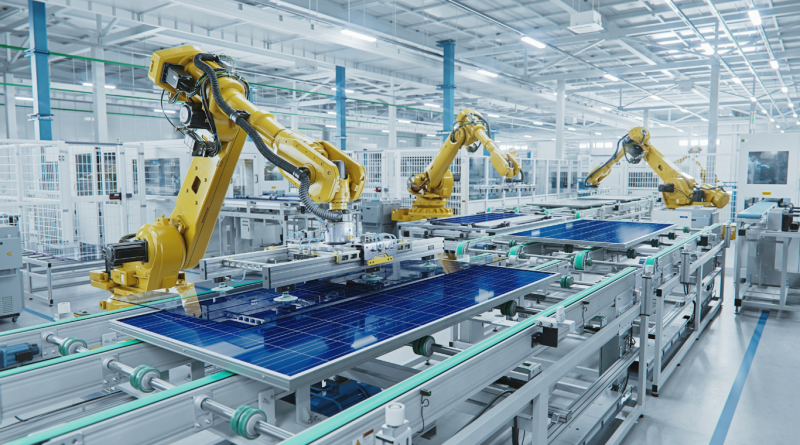
The Manufacturing Shift: From Automation to Intelligence
For decades, manufacturing success has been measured by speed, precision, and cost efficiency. Automation replaced manual labor and connected machines began producing at unprecedented scales. But as global supply chains grow more complex and product lifecycles shorten, traditional automation is no longer enough.
Manufacturers now face a new challenge: staying resilient in an environment defined by volatility and constant change. The next competitive frontier is not just automated processes but intelligent systems that can adapt, predict, and act autonomously.
This is where AI Agents in manufacturing are transforming the landscape. These intelligent systems go beyond rule-based automation. They understand context, learn continuously, and make decisions that enhance efficiency, quality, and uptime.
What Are AI Agents in Manufacturing?
AI Agents are autonomous, decision-making systems designed to perform specialized tasks across industrial operations. They use data from IoT sensors, enterprise systems, and production equipment to perceive conditions, learn from patterns, and act intelligently.
Instead of simply automating a process, AI Agents can reason about it. They can monitor an entire production line, detect anomalies in real time, and take corrective action without waiting for human input.
A modern manufacturing setup might include several AI Agents working together:
-
Predictive Maintenance Agents that identify and prevent equipment failures before they happen.
-
Production Optimization Agents that balance workloads, minimize waste, and improve throughput.
-
Supply Chain Agents that predict material shortages and adjust procurement dynamically.
-
Quality Control Agents that use computer vision to spot product defects instantly.
-
Energy Efficiency Agents that optimize energy consumption across machines and shifts.
These agents create an intelligent operational network that continuously learns and improves, turning factories into adaptive, self-optimizing systems.
Smart Operations in Action
Consider a global manufacturer producing industrial machinery across multiple plants. Each facility generates massive data volumes daily, from vibration levels and temperature readings to cycle times and output quality. In a traditional setup, most of this data goes unused or is analyzed only after problems occur.
By integrating AI Agents into its operations, the company achieved a fundamental transformation:
-
15 percent increase in equipment uptime through predictive maintenance scheduling.
-
12 percent reduction in energy use, as agents optimized machine load and idle times.
-
20 percent improvement in yield, thanks to real-time detection of process deviations.
-
Shorter decision cycles, as agents provided actionable insights within minutes instead of hours.
The result was not just improved performance but a system that continuously learned and adapted, becoming smarter with every production run.
Predictive Maintenance: From Reactive to Autonomous
Maintenance has long been a balancing act. Too much preventive maintenance leads to unnecessary downtime and cost. Too little results in equipment failure and production loss.
AI Agents eliminate this tradeoff by turning maintenance into a predictive and proactive process. By continuously analyzing signals such as vibration patterns, sound frequency, and temperature variation, they can detect anomalies invisible to the human eye.
For instance, if a motor begins to deviate from its normal vibration pattern, the AI Agent can determine the likelihood of bearing wear and automatically trigger an inspection request or order replacement parts. It can even adjust machine settings temporarily to reduce stress until maintenance occurs.
This evolution takes maintenance from reactive, to predictive, and ultimately toward autonomous, where AI Agents orchestrate the entire lifecycle of equipment health.
Why CXOs Are Paying Attention
For CXOs and manufacturing leaders, the rise of AI Agents represents more than a technology upgrade. It signals a shift in operational strategy from managing processes to managing intelligence. The impact is tangible and far-reaching.
-
Operational Continuity
Unplanned downtime can cost thousands per minute. AI Agents ensure round-the-clock monitoring and instant corrective action, keeping production lines running smoothly.
-
Real-Time Decision-Making
Executives gain immediate visibility into production performance. Instead of waiting for reports, leaders can access live insights and act faster.
-
Scalability Across Facilities
Once proven in one plant, AI Agent frameworks can be replicated across other sites, ensuring consistent quality and efficiency globally.
-
Sustainability Outcomes
Optimized energy use and reduced material waste contribute directly to ESG targets and carbon reduction goals.
-
Augmented Workforce Productivity
AI Agents handle repetitive monitoring and data-heavy analysis, freeing skilled teams to focus on innovation and high-value work.
Building the Foundation for AI-Driven Manufacturing
Deploying AI Agents effectively requires more than technology investment. It demands a clear roadmap that connects business value, data readiness, and human adoption.
1. Identify High-Impact Use Cases
Start small but strategically. Target pain points that directly affect cost, quality, or uptime. Predictive maintenance, production optimization, and defect detection are ideal early candidates.
2. Build a Unified Data Ecosystem
AI Agents rely on accurate, real-time data. Integrate IoT sensors, MES, ERP, and SCADA systems to ensure seamless information flow. A unified data foundation ensures that agents can make reliable and timely decisions.
3. Design for Human-Machine Collaboration
AI Agents are not replacements for people but collaborators. Educate plant operators and engineers about how these systems work and how to interpret their insights. This builds trust and accelerates adoption.
4. Establish Governance and Control
Every AI Agent should operate under defined policies and measurable KPIs. Implement oversight frameworks that ensure transparency, compliance, and alignment with operational goals.
5. Measure, Learn, and Scale
Treat AI Agent deployment as a living system. Measure results continuously, refine models, and expand use cases once tangible ROI is achieved.
A Case in Point: Turning Data into Action
A leading precision parts manufacturer faced frequent machine breakdowns and rising maintenance costs. While data was being collected across equipment sensors, it was rarely used proactively.
By deploying AI Agents connected to their IoT and maintenance systems, the company achieved transformative results within months:
-
18 percent reduction in unexpected downtime as predictive alerts became highly accurate.
-
25 percent drop in maintenance hours, with technicians responding only to data-backed issues.
-
9 percent improvement in product quality, as real-time anomaly detection prevented defects from scaling.
-
Faster issue resolution, as the AI Agents recommended precise corrective actions based on past learnings.
This initiative turned their plant into a continuously optimizing ecosystem, where every machine, operator, and process worked in sync with intelligent systems.
From Industry 4.0 to Cognitive Manufacturing
Industry 4.0 introduced connectivity. Cognitive manufacturing introduces intelligence.
AI Agents mark the evolution from smart factories to thinking factories systems that analyze, reason, and improve autonomously. They can coordinate with one another, share insights across production lines, and even negotiate production schedules based on demand fluctuations or supply delays.
As global markets become more unpredictable, such agility becomes mission-critical. Factories that can adapt instantly, optimize resources automatically, and recover from disruptions autonomously will define the next generation of industrial leadership.
Common Barriers and How to Overcome Them
Despite the potential, many manufacturers face hesitation when adopting AI Agents. Common barriers include:
-
Data Silos: Disconnected systems hinder real-time insight. The solution lies in unified data architecture and IoT integration.
-
Change Resistance: Teams may fear automation replacing jobs. Clear communication about augmentation, not replacement, is essential.
-
Cost Perception: While AI adoption requires investment, phased deployments targeting high-ROI areas yield faster payback.
-
Skill Gaps: Upskilling programs and AI literacy initiatives empower existing teams to work alongside AI systems effectively.
Organizations that address these early and align stakeholders from IT, operations, and leadership see faster adoption and measurable success.
The Future of Manufacturing Intelligence
In the near future, AI Agents will form the digital nervous system of manufacturing enterprises. They will communicate across supply chains, share insights across geographies, and make coordinated decisions to optimize entire ecosystems, not just individual plants.
Imagine a scenario where a production delay in one facility automatically triggers a shift in workload to another, reorders raw materials, and informs the customer in real time all autonomously. This is the future AI Agents are enabling.
Manufacturers who invest today will lead tomorrow’s intelligent supply networks. Those who delay risk being outpaced by data-driven competitors with self-learning operations and predictive agility.
Conclusion: The Smart Factory Begins with a Smart Strategy
AI Agents in manufacturing are not just tools for automation; they are catalysts for transformation. They create visibility where there was opacity, agility where there was rigidity, and intelligence where there was once only efficiency.
For CXOs and manufacturing leaders, the imperative is clear. The factories of the future will be built on intelligence that adapts, learns, and acts not just automation that repeats. The path forward begins with strategy. Define your use cases, unify your data, and empower your teams to work with AI Agents as collaborators in innovation.
The result is not only a more efficient operation but a smarter, more resilient enterprise ready for the next era of industrial growth. The intelligent factory is no longer a vision. It is an opportunity waiting to be seized.