

B2B SaaS metrics are key performance indicators used to record, monitor, and measure a marketing campaign’s performance. While it’s important for businesses, the entire thing can be daunting for a beginner.
Whether you are an experienced business owner or a startup, understanding and tracking B2B SaaS metrics is important. It helps you determine the right marketing strategies to use and how much money you can allocate to those efforts.
This article will break down the key aspects of B2B SaaS metrics and how to track them. If you’re a novice looking to get a foot in, then you’ve come to the right place.
Why Tracking B2B SaaS Metrics Matters
B2B SaaS metrics are the health indicators of your business, so tracking them helps you catch problems that could hurt your business. Here’s why this matters.
1. Measure Business Growth
Growth is important for beginner B2B SaaS companies. You need more customers, a bigger market share, and bring in more revenue. But this is easier said than done.
As explored in the Younium SaaS subscription billing guide, you can use metrics like Monthly Recurring Revenue (MRR) and Annual Recurring Revenue (ARR) to see your cash flow.
These metrics are the most accurate ways of determining if your business is expanding or shrinking.
2. Understand Customer Health
For a SaaS business to thrive, it needs happy customers. But how do you single out satisfied and dissatisfied customers?
One metric you can use is the Customer Churn Rate (CCR) which is the percentage of customers who cancel their subscriptions.
With this, you can quickly narrow down the reasons why subscriptions are getting canceled so you can rectify the situation.
3. Optimize Marketing and Sales Efforts
Knowing the cost of acquiring new customers is very crucial for beginner SaaS businesses.
For this, you can use the Customer Acquisition Cost (CAC) metric to measure how much money is going into marketing.
If your CAC is too high, then you’re probably spending more than you’re making and that’s bad. Getting new customers is good, but it shouldn’t come at the cost of the business.
4. Forecast Future Revenue
Tracking B2B SaaS metrics can help you predict how much money your business can make over a certain period.
Metrics like ARR and MRR give you a clear picture of your current revenue and what it can grow to.
Having this data on hand is crucial if you ever want to attract investors.
Key Metrics Every B2B SaaS Business Should Track
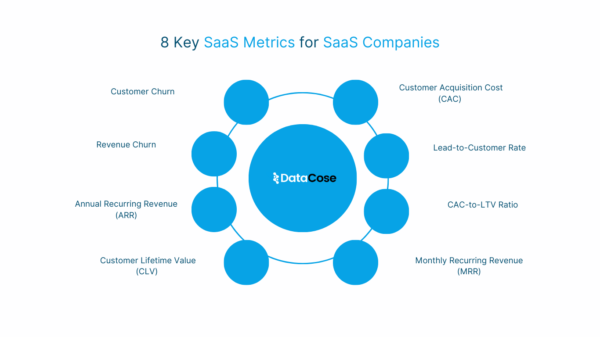
Image via Datacose
You now understand why tracking B2B SaaS metrics matters for your online business. But what exactly are these metrics and what do they do? Here’s a quick breakdown for you.
- Monthly Recurring Revenue (MRR): This measures the total predictable revenue that your business generates every month. You can use it to better understand your revenue flow and potential growth.
- Customer Churn Rate: This refers to the percentage of clients that cancel their subscriptions in a given period. Having a lower church rate means you have higher customer satisfaction and vice versa.
- Customer Lifetime Value (CLTV): This is the total revenue your business can expect from a single customer for as long as they frequent your business. It can help you figure out the cost of acquiring new customers and retaining old ones.
- Net Promoter Score (NPS): This measures customer satisfaction by determining how likely a customer will recommend your product to someone else. A higher NPS means your customers love your product enough to spread the word.
- Customer Acquisition Cost (CAC): This is the total cost of acquiring new customers. It is the cost of marketing, sales, and onboarding expenses. A lower CAC is an indicator of good business.
- Gross Margin: This represents the percentage of revenue that is left after you deduct the cost of sold goods. Having higher gross margins means there’s more money left to invest back into the business.
- Customer Retention Rate: This shows the percentage of customers who continue to use your services over a given period of time. High retention rates are a good sign that your business is doing the right things to retain customers.
Wrapping Up
As you can see, when you understand B2B SaaS metrics and start to track them correctly, you’ll be unstoppable. These metrics are like your eyes, giving you a good idea of where your business stands.
If you are a beginner with a new business startup, familiarize yourself with all the metrics we’ve discussed. You’ll be surprised by how things will transform your business.