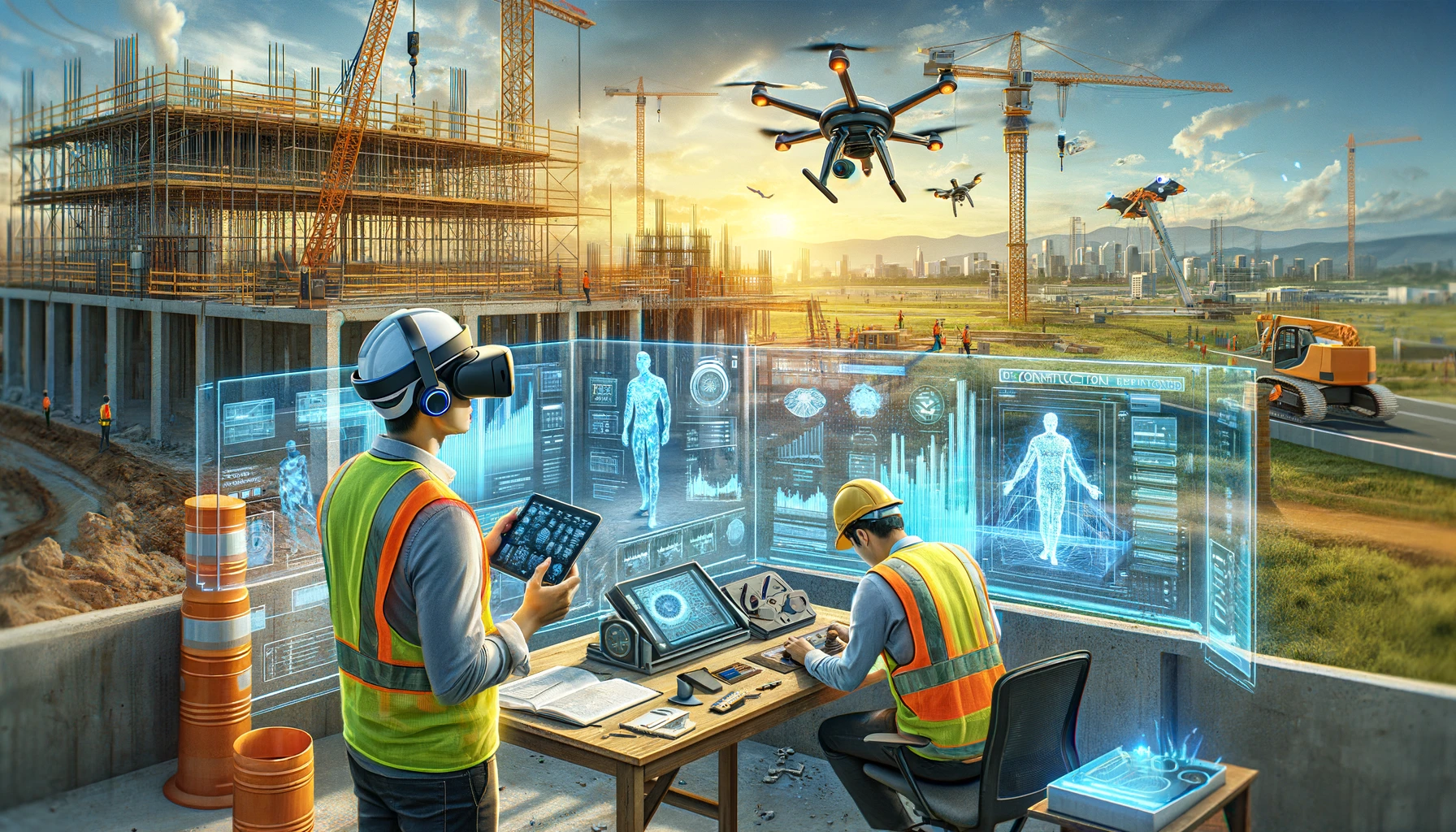
Artificial intelligence is transforming industries around the world, and construction is no exception. From architectural design and project planning to cost estimation, safety monitoring, and building maintenance, AI is helping construction professionals make faster and more informed decisions.
Construction projects involve thousands of individual tasks, materials, measurements, workers, schedules, and financial considerations. Managing all these elements efficiently can be challenging. AI-powered technologies can process large amounts of information, identify patterns, automate repetitive activities, and provide insights that support better decision-making.
As construction companies continue adopting digital technologies, AI is becoming an increasingly important part of modern building design and project management.
AI in Building Design
The design stage is one of the most important phases of a construction project. Architects and engineers need to consider the building’s purpose, available space, structural requirements, materials, environmental conditions, budget, and safety regulations.
AI can assist by analyzing different design possibilities and identifying potential improvements. Generative design systems can evaluate multiple configurations based on specific requirements, allowing professionals to compare alternatives more efficiently.
For example, an architect may provide information about the available site, desired floor area, natural lighting requirements, and energy goals. AI can then help explore different layouts that satisfy those conditions.
Human professionals remain responsible for selecting and refining the final design, but AI can significantly accelerate the exploration process.
Improving Construction Planning
Planning a construction project requires careful coordination. Delays in one area can affect numerous other activities, potentially increasing costs and extending completion times.
AI can analyze project schedules, historical data, resource availability, and other variables to identify potential bottlenecks.
Construction managers can use these insights to adjust schedules and allocate resources more effectively. AI systems may also help predict where delays are likely to occur, giving project teams an opportunity to address problems before they become major issues.
This predictive approach can improve project organization and reduce avoidable disruptions.
AI and Cost Estimation
Accurate cost estimation is essential for construction projects. Materials, labor, equipment, site conditions, and design changes can all affect the final cost.
AI can analyze historical project information and current estimates to identify patterns and support more accurate forecasting.
Measurement is another important part of cost estimation. Before ordering materials or calculating budgets, professionals need accurate information about dimensions and areas. A square foot calculator can simplify area calculations for rooms, floors, walls, and other spaces.
When combined with AI-based estimating systems, accurate measurements can contribute to better material planning and more reliable project budgets.
Enhancing Workplace Safety
Construction sites can contain significant hazards, including heavy machinery, elevated work areas, electrical equipment, and moving vehicles.
AI-powered cameras and monitoring systems can analyze construction sites and identify potentially unsafe conditions. For example, computer vision technology may help detect whether workers are wearing required protective equipment or whether people are entering restricted areas.
AI can also analyze historical accident data to identify patterns associated with workplace incidents.
These systems do not replace safety professionals, but they can provide additional information that helps teams respond to risks more quickly.
Monitoring Construction Progress
Keeping a project on schedule requires accurate information about what has already been completed and what remains to be done.
AI can analyze photographs, drone footage, sensor data, and other information to compare actual construction progress with project plans.
If a particular stage is behind schedule, project managers may receive an early indication that adjustments are necessary.
This can make progress tracking more objective and reduce the amount of manual reporting required from construction teams.
AI and Building Information Modeling
Building Information Modeling, commonly known as BIM, is already widely used in modern construction. BIM creates detailed digital representations of buildings and can contain information about architectural, structural, and mechanical components.
AI can enhance BIM workflows by analyzing the information contained within these models.
For example, AI may help identify potential conflicts between building systems, evaluate design alternatives, or detect inconsistencies in project information.
Combining AI with BIM can improve coordination between architects, engineers, contractors, and other professionals.
Optimizing Material Usage
Material waste is a major concern in construction. Ordering too much material can increase costs and waste, while ordering too little can cause delays.
AI can analyze project requirements, measurements, historical usage, and inventory information to support more efficient material planning.
Accurate area calculations are particularly useful when estimating materials such as flooring, paint, tiles, roofing, and other products.
Using a square foot calculator during the planning process can help teams establish the dimensions of a space before determining how much material may be required.
AI can then use these measurements as part of broader estimating and planning workflows.
Energy-Efficient Building Design
AI is also helping architects design more energy-efficient buildings. Energy consumption can be influenced by factors such as building orientation, insulation, window placement, ventilation, lighting, and heating or cooling systems.
AI can evaluate different design options and estimate how they may affect energy performance.
This allows designers to explore alternatives before construction begins. Making changes during the design stage can be easier and less expensive than modifying a completed building.
AI can therefore support both financial and environmental goals by helping professionals identify potentially more efficient solutions.
Predictive Maintenance
AI’s role does not necessarily end when construction is complete. Building owners can use AI-powered systems to monitor equipment and identify potential maintenance issues.
Sensors can collect information from heating systems, elevators, electrical equipment, ventilation systems, and other building components.
AI can analyze this data and identify unusual patterns that may indicate developing problems. Maintenance teams can then investigate issues before equipment fails completely.
This approach, known as predictive maintenance, can help reduce unexpected downtime and potentially extend equipment life.
Challenges of Using AI in Construction
Despite its potential, AI adoption comes with challenges. Construction companies may need to invest in software, sensors, cameras, training, and other technologies.
Data quality is another important factor. AI systems rely on accurate information to produce useful results. Poor measurements or incomplete project records can lead to unreliable recommendations.
There can also be concerns about cybersecurity, data ownership, workforce training, and integration with existing systems.
Successful implementation therefore requires careful planning rather than simply purchasing new technology.
The Future of AI in Construction
The future of construction is likely to involve greater integration between AI, robotics, BIM, sensors, drones, and connected equipment.
Robotic systems may increasingly perform repetitive physical tasks, while AI can help coordinate activities and analyze project information.
Architects and engineers may also use AI to explore more design possibilities while considering cost, sustainability, structural requirements, and user needs simultaneously.
The construction professionals of the future will likely work alongside AI systems rather than being replaced by them. Human experience, creativity, judgment, and responsibility will remain essential.
Conclusion
Artificial intelligence is reshaping modern construction and building design by improving planning, design, cost estimation, safety, material management, progress tracking, energy efficiency, and maintenance.
Accurate measurements remain an important foundation for many of these processes. A square foot calculator can help simplify area calculations, while AI can use accurate project information to support more advanced planning and estimation.
As technology continues to develop, AI will become increasingly integrated into construction workflows. Companies that combine these technologies with skilled professionals and reliable data can improve efficiency while creating safer, more sustainable, and better-planned buildings.