Artificial Intelligence (AI), Machine Learning (ML), and Data Science have become some of the most influential technologies driving digital transformation across industries. From healthcare and finance to manufacturing and retail, organizations are using data-driven solutions to improve decision-making, automate processes, and create innovative products and services.
Although these terms are often used interchangeably, they represent different yet interconnected fields. Understanding their core concepts is becoming increasingly important for professionals, regardless of their industry or technical background. Whether you’re a business leader, marketer, analyst, developer, or entrepreneur, having a basic understanding of AI, ML, and Data Science can help you adapt to today’s rapidly evolving workplace.
This guide explains the key concepts behind these technologies and why they matter in the modern business landscape.
What Is Artificial Intelligence?
Artificial Intelligence refers to the ability of computer systems to perform tasks that typically require human intelligence. These tasks may include reasoning, problem-solving, learning, language understanding, and decision-making.
Examples of AI applications include:
- Virtual assistants
- Chatbots
- Recommendation engines
- Fraud detection systems
- Autonomous vehicles
- Medical diagnosis support
AI aims to create systems capable of making intelligent decisions with minimal human intervention.
Understanding Machine Learning
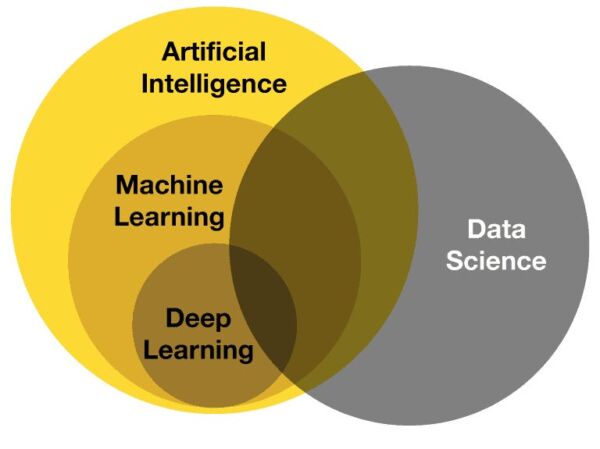
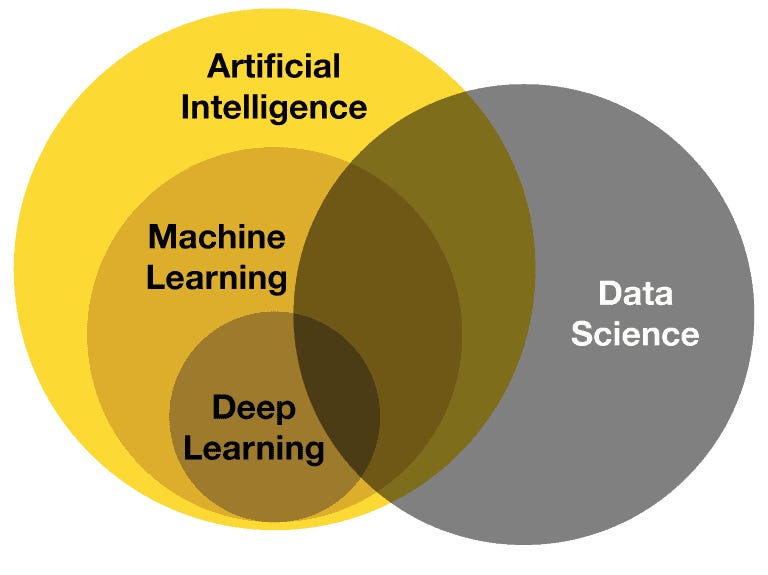
Machine Learning is a branch of Artificial Intelligence that enables computers to learn from data without being explicitly programmed for every task.
Instead of following fixed instructions, ML algorithms analyze data, identify patterns, and improve performance over time through experience.
Common machine learning techniques include:
- Supervised learning
- Unsupervised learning
- Reinforcement learning
Machine learning powers many everyday technologies, including spam filters, recommendation systems, image recognition, and predictive analytics.
What Is Data Science?
Data Science is an interdisciplinary field focused on extracting valuable insights from large volumes of structured and unstructured data.
It combines several disciplines, including:
- Statistics
- Mathematics
- Computer science
- Programming
- Data visualization
- Business knowledge
Data scientists collect, clean, analyze, and interpret data to help organizations make informed decisions.
How AI, ML, and Data Science Are Connected
Although distinct, these fields are closely related.
- Data Science prepares and analyzes data.
- Machine Learning uses data to build predictive models.
- Artificial Intelligence applies those models to create intelligent systems.
Together, they enable organizations to automate processes, discover insights, and improve business performance.
The Importance of Data
Data serves as the foundation for AI and Machine Learning.
Organizations collect information from sources such as:
- Customer interactions
- Sales transactions
- Social media
- IoT devices
- Sensors
- Business operations
High-quality data leads to more accurate models and better decision-making.
Data Preparation Matters
Before analysis begins, data must be prepared carefully.
This process often includes:
- Removing duplicates
- Correcting errors
- Filling missing values
- Standardizing formats
- Identifying outliers
Clean data significantly improves model accuracy and reliability.
Algorithms Drive Machine Learning
Algorithms are sets of mathematical instructions that allow computers to recognize patterns within data.
Popular machine learning algorithms include:
- Decision trees
- Linear regression
- Logistic regression
- Random forests
- Neural networks
- Support vector machines
Each algorithm serves different purposes depending on the problem being solved.
The Role of Predictive Analytics
Predictive analytics uses historical data to forecast future outcomes.
Organizations apply predictive models to:
- Forecast sales
- Detect fraud
- Predict customer behavior
- Optimize inventory
- Reduce equipment failures
These insights help businesses make proactive rather than reactive decisions.
Deep Learning and Neural Networks
Deep learning is an advanced area of machine learning inspired by the structure of the human brain.
Artificial neural networks process massive datasets and excel at tasks such as:
- Speech recognition
- Image classification
- Natural language processing
- Autonomous driving
- Medical imaging
Deep learning has fueled many recent breakthroughs in artificial intelligence.
Business Applications
Today, AI ML data science solutions are transforming industries by helping organizations automate repetitive tasks, personalize customer experiences, improve operational efficiency, and generate actionable insights from complex datasets. Businesses increasingly rely on these technologies to enhance forecasting, optimize supply chains, detect anomalies, and support strategic decision-making, making them valuable assets for organizations seeking innovation and competitive advantage.
Natural Language Processing
Natural Language Processing (NLP) enables computers to understand and generate human language.
Common NLP applications include:
- Chatbots
- Language translation
- Voice assistants
- Sentiment analysis
- Text summarization
These technologies continue to improve communication between humans and machines.
Computer Vision
Computer vision allows machines to interpret visual information from images and videos.
Applications include:
- Facial recognition
- Quality inspection
- Medical imaging
- Traffic monitoring
- Retail analytics
Advancements in computer vision are improving automation across numerous industries.
Ethics and Responsible AI
As AI adoption grows, ethical considerations become increasingly important.
Organizations must address issues such as:
- Data privacy
- Algorithmic bias
- Transparency
- Accountability
- Security
Responsible AI development helps build public trust while ensuring technologies benefit society fairly.
Skills Every Professional Should Develop
Professionals do not necessarily need to become data scientists, but understanding key concepts provides a competitive advantage.
Helpful skills include:
- Data literacy
- Critical thinking
- Basic statistics
- Data visualization
- Problem-solving
- Digital awareness
These competencies support better collaboration with technical teams.
Career Opportunities
The demand for AI and data professionals continues to grow worldwide.
Common career paths include:
- Data Scientist
- Machine Learning Engineer
- AI Researcher
- Data Analyst
- Business Intelligence Analyst
- Data Engineer
- AI Product Manager
Organizations across nearly every industry seek professionals with these skills.
Future Trends
AI, Machine Learning, and Data Science continue evolving rapidly.
Emerging trends include:
- Generative AI
- Explainable AI
- Edge AI
- Automated Machine Learning (AutoML)
- Responsible AI governance
- AI-powered cybersecurity
Businesses that embrace these innovations will likely remain more competitive in the years ahead.
Why Every Professional Should Understand These Technologies
Even non-technical professionals increasingly work alongside AI-powered tools.
Understanding these technologies helps professionals:
- Make better decisions
- Communicate effectively with technical teams
- Identify business opportunities
- Improve productivity
- Adapt to changing workplaces
Digital literacy is becoming an essential skill across virtually every profession.
Conclusion
Artificial Intelligence, Machine Learning, and Data Science are reshaping how organizations operate, compete, and innovate. While each field has its own purpose, they work together to transform raw data into valuable insights and intelligent decision-making systems.
For today’s professionals, understanding these technologies is no longer limited to technical roles. A solid grasp of their key concepts enables better collaboration, informed decision-making, and greater readiness for the future of work. As organizations continue investing in AI-driven solutions, professionals who understand these foundational technologies will be well-positioned to contribute to innovation and long-term business success.