
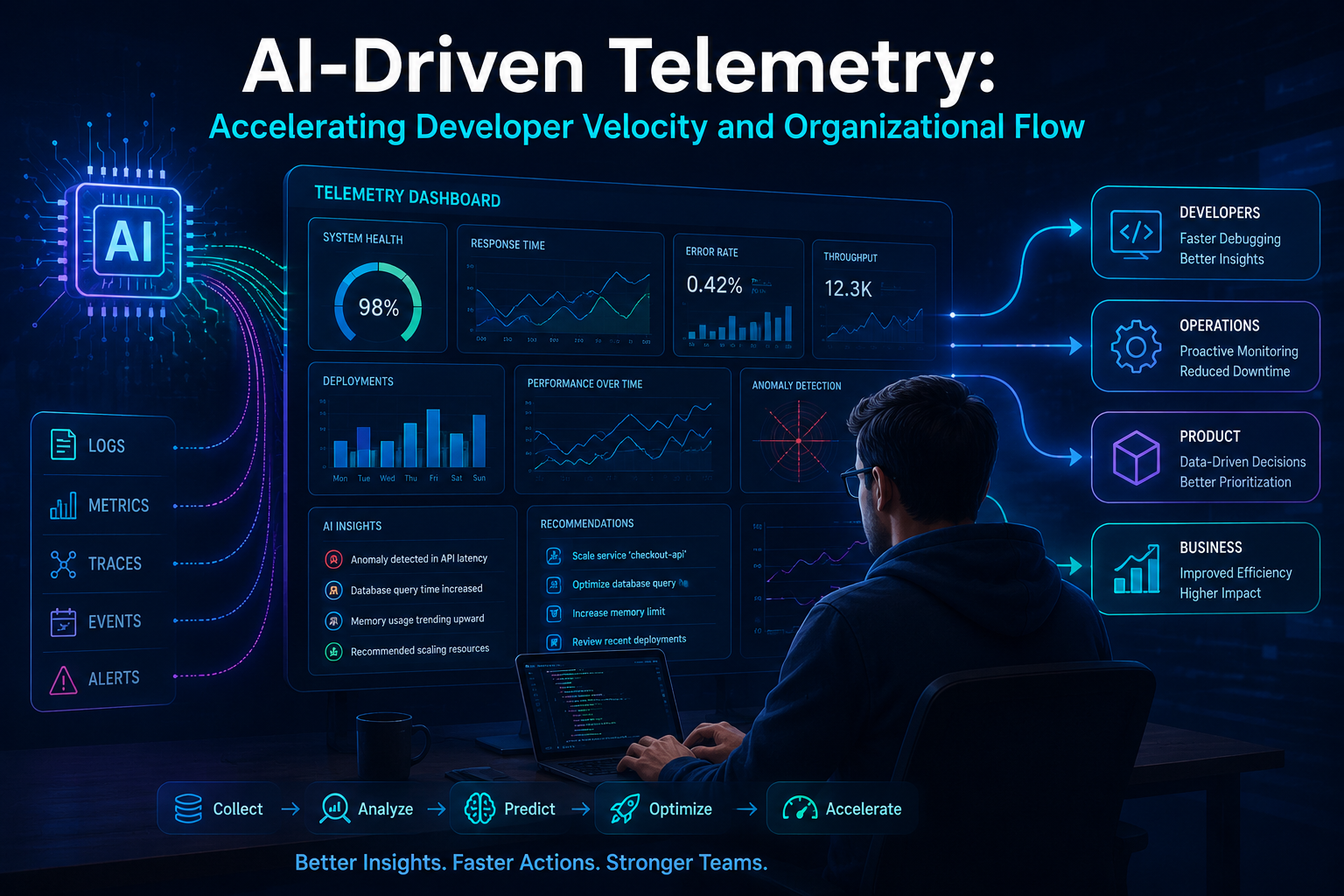
Engineering Telemetry: Merging Developer Velocity and Organizational Flow
The modern technology ecosystem is undergoing a fundamental transformation in how productivity is defined, measured, and achieved. For years, software engineering organizations relied on fragmented, superficial metrics such as raw commit counts or lines of code written to evaluate team velocity and operational health. Today, engineering leaders recognize that true developer efficiency cannot be examined in a vacuum. A software team might ship code at an unprecedented rate, yet the organization can still face delivery delays due to broken cross-departmental handoffs, invisible bureaucratic hurdles, and misaligned operational dependencies.
Achieving true velocity requires a holistic approach to organizational telemetry. By treating the entire software delivery lifecycle and its surrounding business operations as a single, continuous data pipeline, technology companies can uncover the hidden friction points that slow down innovation. When engineering intelligence is successfully combined with granular workflow observability, organizations move away from speculative management and embrace a culture of continuous, evidence-based improvement. This structural alignment ensures that software investments translate directly into tangible business value.
Mapping the Digital Undercurrents of Product Delivery
To optimize how software is built, organizations must look beyond the repository and analyze the broader administrative environment in which engineers operate. A significant portion of a developer’s day is frequently consumed by non-coding activities: updating issue trackers, navigating procurement systems for cloud infrastructure, waiting for security compliance sign-offs, and bouncing between communication platforms. This administrative friction fragments focus blocks, leading to context switching the hidden enemy of deep engineering work.
Uncovering these systemic roadblocks requires advanced diagnostic tools that go beyond basic engineering telemetry. Specialized process mining software plays a critical role here by ingesting event logs from across the enterprise’s entire digital stack to reconstruct exactly how work flows between different functional groups. By visualizing the true, unvarnished pathways of cross-departmental dependencies, system architects can pinpoint the precise moments where engineering initiatives stall due to external process friction. This insight allows companies to streamline compliance and automate routine back-office tasks, freeing up valuable cognitive space for development teams.
Measuring the Truth of AI-Assisted Engineering
As organizations clear out macro-level process friction, they can more accurately evaluate and optimize the specific mechanics of the software development lifecycle itself. This baseline data becomes especially vital during major technological shifts, such as the rapid integration of artificial intelligence into the daily coding environment.
Swarmia is an engineering intelligence platform that helps software teams improve productivity, streamline collaboration, and make data-driven decisions about their development processes. As AI adoption accelerates, the company has been actively exploring the impact of agentic coding and AI-powered development tools on engineering performance, providing research-backed insights into how these technologies influence developer workflows, code quality, and delivery outcomes.
By combining engineering analytics with workflow visibility, Swarmia enables organizations to measure the real-world effects of AI-assisted development rather than relying on assumptions. Their approach helps teams identify bottlenecks, optimize collaboration, and ensure that emerging technologies such as agentic coding contribute to sustainable productivity gains across the software development lifecycle.
Aligning Team Dynamics with Architectural Flow
With the right telemetry frameworks in place, engineering leaders can safely address the cultural and structural patterns that dictate long-term system stability. True engineering velocity is never achieved by simply pushing individuals to work faster; it is achieved by optimizing the flow of collaboration across the entire ecosystem. High-performing engineering organizations intentionally structure their teams to minimize communication overhead and maximize focus.
This structural optimization requires a deep understanding of how code architecture mirrors organizational design. When teams are organized around clear, decoupled domains, code reviews move faster, cycle times drop, and deployment pipelines remain unclogged. Continuous monitoring of cycle time metrics from the first commit to the final production release allows managers to spot healthy collaborative habits and replicate them across the enterprise. Protecting the engineering block from fragmented processes and systemic noise establishes a highly predictable, sustainable environment where high-quality software can be shipped with confidence.
Conclusion: The Horizon of Data-Driven Tech Leadership
Building a world-class technology organization requires a continuous commitment to operational transparency, architectural discipline, and data-backed decision-making. By merging systemic workflow analysis with engineering-specific intelligence, modern enterprises gain an unparalleled view into their operational realities. This multi-layered visibility removes the guesswork from management, allowing leaders to eliminate administrative bottlenecks, safely adopt next-generation AI tools, and cultivate highly collaborative development cultures. As the tech landscape grows increasingly complex, the organizations that thrive will be those that treat their operational data as a core engineering asset, building resilient environments designed for sustainable, long-term growth.