
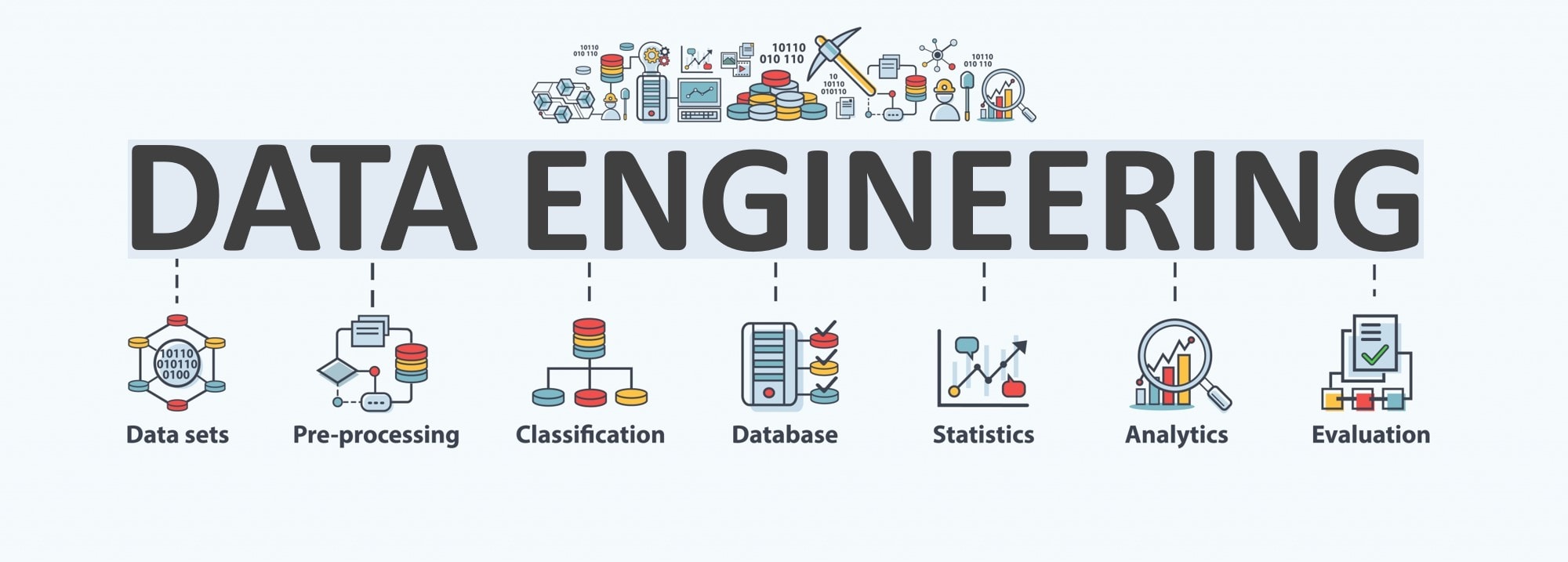
Modern enterprises don’t fail because they lack data. They fail because their data is fragmented, slow, unreliable, or unusable at scale. After working with large enterprises, fast-growing SaaS companies, and data-heavy industries for years, one pattern is consistent: AI, analytics, and digital initiatives succeed or fail based on the strength of underlying data engineering services.
This guide is written for CTOs, Heads of Data, and engineering leaders who need a clear, practical understanding of modern data engineering services—not buzzwords. We’ll walk through what these services actually involve, how they operate in real enterprise environments, where they deliver business value, and how to choose the right data engineering company for long-term success.
What Are Data Engineering Services in Today’s Enterprise Context?
Data engineering services focus on designing, building, and maintaining the systems that turn raw data into reliable, usable data products. This goes far beyond ETL scripts or database management.
In modern enterprises, data engineering sits at the intersection of:
-
Cloud infrastructure
-
Software engineering
-
Analytics and AI enablement
-
Security, governance, and compliance
A mature data engineering function ensures that data is ingested accurately, transformed consistently, governed properly, and delivered in a form that analytics teams, applications, and AI models can trust.
Without this foundation, AI initiatives stall, dashboards lose credibility, and decision-making becomes reactive instead of strategic.
Core Components of Enterprise Data Engineering Services
Data Ingestion: Building Reliable Data Supply Chains
Data ingestion is the first—and often underestimated—layer. Enterprises ingest data from transactional systems, SaaS platforms, IoT devices, partner APIs, logs, and event streams.
In practice, ingestion challenges include:
-
Schema drift from source systems
-
API rate limits and failures
-
Latency mismatches between batch and streaming data
-
Data duplication and loss
Modern data engineering services design ingestion pipelines that are fault-tolerant, observable, and scalable, using a mix of batch and real-time ingestion depending on business needs. A retail analytics use case, for example, might tolerate hourly batch loads, while fraud detection requires near-real-time streams.
Data Transformation: Turning Raw Data into Business-Ready Assets
Raw data is rarely usable as-is. Transformation is where data becomes meaningful.
Enterprise data engineering focuses on:
-
Standardizing definitions across teams
-
Enforcing data quality rules
-
Handling slowly changing dimensions
-
Creating reusable, analytics-ready models
Well-designed transformation layers reduce downstream confusion and prevent the “multiple versions of truth” problem that plagues many organizations. This is also where collaboration between data engineers and analytics teams becomes critical.
Cloud Data Platforms: Designing for Scale and Cost Control
Most enterprises today rely on cloud data engineering services to support elasticity and global access. However, moving to the cloud without architectural discipline often leads to cost overruns and performance issues.
Effective cloud data engineering services balance:
-
Compute and storage separation
-
Cost-aware workload design
-
Data lifecycle management
-
Environment isolation (dev, test, prod)
A strong data engineering company doesn’t just migrate data—they redesign architectures to align with usage patterns and business priorities.
Data Governance and Security: Engineering for Trust
Governance is not a policy document—it’s an engineering problem.
Enterprise data engineering services embed governance directly into pipelines by implementing:
-
Data lineage tracking
-
Role-based access controls
-
Audit logging
-
Automated quality checks
When governance is engineered rather than enforced manually, teams move faster without compromising compliance. This is especially critical in regulated industries like finance, healthcare, and insurance.
Real-Time and Streaming Pipelines: Enabling Operational Intelligence
Real-time data engineering has moved from “nice to have” to essential. Use cases like personalization, fraud prevention, dynamic pricing, and operational monitoring all depend on streaming pipelines.
These systems require different design trade-offs than batch processing:
-
Low-latency processing
-
Exactly-once or at-least-once guarantees
-
Stateful stream processing
-
Resilience under traffic spikes
Enterprise-grade data engineering services ensure streaming systems are production-ready, not experimental.
Types of Data Engineering Services
Enterprise Data Engineering Services
These services focus on large-scale, multi-team environments with complex data landscapes. Typical work includes:
-
Platform modernization
-
Data mesh or domain-oriented architectures
-
Governance frameworks at scale
-
Legacy system integration
Cloud Data Engineering Services
Cloud-focused services help organizations:
-
Design cloud-native data platforms
-
Optimize performance and cost
-
Implement Infrastructure as Code
-
Support hybrid or multi-cloud environments
Big Data Engineering Services
Big data engineering services address:
-
High-volume, high-velocity data
-
Distributed processing frameworks
-
Advanced partitioning and storage strategies
-
Performance tuning for analytics and ML workloads
Data Engineering for AI and Machine Learning
AI-ready data systems require:
-
Feature stores
-
Training and inference pipelines
-
Data versioning
-
Monitoring for data drift
Without strong data engineering, machine learning models degrade quickly in production.
Enterprise and Industry Use Cases
Financial Services
Banks and fintech firms rely on data engineering services for:
-
Fraud detection
-
Risk analytics
-
Regulatory reporting
-
Customer 360 platforms
Reliability and auditability are non-negotiable in this domain.
Healthcare and Life Sciences
Healthcare data engineering supports:
-
Clinical analytics
-
Patient data integration
-
Compliance with privacy regulations
-
Real-time monitoring systems
Data quality directly impacts patient outcomes, making engineering rigor essential.
Retail and eCommerce
Retail use cases include:
-
Demand forecasting
-
Personalization
-
Inventory optimization
-
Omnichannel analytics
These systems often combine batch and real-time pipelines to balance accuracy and speed.
Manufacturing and IoT
Manufacturers depend on data engineering services to:
-
Process sensor data
-
Enable predictive maintenance
-
Optimize supply chains
-
Support digital twins
Latency, scalability, and edge integration are key considerations here.
Business Benefits of Investing in Data Engineering Services
When done well, data engineering delivers measurable outcomes:
-
Faster decision-making through reliable analytics
-
Higher ROI on AI investments by improving data readiness
-
Reduced operational risk through better governance
-
Improved productivity for data and engineering teams
-
Scalable growth without constant rework
Enterprises that treat data engineering as a strategic capability—not a support function—consistently outperform peers.
Common Challenges and Practical Solutions
Data Silos and Fragmentation
Solution: Unified data platforms with domain-aligned ownership models.
Poor Data Quality
Solution: Automated validation and monitoring built into pipelines.
Rising Cloud Costs
Solution: Usage-aware architecture and proactive cost optimization.
Talent Gaps
Solution: Partnering with an experienced data engineering company to accelerate maturity.
How to Choose the Right Data Engineering Company
Not all data engineering companies operate at the same level. When evaluating partners, focus on:
-
Architectural depth, not just tool expertise
-
Enterprise experience across industries
-
Ability to design for scale and governance
-
Clear communication with business and technical stakeholders
-
Long-term thinking, not short-term delivery
Ask how they handle failure scenarios, cost trade-offs, and evolving requirements. Their answers reveal far more than a slide deck ever will.
Future Trends in Data Engineering Services
Looking ahead, several trends are reshaping data engineering:
-
Data product thinking replacing pipeline-centric approaches
-
Automation and observability becoming standard
-
Closer integration with AI and ML platforms
-
Decentralized ownership models with centralized governance
-
Increased focus on cost efficiency and sustainability
Organizations that invest early in modern data engineering services will be better positioned to adapt as data volumes, use cases, and expectations continue to grow.
Final Perspective
Data engineering services are no longer just about moving data from point A to point B. They are about building resilient, trustworthy data systems that power analytics, AI, and strategic decision-making at scale.
For enterprise leaders, the question is no longer whether to invest in data engineering—but how intentionally and how well. The right approach, supported by experienced partners and strong internal ownership, turns data from a liability into a lasting competitive advantage.