
Table of Contents
1. Introduction: The Deep Learning Landscape
2. Understanding Deep Learning: Core Concepts
3. Popular Libraries for Deep Learning: An Overview
4. Step 1: Building Your Deep Learning Model
5. Step 2: Training Your Model: Techniques and Best Practices
6. Step 3: Evaluating Your Model’s Performance
7. Common Issues in Deep Learning and their Solutions
8. The Role of a “Data Science Course in Hyderabad” in Skill Development
9. Future Trends in Deep Learning
10. Conclusion: Embracing the Deep Learning Journey
Introduction: The Deep Learning Landscape
So, deep learning has been the groundbreaking force in the landscape of artificial intelligence, making it possible to let the machines learn with vast amounts of data and do things that are very complex with very high accuracy, originally not attainable. It has been very impactful in changing many industries through image recognition, coupled with natural language processing, as most effective deep learning models. Without it, data scientists and AI practitioners will struggle very hard to apply theory in a useful manner.
The present article will help users to navigate in the landscape of deep learning with popular libraries such as TensorFlow, PyTorch, and Keras. We will get deep insights into the core concepts of deep learning, model development steps, and best practices required to ensure that fruitful success is realized. By following these guidelines, your skills will be improved, and you will contribute to the exuberant progress of the field of artificial intelligence.
Understanding Deep Learning: Core Concepts
Deep learning is a sub-domain of machine learning dealing with artificial neural network structures to model complex patterns in data. Compared to machine learning algorithms, most of which entail manual feature extraction, the deep learning model learns the representation of data through interconnected multi-layer nodes. Due to this property of learning from raw data, deep learning has been found to be very promising in domains such as image classification, speech recognition, and natural language processing.
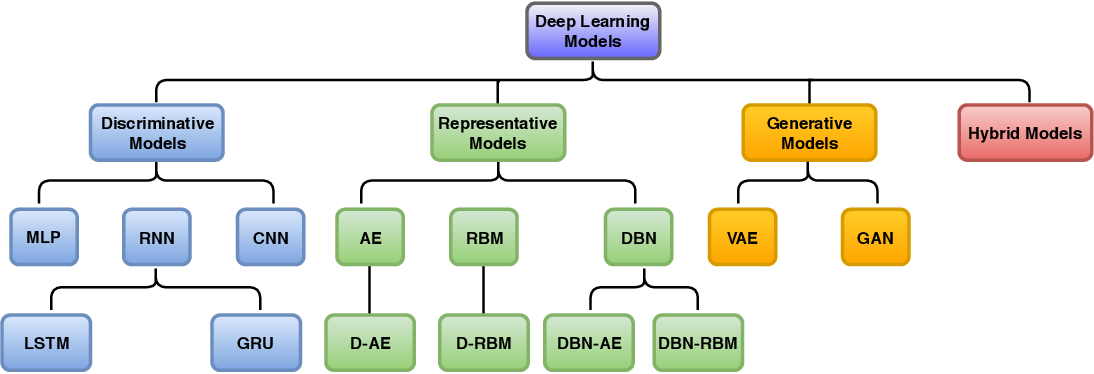
Deep learning models are built by composing two or more different types of layers sequentially, where consecutive layers of neurons process input data progressively from the previous layer and generate more and more usable forms. Each layer works with abstract features, so the model makes predictions or classifications based on the features learned. The most common used in training, except for feedforward, are convolutional neural networks (CNNs), and the restricted case of recurrent neural networks (RNNs).
With the growing quantity of data, now reaching unprecedented proportions, it has fueled the demand for deeper and more sophisticated deep learning architectures that could manage this increasing complexity. This demand has given rise to specialized libraries that aid in building and training deep learning models, making it practitioner-friendly to develop cutting-edge AI solutions.
Popular Libraries in Deep Learning: A Comparative Overview
Some of the more popular libraries that have emerged to develop support in deep-learning models have their features and strengths, including:
1. TensorFlow: This has arguably been the most popular and critically acclaimed deep learning library from Google’s stable. It is an ecosystem that abounds in great flexibility for developers while building machine learning models and deploying them. Both high-level APIs, like Keras, as well as low-level operation support are present in TensorFlow. It is known for its great performance and scalability.
2. PyTorch: Released by Facebook, PyTorch has recently become more popular because of its dynamic computation graph and very user-friendly treatment. Many researchers and practitioners favor it due to its intuitive way of model building and debugging. It is very particular in natural language and computer vision tasks.
3. Keras: Keras is a high-level neural network API that works with TensorFlow. It aims to present an interface that is user-friendly and free from bloat, making deep learning possible even for novices. Using Keras, rapid prototyping is made possible through a user-friendly interface that allows for quick experimentation with different network configurations.
4. MXNet: A flexible and efficient deep learning library developed by Apache, MXNet, supports symbolic and imperative. It is known for scalability and high performance, making it suitable for the training of large models in a distributed system.
5. Caffe: Written by the Berkeley Vision and Learning Center, this is a deep learning framework dedicated to speed and modularity. It is widely popular for image classification and has been applied to many computer vision tasks.
Among these libraries, the strengths and limits become apparent, which would enable a practitioner to select a tool for job in their deep learning projects.
Step 1: Building Your Deep Learning Model
Architectures in deep learning define the way to create a neural network model. This allows one to select appropriate neural network types for the specific task: for instance, a feedforward neural network, a convolutional neural network (CNN), or a recurrent neural network (RNN). Based on the strength of the architectures, they are well suited to different forms of data and different types of applications.
Afterward, when you have your architecture decided, you are able to create your model with the respective libraries. For example, with TensorFlow and Keras, you are able to define your model within the Sequential API or Functional API. This begins the process in which you actually have to define the architecture: how many layers, what type of layers, pooling, convolution, dense, and activation, among others.
Once we define our model architecture, we must compile it. We specify an optimizer, a loss function, and hopefully a list of metrics to keep an eye on while the training and testing performance is tracked. The optimizer should not just go and update the weights in some blind way; it should update the weights in accordance with the optimization technique incorporated in the function we pass through during compilation. On the other hand, the loss function indicates how far from the ground truth the model’s prediction is. Therefore, the selection of both optimizer and loss function is crucial.
Step 2: Training Your Model: Techniques and Best Practices
Training a deep learning model involves feeding the model data and causing the learning process to take place via that data. The normal training process goes through many steps, normally named epochs, in which the model tunes its weights through received training data and the process of loss computation.
Always prepare data before training by splitting the dataset into training, validation, and testing. The training set is responsible for modeling the data, the validation set for hyperparameter tunings, and the test set is crucial to evaluate the model over unknown data.
While training the model, some best practices are:
1. Batch Size: Choose an appropriate batch size for training. Reducing the batch size makes the weight update higher in precision, and increasing it makes training faster. Experiment and find the best batch size for training your model.
2. The learning rate determines how fast the model will update its weights. A high learning rate may cause the model to quickly converge in a suboptimal solution, while a too-small learning rate still makes it too slow in converging. Techniques like learning rate schedules or adaptive learning rates can be used to increase the effectiveness in training.
3. Regularization: Apply any kind of regularization method to avoid overfitting. This can be done by dropout, L1/L2 regularization, or early stopping. All these help in generalizing the network even for new data.
4. Monitor Performance: Keep a record and monitor the performance of the training model on metrics like accuracy, precision, recall, or F1 score. Such monitoring can enable you to have wiggle room, and in case anything does not in the desired way, one can always trace back the cause and make an amendment.
In this way, you can train your deep learning model effectively with the best practices and techniques to make your model perform as optimized.
Step 3: Evaluating Your Model’s Performance
With the training of your model complete, feed it with test set data and check the performance of your model. This type of evaluation generally allows us to gain an insight into how well the model generalizes over new, unseen data. The general evaluation process is particularly based on the computation of several derived measures on the predictions made by the model versus the actual labels. Common evaluation metrics include:
1. Accuracy: The model should predict properly in the data. As highly regarded as accuracy might be, it sometimes does not give the integral picture, especially in a data set that has a class imbalance.
2. Precision: It is how many true positive predictions are said to be positive from the total number of predicted positive outcomes mentioned. In cases where the false positives carry high costs, precision becomes especially significant.
3. Recall: It is the number of true positive predictions, divided by the total actual positives. Recall is paramount when a false negative is undesirable say, in the diagnosis of an illness.
4. F1 Score: Harmonic mean of precision and recall; that is, a more balanced view of how a model performs overall. F1 score is useful in giving weight to both the false positives and false negatives.
5. Confusion Matrix: An illustrative view of how the model is performing, showing the counts of true positive, true negative, false positive, and false negative. That way, it shows the real strengths and limitations of a model.
These are the metrics that will be studied for a better understanding or judgment of the model and to improve the model if the performance is not up to the mark:
Common Deep Learning Challenges and Solutions
Since deep learning allows for great capabilities, some of the challenges that come with it require negotiating by the practitioner. Some common challenges are:
1. Data Quality and Quantity: Deep learning models are highly data-determined, and they require a vast amount of high-quality data for effective training. The scarcity of availability of low-quality data might prove to be the potential risk factor of poor model performance. One way around this would be to focus on data augmentation techniques, clean datasets, and utilize transfer learning to leverage the power of pre-trained models.
2. Overfitting: Overfitting occurs when a model is learning the noise of the training data rather than the underlying patterns. Techniques to handle overfitting include cross-validation, regularization, and the use of dropout layers during training.
3. Computational Resources: Basically, deep learning model training is a resource-hungry area for computational power and memory. There are some ways to deal with that, like cloud solutions and optimization in the model architecture so as not to have to use too many resources.
4. Interpretability: Sometimes, interpretability, especially in the case of deep neural networks, is a big issue. It’s recommended to use SHAP (Shapley Additive explanations) or LIME (Local Interpretable Model-agnostic Explanations) to make the model interpretable, or to understand the contribution of features.
Of course, it is, by enabling a practitioner to take care of such challenges in advance for a better deep learning workflow and hence, better results.
Role of Data Science Course in Skill Development
With the current pace of evolution in this field, a professional in this sector will have to stay updated with the latest in deep learning architectures. Enrolling in a Data Science Course in Hyderabad will provide individuals with essential knowledge and skills required to cope with the complexities that come with deep learning architectures.
These are some of the courses that cover a wide range of diverse topics, such as neural networks, machine learning algorithms, data preprocessing, and model evaluation. Enrolling in any of these courses will equip you with hands-on experience in the most popular frameworks, TensorFlow and PyTorch, and will expose you to the real-world application of deep learning.
Investing in education is a proactive step toward achieving career goals in data science and artificial intelligence. Whether aspiring to work in research, development, or application, a comprehensive course can equip individuals with the skills needed to succeed in this rapidly evolving field.
Future Trends in Deep Learning Architectures
This gives the hope of a future for deep learning architectures, as studies and innovation continue to create more advanced models. Some emerging trends include:
1. Hybrid Models: This will blend the power of different architectures—for example, CNNs and their so-called successor architecture, Transformers— into a single hybrid model to store and analyze both spatial and sequential data.
2. Efficient Architectures: These are the new architectures that develop more efficient models—lower the consumption of computational power and memory requirements—while keeping performance high. Techniques such as model pruning and quantization are making big advances here.
3. Explainable AI: While the demand for explain ability in AI continues to rise, the research community is starting to shift toward architectures that can shed some light on the internal decision process.
4. Transfer Learning: Transfer learning uses pre-trained models to boost the performance of models on natural language understanding tasks that have scanty data. Therefore, it is very necessary in domains in which labeled data hardly exists.
Staying updated on such trends and breakthrough technologies helps a professional stay at the forefront of the deep learning revolution.
Conclusion: Embracing the Future of AI
The availability of advanced deep learning architectures in the form of CNNs and Transformers lately revolutionizes how artificial intelligence implicates major breakthroughs in the different sectors of the economy. With the knowledge on respective unique strengths and application areas, this power actuality can be harnessed toward effecting innovation and improved outcomes.
Investment in education like a “Data Science Course in Hyderabad” is a must for building the underpinning deeper-level knowledge and skills required by any professional in this expanding field. Embrace the future of AI, get informed about emerging trends—an individual and his or her organization will find themselves right in the front and leading in this fast-emerging data-driven world.
In a nutshell, the path forward to explore advanced deep learning architectures is just commencing. Only with their power can we unlock new possibilities and bring meaningful change across industries, finally shaping a smarter and more efficient imminence version of the future.