
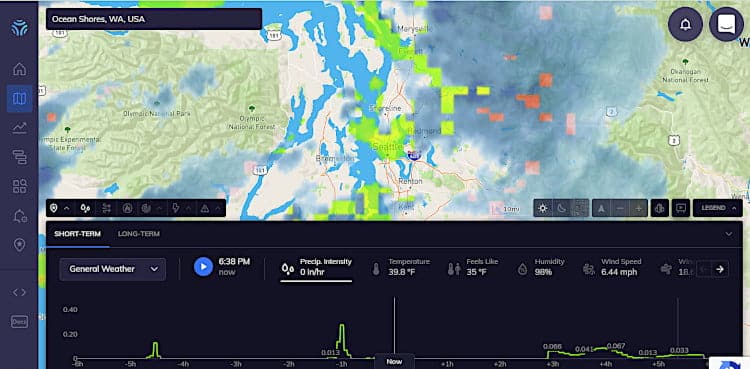
Weather impacts almost every aspect of our lives, from the food we eat to the energy we use. Imagine a farmer who, by analyzing past weather patterns, discovers the optimal time to plant crops, leading to a bountiful harvest. Or consider an energy company that, by studying historical weather data, prevents a potential blackout during a heatwave. These scenarios illustrate just how crucial understanding past weather conditions can be.
With the wealth of weather data available today, it’s more important than ever to grasp how historical weather patterns influence current and future conditions. But what about historical weather data specifically? What practical purposes does it serve, and how can different industries harness this valuable information to their advantage?

What is Historical Weather Data?
Historical weather data refers to records of past weather conditions, including details such as temperature, precipitation, wind speed, and humidity. This data is collected from various sources such as weather stations, satellites, and ships, and can extend back decades or even centuries. By examining these records, we gain valuable insights into how weather patterns have evolved over time.
However, it’s important to note that the quality and granularity of historical weather data can vary significantly depending on the source. For instance, data from modern weather stations is typically highly accurate and detailed, while historical records from older sources might be less precise or sparse. The resolution of data also varies; some sources provide high-resolution, localized data, while others offer broader, less detailed information. Understanding these differences is crucial when using historical weather data for analysis or decision-making.
Why is Historical Weather Data Important?
Historical weather data holds immense value across many sectors. It helps us understand trends, predict future events, and make informed decisions. From agriculture to insurance, construction to energy, and even climate research, the ability to analyze past weather conditions allows us to improve practices, manage risks, and adapt to changing environments.
Practical Use 1: Agriculture
Agriculture is one of the most weather-dependent industries, and historical weather data plays a critical role in ensuring farming success. Here’s how it impacts key areas of agriculture:
- Planning Crop Cycles: By analyzing historical weather patterns, farmers can better plan their planting and harvesting schedules. For instance, a farmer in the Midwest might use data from past years to determine the optimal time to plant corn, ensuring that the crop is sown after the last frost but before the growing season’s peak.
- Predicting Pest and Disease Outbreaks: Certain weather conditions can promote the spread of pests and diseases. Historical data helps farmers anticipate these outbreaks. For example, in 2018, historical weather data helped grape growers in California predict an increased risk of mildew, allowing them to take preventative measures and protect their crops.
- Optimizing Irrigation Strategies: Understanding past rainfall patterns enables farmers to adjust their irrigation schedules more effectively. A practical example is the use of historical rainfall data to optimize water usage in drought-prone regions, reducing waste and ensuring that crops receive adequate moisture.
In each of these cases, historical weather data provides valuable insights that help farmers make informed decisions, ultimately leading to better crop yields and more efficient farming practices.
Practical Use 2: Insurance Industry
The insurance industry heavily relies on accurate data to assess risks and set premiums. Historical weather data is invaluable in this regard.
- Risk Assessment and Premium Calculation: Insurers use historical weather data to assess the likelihood of weather-related claims, such as those caused by floods, storms, or droughts. This data informs the calculation of premiums, ensuring that they are fair and reflective of the actual risk.
- Developing New Insurance Products: Insurers can create specialized products based on the risk patterns identified in historical weather data, such as crop insurance or natural disaster coverage.
- Claims Verification and Fraud Detection: When claims are made, insurers can verify the legitimacy by cross-referencing them with historical weather data. This reduces the likelihood of fraudulent claims being approved.
Practical Use 3: Energy Sector
Energy production and consumption are closely linked to weather conditions. Historical weather data provides the energy sector with crucial insights.
- Forecasting Energy Demand: By understanding how weather affects energy consumption, utility companies can better forecast demand and manage supply, reducing the likelihood of blackouts or energy shortages.
- Optimizing Renewable Energy Production: For renewable energy sources like wind and solar, historical weather data helps in determining the best locations for new projects and optimizing existing ones.
- Enhancing Grid Stability and Efficiency: Historical weather patterns help energy companies anticipate and mitigate the impact of extreme weather on the grid, ensuring consistent energy delivery.
Practical Use 4: Construction and Infrastructure
Construction projects are often at the mercy of the weather, making historical data essential for planning and execution.
- Planning Construction Projects: Historical weather data helps construction managers schedule work during favorable conditions, minimizing delays and ensuring the safety of workers.
- Material Selection and Durability Predictions: Different materials perform better under certain weather conditions. Historical data informs material selection, ensuring that buildings and infrastructure are durable and long-lasting.
- Ensuring Worker Safety: By analyzing past weather conditions, construction companies can implement safety measures to protect workers from extreme weather events.
Practical Use 5: Climate Research
Climate research relies heavily on historical weather data to understand and predict long-term changes in the Earth’s climate.
- Tracking Long-Term Climate Changes: Historical weather data provides a record of how the climate has changed over time, helping scientists identify trends and anomalies.
- Developing Climate Models and Simulations: Researchers use historical data to create models that simulate future climate scenarios, providing valuable insights into potential impacts.
- Informing Policy Decisions: Policymakers rely on climate research to make informed decisions about environmental protection and resource management. Historical weather data is a key component of this research.
How to Access Historical Weather Data
Accessing historical weather data has become easier with the advent of digital databases, APIs, and specialized tools. Below are some of the most common methods to obtain this valuable data.
Public Databases and Archives
One of the most accessible ways to obtain historical weather data is through public databases. Organizations like the National Oceanic and Atmospheric Administration (NOAA) offer free access to extensive archives of weather data. These resources are invaluable for research, education, and general analysis, providing detailed records of past weather conditions from various locations around the world.
Paid Services and Specialized Tools
For those with more specific needs, paid services offer enhanced tools and datasets. These services often come with advanced features like customizable data extraction, higher resolution data, and user-friendly interfaces that simplify the process of retrieving and analyzing historical weather information.
Historical Weather APIs
A more advanced option for accessing historical weather data is through a historical weather API. APIs (Application Programming Interfaces) allow developers and businesses to integrate weather data directly into their applications, enabling seamless access to historical weather conditions for any location and time period.
- Tomorrow.io: For a powerful and versatile solution, consider using the Tomorrow.io historical weather API. This API provides accurate, high-resolution historical weather data, perfect for industries like agriculture, insurance, and energy. With Tomorrow.io’s API, you can easily retrieve detailed weather data tailored to your specific needs, helping you make data-driven decisions and optimize your operations.

By leveraging these tools, whether through public resources or specialized APIs, you can harness the full potential of historical weather data for your research, business, or project needs.
Challenges in Using Historical Weather Data
While historical weather data is incredibly useful, it comes with challenges. Data accuracy and completeness can vary, particularly with older records. Additionally, interpreting this data requires expertise, as weather patterns are influenced by numerous variables. Misinterpretation can lead to incorrect conclusions and decisions.
The Future of Historical Weather Data
As technology advances, the collection and analysis of weather data are becoming more sophisticated. One of the most exciting developments is the use of space-based technology to enhance weather monitoring and forecasting.
- Tomorrow.io’s Space-Based Radar Technology: A prime example of this innovation is Tomorrow.io’s successful precipitation scans from its space radars. These scans represent a significant leap forward in weather data accuracy and resolution. By utilizing space radars, Tomorrow.io can capture detailed precipitation data from around the globe, even in remote and hard-to-reach areas. This advancement not only improves the quality of current weather data but also enhances the accuracy of historical weather records.

- Remote Sensing and Historical Climate Analysis: The use of remote sensing technologies has been transformative for analyzing historical climate data. According to research published by MDPI, remote sensing techniques provide comprehensive insights into climate patterns by collecting data from satellites and other aerial sources. These methods allow for the analysis of historical climate trends with greater precision, offering detailed information on factors like temperature variations, precipitation patterns, and atmospheric conditions over extended periods.

- Integration with Historical Weather Data: The high-resolution data obtained from these space radars can be integrated with existing historical weather data, providing a more comprehensive and detailed understanding of past weather patterns. This enhanced dataset will be invaluable for industries that rely on precise weather information, such as agriculture, insurance, and energy.
With the increasing importance of accurate weather data in a changing climate, the role of advanced technologies like those developed by Tomorrow.io will only grow. As we continue to innovate, the future of historical weather data looks brighter and more detailed than ever.
Conclusion
Historical weather data is far more than just a record of past temperatures and rainfall. It’s a critical resource that industries across the globe use to make better decisions, manage risks, and innovate for the future. From agriculture to energy, insurance to construction, and climate research, the practical uses of historical weather data are vast and varied. As we move forward into an increasingly uncertain climate, the importance of this data will only continue to grow.
FAQs
- What is the most common use of historical weather data?
- The most common use is in agriculture, where it’s used to plan crop cycles, predict pest outbreaks, and optimize irrigation.
- Can historical weather data predict future weather?
- While it can’t predict specific future weather events, it helps in identifying patterns and trends that can inform forecasts.
- How accurate is historical weather data?
- The accuracy varies, especially with older records, but modern data is generally very accurate due to advanced collection methods.
- Is historical weather data accessible to the public?
- Yes, many public databases, like those from NOAA, offer free access to historical weather data.
- How can businesses leverage historical weather data?
- Businesses can use it for risk management, planning, product development, and optimizing operations based on past weather trends.