
Ever slogged through an hour-long compliance course only to forget half of it by lunch? You’re not alone. Bite-sized modules now achieve 80–83 percent completion—quadruple traditional courses—and that single metric shows why analytics-focused companies are abandoning clunky learning portals.
We’re writing for product leads, data managers, and L&D pros who live by dashboards and deadlines. You need an LMS that reveals who learned what, when, and how that knowledge affected the business.
Gartner warns that employees will walk if their company skips serious AI upskilling. Choose the right system today, or risk a talent drain tomorrow.
We scored a dozen platforms on analytics depth, rollout speed, AI power, price, and security. The five winners turn learning into measurable ROI.
How we picked the winners
We didn’t rely on gut feelings or vendor one-pagers. We scraped the first two pages of Google, combed through hundreds of G2 reviews, and lurked in r/elearning threads where real admins vent about hidden fees and clunky dashboards.
From there, we built a simple, yet ruthless, scorecard. Each platform could earn up to 100 points across seven factors that matter to data-driven teams. We weighted each factor by its business impact, then let the math decide the ranking.
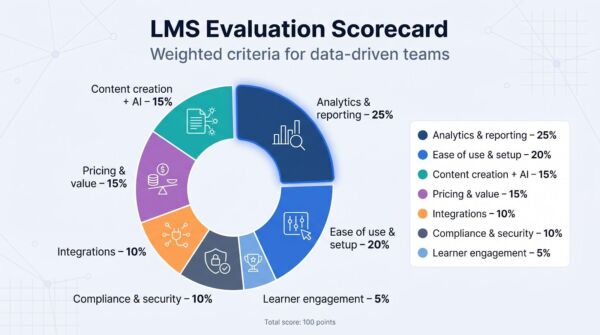
Here’s the exact rubric:
-
Analytics & reporting (25 percent) – Does the LMS offer drill-downs, custom dashboards, or xAPI feeds that prove learning drives results?
-
Ease of use & setup (20 percent) – Can a busy ops lead go from signup to first course in a day, or will IT need to babysit?
-
Content creation + AI (15 percent) – Built-in authoring and generative tools that cut production time.
-
Pricing & value (15 percent) – Transparent tiers that scale without surprise “enterprise” surcharges.
-
Integrations (10 percent) – Native hooks into HRIS, CRM, SSO, and a documented REST API.
-
Compliance & security (10 percent) – SOC 2 or ISO badges plus features for audit-ready reporting.
-
Learner engagement (5 percent) – Gamification, mobile apps, and microlearning UX that keep completion rates high.
Why lean so hard on analytics? As a 2025 industry deep dive noted, “analytics and reporting have become the backbone of every effective learning strategy.”
We scored twelve contenders, but only five cleared every bar. That quantitative filter sets up the ranked reviews that follow.
Why these five stand out
Plenty of platforms promise a friction-free learning experience, yet only a handful deliver the data depth, AI speed, and admin sanity checks we just scored. The five you’re about to meet share three superpowers. First, they expose learner data in ways your BI team will truly use: custom dashboards, xAPI streams, and predictive “who’s-at-risk” flags. Second, each rolled out a meaningful AI upgrade in the last eighteen months, so you spend less time building courses and more time closing skill gaps. Finally, they pass the enterprise sniff test with SOC 2 Certification System guidance and ISO certifications, helping organizations prepare for stronger security controls and audit readiness.
That mix is rarer than you’d think. Big-name incumbents like Cornerstone and legacy open-source options such as Moodle fell off our list because users keep calling them heavy, fiddly, or both. Canvas shines in higher-ed but needs extra plug-ins for corporate analytics. We wanted platforms you can launch fast, prove ROI, and still sleep soundly when the audit team knocks.
As you read the ranked reviews, keep your own priorities front and center. If budget beats bells and whistles, you’ll vibe with our number-three pick. If you’re chasing global scale and AI-driven skills mapping, skip ahead to number four. The goal is simple: match the tool to the data story you need to tell.
1. GoSkills: best overall for analytics and rapid upskilling
True to its promise that you can go “from blank slate to a fully running LMS faster than you can finish your coffee,” GoSkills feels like the LMS version of a Swiss Army knife: compact, intuitive, and loaded with tools your team will actually use.
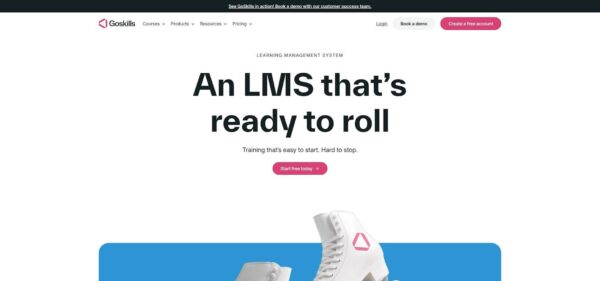
GoSkills LMS dashboard and AI course builder screenshot
Overview
GoSkills feels like the LMS version of a Swiss Army knife: compact, intuitive, and loaded with tools you will use. Sign up, invite a few testers, and within an afternoon your team can take micro-courses on SQL joins or data-visualisation best practices. No frantic calls to IT. No six-week implementation Gantt chart.
The secret is a clean, consumer-grade interface wrapped around powerful AI. Drop a PDF, slide deck, or even a messy Google Doc into the Genie course builder, and it produces a structured module (lessons, quizzes, and all) in minutes. Administrators track progress on a real-time dashboard that drills from company-wide trends down to a single learner’s quiz attempts.
For data-driven teams, that granularity matters. Need to show leadership that the new “Python for Analysts” path trimmed onboarding time by two weeks? The reporting tab delivers the evidence on a silver platter. Learners stay hooked thanks to three-to-seven-minute video bursts, badges, and light gamification, mechanics proven to drive the completion rates we cited earlier.
GoSkills is cloud-only and SOC 2 compliant, so you won’t babysit servers or fret over audits. Pricing starts with a free tier for small pilot groups, then scales predictably with headcount. All told, it’s a rare platform that treats both admins and learners as first-class citizens instead of forcing one to struggle for the other’s convenience.
2. LearnUpon: best for scaling businesses and external training
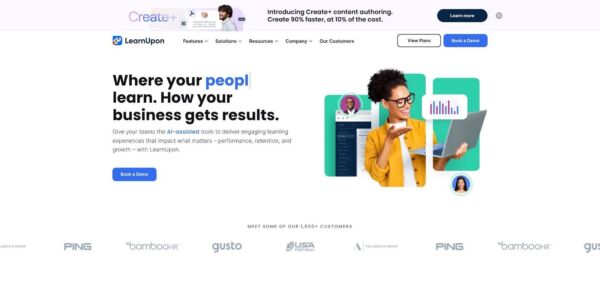
LearnUpon multi-portal LMS analytics dashboard screenshot
Overview
Imagine your company doubling headcount this year while launching a customer academy next quarter. Most LMS platforms groan under that growth curve. LearnUpon stays cool. Born in the SaaS startup scene, it balances enterprise muscle with a workflow that still feels lightweight.
You can spin up separate portals for employees, partners, and clients, each with its own logo and course catalogue. All analytics flow into one master dashboard, so leadership sees training impact across audiences without juggling spreadsheets. Completion and compliance widgets flag at-risk learners in real time, giving you a chance to nudge before deadlines slip.
Integration is where LearnUpon shines. Out-of-the-box connectors tie into Salesforce, Zendesk, and BambooHR. A sales manager closes a deal, and the new customer appears in the academy with a welcome course ready. No CSV imports, no manual invites; automation does the work.
Content creation recently improved as well. The new Create+ tool uses AI to slice a dense slide deck into bite-sized lessons, then drafts quiz questions that directly map to the material. It is not full autopilot, but it can cut development hours in half and free subject-matter experts for higher-level work.
Pricing sits in the mid-market sweet spot. You will need a quote, yet feedback from ops leaders shows total cost lands well below heavyweight suites like Docebo once you account for implementation and support. And speaking of support, LearnUpon’s onboarding team has a cult following; many admins say the vendor’s guidance kept their rollout on schedule.
Bottom line: if you are scaling fast and training more than just employees, LearnUpon’s blend of multi-portal flexibility, solid analytics, and AI-assisted authoring makes it a pragmatic choice.
3. TalentLMS: best for small teams seeking simplicity and value
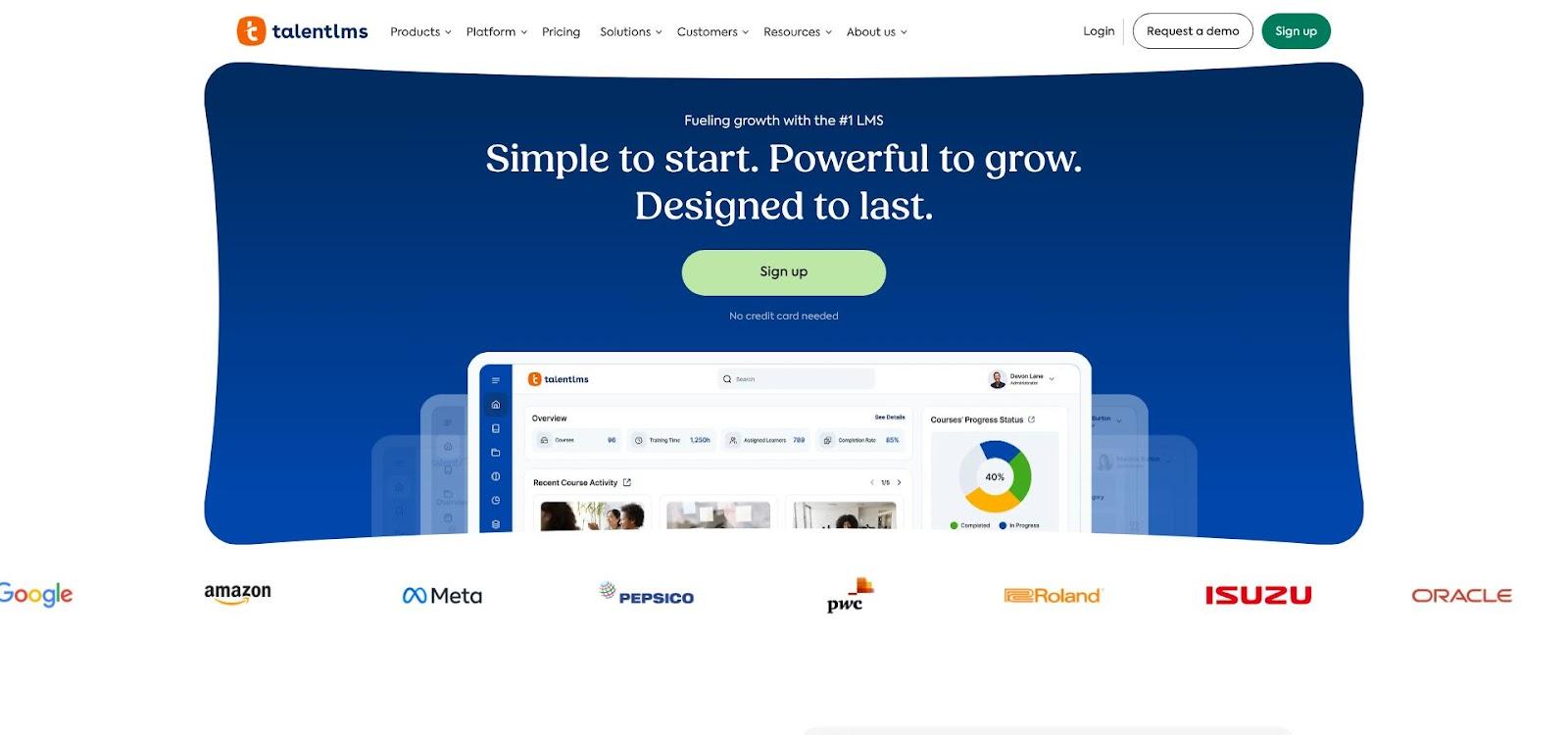
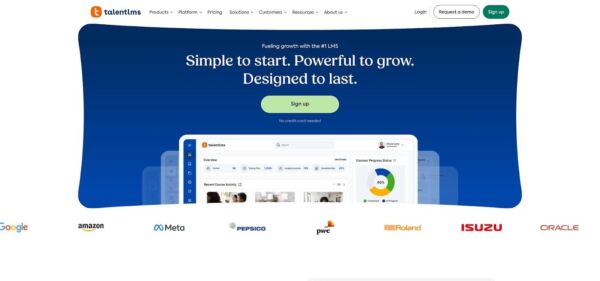
TalentLMS simple course dashboard and reporting screenshot
Overview
If GoSkills is a multitool and LearnUpon a secure vault, TalentLMS is the trusty pocket notebook, always present and never overcomplicated. Start-ups and lean departments choose it because setup feels more like creating a social account than rolling out enterprise software. Sign up, tweak a colour scheme, and launch your first course before the coffee cools.
Affordability drives the initial attraction. A free tier handles five users, while the first paid plan provides forty seats for roughly the cost of one team lunch per month. Yet the savings do not come at the expense of polish. The interface is uncluttered, mobile friendly, and translated into dozens of languages out of the box.
Reporting covers the essentials: completions, quiz scores, and learner activity by branch. Scheduled email digests keep managers informed without logging in. You will not find xAPI firehoses or embedded BI charts, but most small teams do not need them on day one. What they do appreciate is the new AI content helper that drafts course descriptions, suggests quiz questions, and even auto-generates thumbnail images, touches that save hours of prep.
TalentLMS also supports multi-tenant learning. Branches let you spin isolated portals for each client or department, each with its own branding and catalogue. Add Zapier or the open API, and you can automate user creation from tools like HubSpot or Google Workspace in a few clicks.
In short, TalentLMS keeps barriers to structured learning low. If you value speed, sane pricing, and a user-friendly interface your non-technical colleagues will use, this platform is a safe starting point.
4. Docebo: best for AI-powered learning at enterprise scale
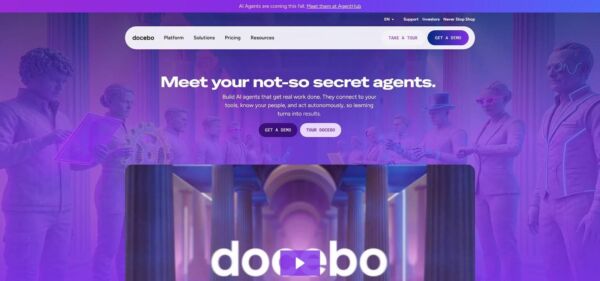
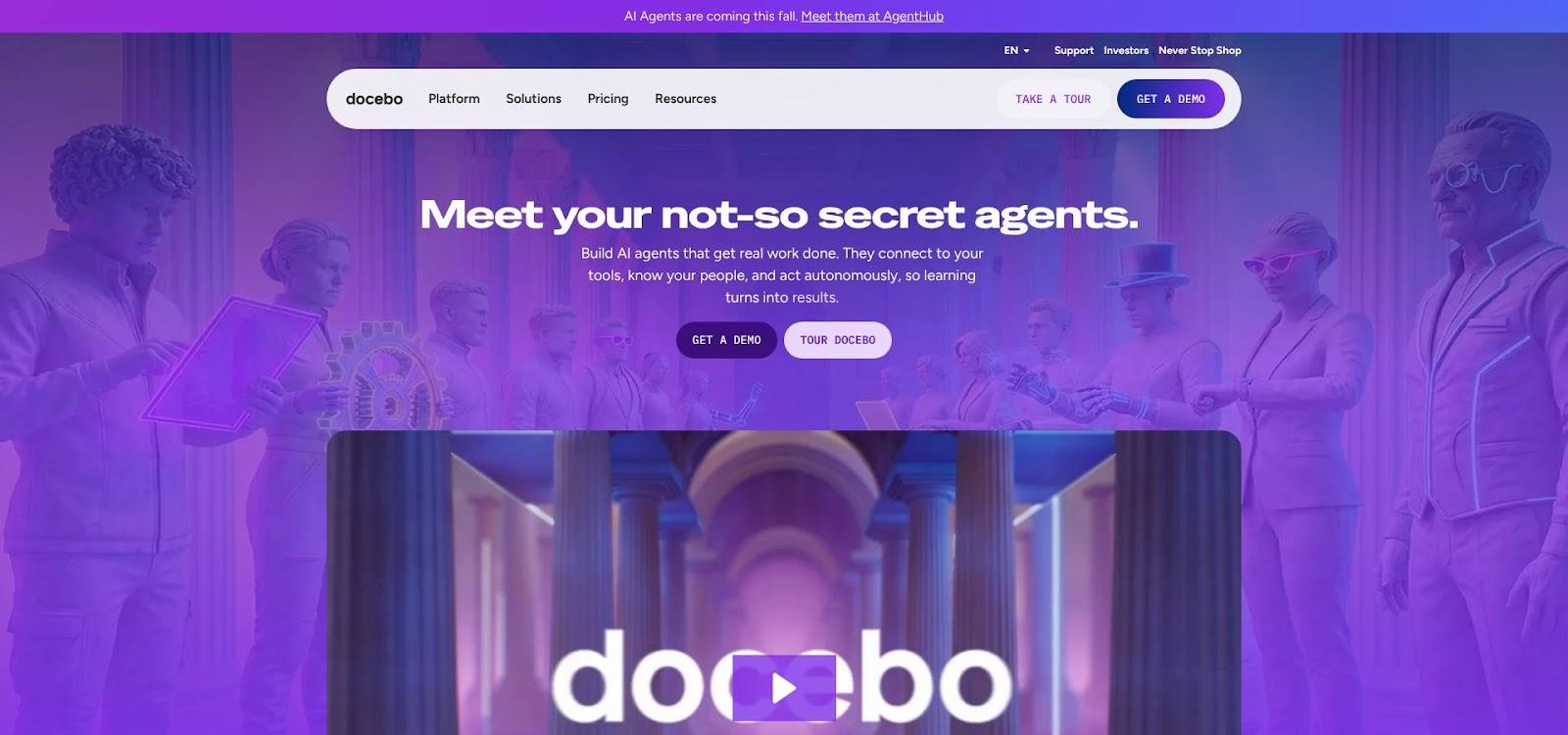
Docebo enterprise AI-powered learning analytics dashboard screenshot
Overview
Large organisations juggle dozens of job roles, thousands of learners, and leadership’s constant question: “Is this training moving our KPIs?” Docebo answers with an AI-first approach. Its Discover module tags every video, slide, and PDF you upload, then recommends content to each learner based on skills they lack. The experience feels closer to Netflix than a corporate course catalogue.
Analytics go deep. Admins build custom dashboards that pull data from training activity and, through integrations, business systems such as Salesforce. Need to connect product-enablement courses with regional sales lifts? Drag two widgets together and the graph appears. For data-driven teams proving ROI, that flexibility is gold.
Docebo also shines at scale. Global organisations launch multiple domains, each skinned for a different brand or subsidiary, while user provisioning flows from Workday or Azure AD. Throughout, the platform meets strict security standards, including ISO 27001 certification.
Complexity is the trade-off. Implementation can take weeks, and pricing sits firmly in enterprise territory. Yet for companies ready to treat learning as a strategic data asset, Docebo offers a feature stack that grows with ambition instead of capping it.
5. Absorb LMS: best for compliance and deep-dive reporting
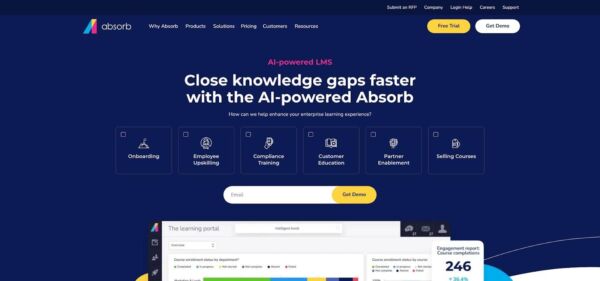
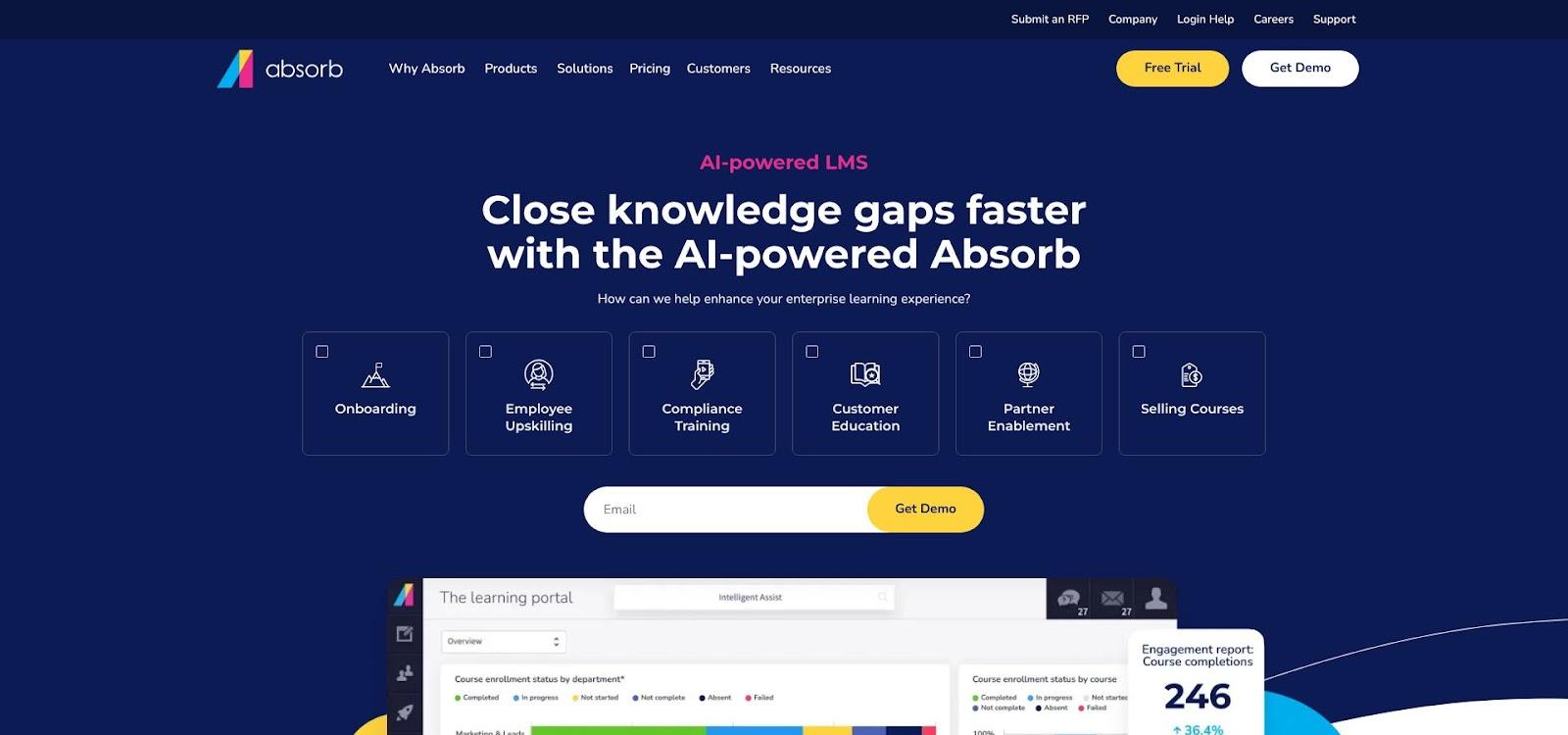
Absorb LMS compliance tracking and BI reporting screenshot
Overview
Absorb approaches learning like a well-run audit: every click is tracked, every certificate time-stamped, and every compliance rule surfaced before it turns into a headache. Yet the learner view is anything but bureaucratic. Clean tiles, eye-catching billboards, and a carousel layout invite users to explore rather than dodge training emails.
Admins unlock two power features. First is automated compliance management. Set renewal cycles, grace periods, and reminders once, and Absorb handles enrolments and escalations year after year. Second is Absorb Analyze, an embedded BI layer that turns raw activity logs into pivot-table magic. Drag fields, filter by geography, and share a live dashboard with the exec who keeps requesting ROI charts.
Security checks the right boxes, from SOC 2 certification to single sign-on with Azure AD or Okta. The platform also includes a native e-commerce module, so you can monetise a certification course today without bolting on Shopify tomorrow.
Cost sits in enterprise territory, especially when you add Analyze or the Engage gamification bundle. For organisations facing regulatory scrutiny or planning customer-facing certifications, Absorb’s blend of polished UX and audit-ready depth earns its price tag.
Comparing the top five at a glance
You now know the story behind each platform. Executive decisions often come down to crisp side-by-side facts. The table below distils the essentials: who each LMS serves best, where its analytics shine, and what budget range you will face.
|
LMS |
Best for |
Analytics highlight |
Notable AI feature |
Starting price* |
G2 rating** |
|
GoSkills |
SMBs that need speed and built-in content |
Lesson-level dashboards; real-time drill-downs |
Genie auto-builds courses from docs |
Free / $49 mo |
4.8 |
|
LearnUpon |
Mid-market firms training employees and customers |
Compliance and completion snapshots across portals |
Create+ turns slide decks into micro-lessons |
Quote (mid range) |
4.5 |
|
TalentLMS |
Start-ups on tight budgets |
Scheduled completion reports; quiz stats |
AI drafts descriptions and quiz items |
Free / $119 mo |
4.6 |
|
Docebo |
Global enterprises needing BI depth |
Custom dashboards; skills-gap heatmaps |
AI recommends content and tags assets |
Quote (high range) |
4.3 |
|
Absorb |
Regulated organisations and certification sellers |
Absorb Analyze BI module |
AI course recommendations |
Quote (mid-high range) |
4.6 |
-
Prices reflect entry tiers as of Q2 2026; enterprise quotes vary.
** Average user rating on G2, rounded to one decimal.
Use this grid as a quick filter. If analytics rank first for you, GoSkills or Docebo rise to the top. Watching every dollar? TalentLMS fits. Managing strict compliance? Absorb is the safer pick. The best choice is the one that meets both your data goals and your budget.
Buyer’s guide: match the LMS to your data story
Choosing an LMS is more like hiring a new team member than buying software. You want chemistry, capability, and proof it will pull its weight. Use the questions below as your interview script.
First, pin down your learning objective and metric. Are you chasing faster onboarding, airtight compliance, or revenue from a customer academy? Knowing the goal steers you toward deep analytics (GoSkills, Docebo) or iron-clad audit trails (Absorb).
Next, map who you will train today and tomorrow. Internal staff only? TalentLMS or GoSkills covers that need. Planning to educate partners and clients? Multi-portal options such as LearnUpon or Docebo handle external audiences without user-management chaos.
Consider admin bandwidth. Without a dedicated LMS owner, simplicity rules. TalentLMS and GoSkills shine here. A seasoned L&D team, however, can exploit the configurability of Docebo or Absorb to build sophisticated paths and dashboards.
Do not overlook integration gravity. Your HRIS, CRM, and BI stack already hold valuable data. Platforms with native connectors and open APIs prevent silo creep and unlock richer insights. That is another point for LearnUpon’s Salesforce tie-ins or Docebo’s large app marketplace.
Finally, pressure-test total cost. Licence fees are obvious, but factor in setup hours, support tiers, and any need to buy third-party content. A pricier quote sometimes saves money when it trims admin work or removes the need for separate authoring tools.
Answer these five questions honestly, and the “best LMS” for your neighbour becomes the perfect fit for you.
Conclusion
By focusing on clear objectives, audience needs, and data goals—and by weighing analytics depth against budget—you can choose an LMS that transforms learning into measurable business impact.