
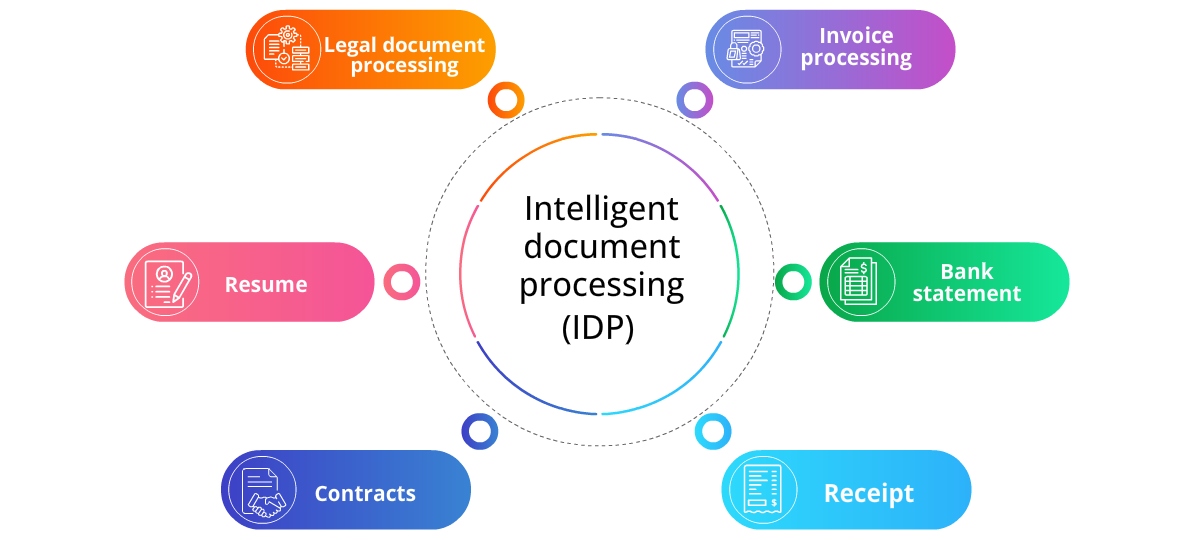
Organizations today face mounting pressure to process vast amounts of documentation while maintaining high accuracy standards and operational efficiency. Manual document handling often leads to costly errors, delayed workflows, and resource-intensive operations that drain productivity. Outsourced document processing presents a strategic solution by combining advanced technologies with specialized expertise to transform how businesses manage their information. The benefits extend far beyond simple cost savings, fundamentally reshaping operational capabilities in ways that directly impact competitive advantage and long-term sustainability.
Understanding the Challenges of Manual Document Management
Organizations that rely on manual document processing face a growing list of operational bottlenecks that directly impact productivity and accuracy. Data entry errors occur frequently when employees manually transcribe information from physical or digital documents into business systems. These mistakes cascade through workflows, creating costly discrepancies in financial records, customer accounts, and compliance documentation.
Manual processing also consumes significant time resources. Staff members spend hours sorting, categorizing, and filing documents instead of focusing on strategic tasks. As document volumes increase, businesses struggle to scale their operations without proportionally expanding their workforce.
Paper-based systems create retrieval challenges. Locating specific documents requires physical searching through filing cabinets or digital folders, delaying decision-making processes. Version control becomes problematic, leading to confusion about which document represents the most current information.
How Outsourced Document Processing Improves Accuracy and Efficiency
Outsourced document processing leverages specialized technologies and trained personnel to minimize errors inherent in manual data handling. Professional service providers implement advanced optical character recognition (OCR) and machine learning algorithms that accurately extract data from various document formats. These systems maintain consistency across high-volume processing tasks, eliminating human fatigue factors that contribute to mistakes.
Dedicated teams follow standardized workflows and quality control protocols, ensuring uniform accuracy rates. Multi-tiered verification processes catch errors before they enter business systems, reducing costly corrections downstream.
Automation accelerates processing speeds considerably, enabling organizations to handle larger document volumes without proportional staff increases. Service providers continuously update their technology stacks and train personnel on industry best practices, delivering improvements that in-house teams struggle to maintain amid competing priorities.
Reducing Operational Costs and Administrative Workloads Through Outsourcing
Beyond accuracy improvements, document processing outsourcing delivers considerable financial benefits by converting fixed labor costs into variable expenses. Organizations eliminate expenses associated with hiring, training, and retaining full-time staff dedicated to document management tasks. Infrastructure investments in scanning equipment, software licenses, and storage systems become unnecessary when transferred to specialized providers.
Administrative workloads decrease notably as external teams handle data entry, document classification, indexing, and quality control. Internal staff redirect their focus toward core business functions that generate revenue rather than routine paperwork processing.
Scalability becomes straightforward, companies adjust service levels based on fluctuating document volumes without staffing constraints. The combination of reduced overhead, minimized technology investments, and optimized resource allocation typically produces cost savings ranging from 30-50% compared to in-house operations.
Improving Data Quality With Standardized Workflows and Quality Control
Standardized workflows form the foundation of superior data quality in outsourced document processing environments. Reputable providers implement systematic procedures that guarantee consistent data capture, validation, and entry across all documents. Each processing step follows predetermined protocols, minimizing variations that typically lead to errors.
Quality control mechanisms operate at multiple checkpoints throughout the workflow. Automated validation tools detect formatting inconsistencies, missing fields, and logical discrepancies before human review. Skilled operators then perform manual verification, comparing extracted data against source documents to identify subtle errors that automated systems might overlook.
Multi-tier review processes catch mistakes early, preventing error propagation downstream. Performance metrics track accuracy rates, processing times, and error types, enabling continuous improvement. This combination of standardization and rigorous quality control delivers superior data integrity compared to ad-hoc internal processing methods.
Strengthening Data Security and Regulatory Compliance in Outsourced Operations
While standardized workflows protect data quality, organizations must equally prioritize the protection of sensitive information throughout the processing lifecycle. Reputable outsourcing providers implement multi-layered security frameworks including encryption protocols, access controls, and secure data transmission channels. These measures safeguard confidential documents from unauthorized access and potential breaches.
Compliance with industry-specific regulations such as HIPAA, GDPR, and SOC 2 remains non-negotiable. Established providers maintain certifications demonstrating adherence to these standards through regular audits and assessments. They implement role-based permissions, audit trails, and data retention policies aligned with regulatory requirements.
Organizations should evaluate providers based on their security infrastructure, compliance certifications, and incident response protocols. Service level agreements must explicitly define data handling procedures, breach notification timelines, and liability parameters, ensuring accountability throughout the outsourcing partnership.
Choosing the Right Outsourcing Partner for Your Business Needs
Selecting an outsourcing partner requires systematic evaluation of capabilities that extend beyond basic security certifications and compliance frameworks. Organizations should assess the provider’s technological infrastructure, including document management systems, optical character recognition accuracy rates, and integration capabilities with existing enterprise software.
Industry-specific experience proves critical, as vendors familiar with particular document types and regulatory requirements deliver superior results with shorter onboarding periods. Scalability determines whether the partnership can accommodate fluctuating processing volumes and business growth.
Service level agreements must specify clear metrics for turnaround times, accuracy thresholds, and error resolution protocols. Financial stability and client retention rates indicate reliability and service quality. Additionally, evaluating the provider’s workforce training programs, quality control processes, and disaster recovery plans guarantees consistent performance and business continuity throughout the partnership duration.
Measuring Performance and Scaling Document Operations for Long-Term Growth
Effective measurement systems form the foundation for optimizing outsourced document processing operations after establishing the partnership. Organizations should track key performance indicators including processing speed, accuracy rates, turnaround times, and error frequencies. Regular performance reviews enable data-driven decisions about workflow improvements and resource allocation.
Scaling operations requires flexible infrastructure that accommodates volume fluctuations without compromising quality. Businesses should establish clear communication protocols with their outsourcing partner to address capacity needs proactively. Implementing automated monitoring tools provides real-time visibility into processing metrics and identifies bottlenecks early.
Long-term growth depends on continuous improvement cycles. Companies must regularly assess whether current processes align with evolving business objectives. Quarterly strategy sessions help recalibrate performance targets, adjust service levels, and explore automation opportunities that enhance operational efficiency while maintaining cost-effectiveness.