
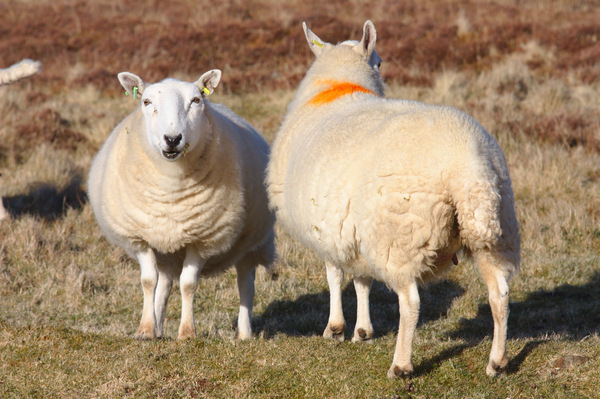
Successful sheep farming depends on careful planning, and one of the most important parts of flock management is tracking pregnancy and preparing for lambing. Knowing when ewes are likely to give birth helps farmers organize feeding schedules, monitor animal health, prepare lambing areas, and ensure that adequate assistance is available when needed.
Traditionally, farmers have relied on breeding records, calendars, and their experience to estimate lambing dates. Today, digital tools and artificial intelligence (AI) can make this process more organized by helping interpret breeding information, calculate expected delivery dates, and manage reminders.
A sheep gestation period calculator is a useful starting point for estimating when a ewe may lamb. When combined with accurate records and AI-supported farm management, it can help farmers make more informed decisions throughout the breeding season.
Understanding the Sheep Gestation Period
The gestation period is the time between conception and birth. In sheep, pregnancy typically lasts approximately 147 days, or around five months. However, the actual duration varies between individual ewes and can be influenced by factors such as breed, litter size, nutrition, and other biological differences.
Some ewes may lamb a few days earlier or later than expected, so a calculated date should always be treated as an estimate rather than a guaranteed delivery date.
For example, if a ewe is bred on September 1 and conceives around that time, adding approximately 147 days gives an estimated lambing date near January 26 of the following year. The precise date depends on the calendar year and the assumptions used in the calculation.
This estimate gives farmers a useful planning window, allowing them to prepare supplies, organize labor, and monitor the ewe more closely as lambing approaches.
How a Sheep Gestation Period Calculator Works
A sheep gestation period calculator simplifies the process of estimating lambing dates. Most calculators require the date of mating or breeding and use an average gestation length to calculate an expected delivery date.
The basic calculation is:
Expected lambing date = breeding date + approximately 147 days
Some tools allow farmers to adjust the assumed gestation length. This can be useful when they have reliable flock-specific records suggesting that their ewes tend to lamb earlier or later than the general average.
For example, if a ewe was bred on October 10, adding 147 days gives an estimated lambing date in early March of the following year.
A calculator reduces manual date-counting errors and makes it easier to repeat the same process for multiple animals. For larger flocks, this can save time and help keep records consistent.
However, the result is only as reliable as the information entered. If the ewe was exposed to a ram over several days or weeks, the actual conception date may be uncertain. In that case, the estimated lambing date should be treated as a range rather than a single fixed day.
How Artificial Intelligence Can Improve Lambing Predictions
Artificial intelligence can extend the usefulness of traditional pregnancy calculators by helping farmers organize and interpret more detailed information.
A basic calculator performs a straightforward date calculation. An AI-supported system may also analyze historical breeding records, generate reminders, identify missing information, and help organize lambing schedules.
1. Analyzing Breeding Records
Accurate breeding records are essential for predicting lambing dates. Farmers may record the date a ram joined a group of ewes, the dates of observed matings, the ewe’s identification number, and any relevant reproductive history.
AI tools can help organize these records and identify which animals are approaching their expected lambing periods.
For example, a farmer managing 80 ewes could use a digital record system to sort animals by expected lambing date. An AI assistant could then summarize which ewes are due to lamb in the coming week and highlight records that lack a confirmed mating date.
This makes it easier to prioritize observation and preparation.
2. Creating Personalized Lambing Estimates
Not every ewe has exactly the same gestation length. With sufficient reliable historical data, a farm management system could compare previous lambing dates and breeding records to help refine planning estimates.
For example, if a farmer has consistently recorded breeding and lambing dates for a particular flock, those records may reveal patterns that are useful for scheduling.
However, historical patterns cannot establish the exact conception date or guarantee when an individual ewe will lamb. Any personalized estimate should supplement, rather than replace, the standard gestation calculation and appropriate animal-health guidance.
3. Automating Lambing Reminders
One of the most practical uses of AI is helping farmers prepare for important dates.
A system connected to a flock calendar could generate reminders as expected lambing dates approach. These reminders might prompt the farmer to inspect lambing pens, check bedding, review supplies, and increase observation of ewes nearing term.
The system could also group reminders by day or week, making it easier to organize work during busy lambing seasons.
These features generally require a compatible farm management application, calendar, or reminder service. A standalone calculator may only provide the estimated date without sending notifications.
4. Supporting Flock-Level Planning
When several ewes are expected to lamb within the same period, managing them individually can become difficult.
AI-supported scheduling tools can help group animals by their estimated lambing windows, allowing farmers to plan staff availability, pen assignments, and routine checks.
For example, a farm expecting multiple lambings over a two-week period could use digital records to identify the busiest days and prepare resources accordingly.
This can improve organization and reduce the likelihood of overlooking animals whose expected dates are approaching.
Using a Calculator to Plan for Lambing
A reliable workflow combines a gestation calculator with consistent recordkeeping.
Step 1: Record the breeding date. Enter the observed mating date if known. If the ewe was exposed to a ram for an extended period, record the exposure window.
Step 2: Calculate the expected date. Use an average gestation period of approximately 147 days as an initial estimate.
Step 3: Record the result. Store the estimated lambing date alongside the ewe’s identification number and breeding information.
Step 4: Establish a preparation window. Schedule reminders before the expected date so there is time to prepare equipment, clean lambing areas, and review the ewe’s management needs.
Step 5: Monitor the ewe. Observe her condition and behavior as lambing approaches. Calendar estimates should not be used as a substitute for recognizing signs of labor or illness.
Step 6: Update the records. After lambing, record the actual birth date and any relevant observations. These records can support better planning for future breeding seasons.
This approach works for small flocks as well as larger operations. The main difference is the amount of automation needed to manage the records.
Important Factors That Can Affect Lambing Estimates
Although the average gestation period is a useful guide, several factors can influence how closely an estimated date matches the actual birth date.
Uncertain Conception Dates
When a ewe has access to a ram for several weeks, the precise mating date may be unknown. Calculating from the first day of ram exposure could produce an estimate that is too early.
In these situations, use the known exposure period to establish a possible lambing window. Additional reproductive information may help narrow the estimate.
Breed and Individual Variation
Gestation length can vary among breeds and individual animals. Flock-specific records may provide useful context, but farmers should avoid assuming that every ewe will follow the same pattern.
Litter Size
Ewes carrying multiple lambs may differ in gestation length from those carrying a single lamb. However, litter size alone cannot reliably predict an individual ewe’s delivery date.
Health and Nutrition
Nutrition and overall health are important throughout pregnancy. A calculator cannot assess whether a ewe is healthy or whether her pregnancy is progressing normally.
Farmers should follow appropriate veterinary and flock-management guidance, particularly when an animal shows signs of distress or other concerning symptoms.
Combining AI With Traditional Sheep Management
Technology works best when it supports practical livestock care rather than replacing it.
A digital system can calculate dates, organize records, and remind farmers when preparation is due. Direct observation remains essential for assessing an animal’s condition and identifying possible complications.
Ultrasound scanning, when performed and interpreted appropriately, can help confirm pregnancy and provide information about litter size. A veterinarian or qualified livestock professional can advise on suitable examination methods and the interpretation of findings.
AI tools should not be treated as diagnostic systems unless they have been specifically developed and validated for that purpose. Even then, veterinary judgment remains important when health concerns arise.
Farmers should also protect their records by choosing digital tools with appropriate privacy and data-management practices, particularly when sharing information across a team or with external service providers.
Common Mistakes to Avoid
Several simple errors can reduce the usefulness of lambing-date estimates:
- Treating the estimated date as exact: The average gestation period is a guide, not a guarantee.
- Entering an incorrect breeding date: Incorrect input produces an incorrect estimate.
- Ignoring extended ram exposure: A longer mating window creates greater uncertainty about conception.
- Failing to maintain records: Missing dates make future planning less reliable.
- Relying entirely on automation: Digital reminders cannot replace animal observation or professional veterinary advice.
Avoiding these mistakes helps farmers use technology more effectively while maintaining good standards of flock care.
Conclusion
Artificial intelligence is creating new opportunities to improve sheep breeding management, from organizing flock records to automating reminders and supporting lambing schedules. Although the underlying gestation calculation remains straightforward, combining it with accurate data and digital planning can make the process more efficient.
A sheep gestation period calculator provides a practical estimate based on the breeding date and an average gestation length of approximately 147 days. AI-supported tools can build on that foundation by helping farmers track multiple ewes, organize preparation tasks, and identify upcoming lambing periods.
The most effective strategy combines accurate records, reliable calculations, attentive animal care, and professional veterinary guidance when necessary. By using these resources together, sheep farmers can approach lambing season with better preparation and a clearer understanding of their flock’s needs.