
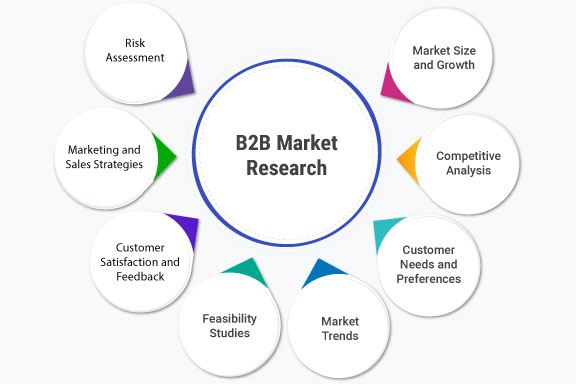
Market research used to involve collecting information from industry reports, company directories, surveys, and financial statements. While these sources remain valuable, they often provide an incomplete picture of how businesses operate today.
A company might be listed under the same industry classification for years, even as it introduces new products, enters different markets, or changes its technology. Traditional research methods can struggle to keep up with these developments.
Machine learning is changing that process. By analyzing large datasets, identifying patterns, and continuously processing new information, it helps businesses understand their markets with greater detail and efficiency.
The result is a shift from researching companies based mainly on what they say about themselves to examining what their data reveals about their activities.
Why Traditional B2B Market Research Falls Short
Traditional business databases typically organize companies using information such as industry, location, employee count, and annual revenue.
These details are useful for understanding the general characteristics of a business, but they rarely explain its operational requirements or purchasing priorities.
Consider two companies with similar employee counts and revenue. One might operate entirely through physical stores, while the other manages a large ecommerce operation with international shipping.
Although their traditional business profiles look similar, their technology requirements, logistics challenges, and potential purchasing needs could be very different.
Another difficulty is data accuracy. Businesses regularly change addresses, appoint new decision-makers, adopt different technologies, and expand into new territories.
When research relies on information collected several months earlier, these changes may go unnoticed.
Machine learning offers ways to address these limitations by processing more diverse information and detecting changes across multiple sources.
How Machine Learning Extracts Insights From Business Data
Machine learning algorithms can identify relationships within datasets that would be difficult or time-consuming to discover manually.
Several techniques are particularly useful for understanding B2B markets.
Natural Language Processing
Natural language processing (NLP) allows computers to analyze written content and extract meaningful information.
In B2B research, NLP can help interpret company websites, product descriptions, news articles, and other publicly available business information.
For example, a company might not explicitly identify itself as a logistics technology provider. However, its website may describe route optimization, delivery tracking, and warehouse management products.
An NLP system can analyze these descriptions and help classify the company based on its actual activities.
This creates opportunities to build more detailed business profiles than traditional industry categories alone provide.
Predictive Analytics
Predictive models use historical patterns to estimate future outcomes.
In market research, these models can help identify which businesses are more likely to enter a new market, adopt certain technologies, or respond to particular commercial offers.
For example, a software provider might examine historical customer characteristics to understand which combinations of company size, technology infrastructure, and business activity are associated with successful sales.
These patterns can then inform future prospect prioritization.
However, predictions are probabilities rather than guarantees. Model performance depends on the quality of the underlying data and whether historical relationships remain relevant.
Clustering and Business Segmentation
Clustering algorithms group businesses based on shared characteristics without requiring every category to be defined beforehand.
Instead of segmenting companies only by industry or revenue, researchers can examine combinations of operational and behavioral data.
An analysis might identify a group of businesses that operate online stores, use similar payment technologies, and ship internationally.
These businesses may share commercial requirements despite belonging to different traditional industry classifications.
This approach helps reveal market segments that would otherwise remain hidden.
The Importance of Data Quality in Machine Learning
A sophisticated model cannot compensate for fundamentally unreliable information.
Duplicate records, outdated company details, missing fields, and inconsistent classifications can all distort analytical results.
For example, if a business appears under several variations of its name, a model may incorrectly treat those records as separate companies.
Similarly, outdated employee figures or technology information can lead to inaccurate customer segmentation.
This is why data preparation remains one of the most important stages in a machine learning workflow.
Organizations can improve their datasets by supplementing incomplete company profiles with verified business characteristics, contact information, and technology data.
The goal is not simply to collect more information. It is to create records that are accurate, consistent, and useful for analysis.
A reliable data preparation process should include duplicate detection, field standardization, source validation, and regular updates.
Researchers should also record where information originated and when it was last verified.
Without these controls, automated systems risk making confident recommendations based on outdated assumptions.
Real-World Applications of AI in B2B Market Research
Machine learning has practical applications across several business functions, from identifying potential customers to understanding competitive markets.
Identifying High-Potential Business Segments
Businesses frequently struggle to determine which market segments deserve the most attention.
Machine learning can help by examining characteristics shared by existing customers and comparing them with a broader population of companies.
Suppose a payment technology provider discovers that its strongest customers are mid-sized ecommerce businesses operating in multiple countries.
Rather than searching for companies based only on employee count or revenue, the provider could analyze ecommerce technologies, payment infrastructure, and international operations.
This produces a more specific understanding of its target market. Businesses can also apply these insights to ai b2b lead generation, using company data and predictive analytics to identify relevant prospects and prioritize outreach more effectively.
Monitoring Competitor Activity
Competitor research traditionally involves reviewing company websites, product announcements, and industry publications.
AI-assisted analysis can make this process more systematic.
Algorithms can examine changes in website content, product descriptions, hiring activity, and publicly visible technology adoption.
These observations may reveal that a competitor is expanding into a new industry or investing in a different product category.
Of course, such signals require interpretation. A new job posting or website update does not necessarily confirm a strategic change.
Human review remains essential for distinguishing meaningful developments from routine business activity.
Improving Customer Segmentation
Traditional segmentation often relies on broad categories that overlook important differences between companies.
Machine learning allows businesses to use more detailed combinations of variables.
For example, a cybersecurity provider could segment potential customers according to company size, digital infrastructure, industry requirements, and publicly identifiable technology characteristics.
These segments may help marketing and sales teams develop more relevant educational content and outreach strategies.
The underlying benefit is better alignment between the company’s offering and the specific needs of its audience.
Challenges Businesses Should Consider
Despite its advantages, applying machine learning to B2B market research introduces several practical challenges.
Data privacy and compliance are important considerations, especially when research includes identifiable individuals or contact information. Organizations must establish appropriate legal bases for processing personal data and respect applicable privacy requirements.
Algorithmic bias can also influence results. If a training dataset disproportionately represents certain industries, regions, or company sizes, a model may overlook valuable opportunities elsewhere.
Model explainability presents another challenge. Business users need to understand why a system assigns a particular company to a segment or identifies it as a promising opportunity.
A prediction is more useful when the factors behind it can be examined and challenged.
Finally, ongoing maintenance is necessary. Markets evolve, business behavior changes, and datasets become outdated. Models must be evaluated regularly to ensure their recommendations remain reliable.
Organizations adopting these systems should treat machine learning as a tool that supports informed judgment rather than a replacement for it.
What Comes Next for AI-Driven Market Research?
The next stage of B2B market research will likely involve closer integration between data collection, machine learning, and everyday business workflows.
Instead of conducting research as an isolated project, businesses can build systems that continuously update their understanding of markets and customers.
For example, an organization could combine regularly refreshed company data with segmentation models and automated reporting.
When significant changes occur, analysts could investigate the underlying evidence and decide whether their market strategy needs adjustment.
Advances in language models may also make business intelligence more accessible to employees without specialized data science skills.
Rather than writing database queries or creating complex dashboards, users may increasingly ask natural-language questions about customer segments, market conditions, and company characteristics.
However, convenient interfaces do not eliminate the need for dependable data, transparent methodologies, and responsible oversight.
The organizations that benefit most will be those that combine technical capabilities with strong data governance and a clear understanding of their business objectives.
Final Thoughts
Machine learning is reshaping B2B market research by making it possible to analyze larger datasets, discover meaningful patterns, and respond more efficiently to changing market conditions.
Techniques such as natural language processing, predictive analytics, and clustering can provide deeper insights into company behavior than traditional classifications alone.
Still, the effectiveness of these methods depends heavily on data quality, thoughtful implementation, and human interpretation.
As AI becomes more integrated into business research, the real competitive advantage will come not from collecting the largest amount of information, but from turning reliable data into decisions that are useful, explainable, and relevant.