
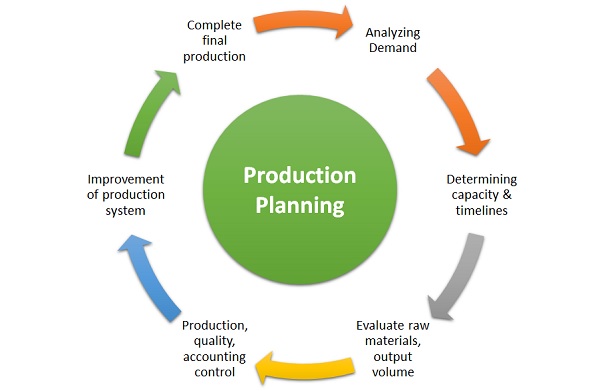
AI agents can improve production planning and predictive maintenance by continuously analyzing operational data, predicting disruptions, and recommending or executing actions across manufacturing systems. They help manufacturers move from reactive decisions and static schedules to more adaptive, data-driven operations.
Unlike conventional automation, AI agents can monitor changing conditions, coordinate information across systems, and determine the next best action within predefined operational and safety controls.
How Do AI Agents Improve Production Planning?
Production planning requires manufacturers to balance demand, materials, equipment capacity, labor availability, delivery dates, and operational constraints. Traditional planning systems often rely on fixed rules and periodic data updates, making it difficult to respond quickly when conditions change.
AI agents can connect with ERP, MES, warehouse management, supply chain, and shop-floor systems to create a real-time view of production operations. They can analyze incoming orders, inventory levels, machine availability, supplier delays, and workforce capacity before recommending an updated production plan.
For example, if a supplier delays a critical component, an AI agent can identify affected orders, evaluate available inventory, and recommend an alternative production sequence. It may also notify planners, reserve substitute materials, or reschedule lower-priority work based on established business rules.
AI agents can support production planning by:
-
Creating capacity-aware production schedules
-
Identifying material and resource constraints
-
Adjusting schedules when demand changes
-
Recommending optimal job sequences
-
Reducing changeover time and production bottlenecks
-
Coordinating decisions across plants and production lines
Planners retain control over high-impact changes, while routine scheduling adjustments can be automated within approved limits.
How Do AI Agents Strengthen Predictive Maintenance?
Predictive maintenance uses equipment data to identify potential failures before they disrupt production. AI agents extend this capability by connecting failure predictions with maintenance planning and operational workflows.
The agents can monitor vibration, temperature, pressure, energy consumption, error codes, maintenance history, and equipment performance. When abnormal behavior is detected, they can assess the likelihood of failure, estimate its operational impact, and determine how urgently maintenance is required.
Instead of generating another isolated alert, an AI agent can:
-
Identify equipment showing early failure signals
-
Estimate the remaining useful life of components
-
Compare the risk of failure with production priorities
-
Recommend the best maintenance window
-
Check technician and spare-parts availability
-
Create a maintenance work order
-
Escalate critical conditions to plant teams
This helps manufacturers avoid both unexpected breakdowns and unnecessary preventive maintenance.
How Do Production Planning and Maintenance Work Together?
The greatest value emerges when AI agents connect production planning with predictive maintenance. If a machine is likely to fail, the agent can adjust the production schedule, move work to another line, reserve replacement parts, and arrange maintenance during a lower-impact period.
This coordinated approach reduces unplanned downtime while protecting delivery commitments and production targets.
Conclusion
AI agents improve manufacturing operations by turning operational data into coordinated action. They help manufacturers build more responsive production plans, anticipate equipment failures, and align maintenance activities with production priorities.
Successful implementation requires reliable data, integration with ERP and MES environments, human approval controls, clear escalation rules, and continuous performance monitoring. With these foundations, AI agents can help manufacturers increase equipment availability, improve schedule adherence, and operate more efficiently.