
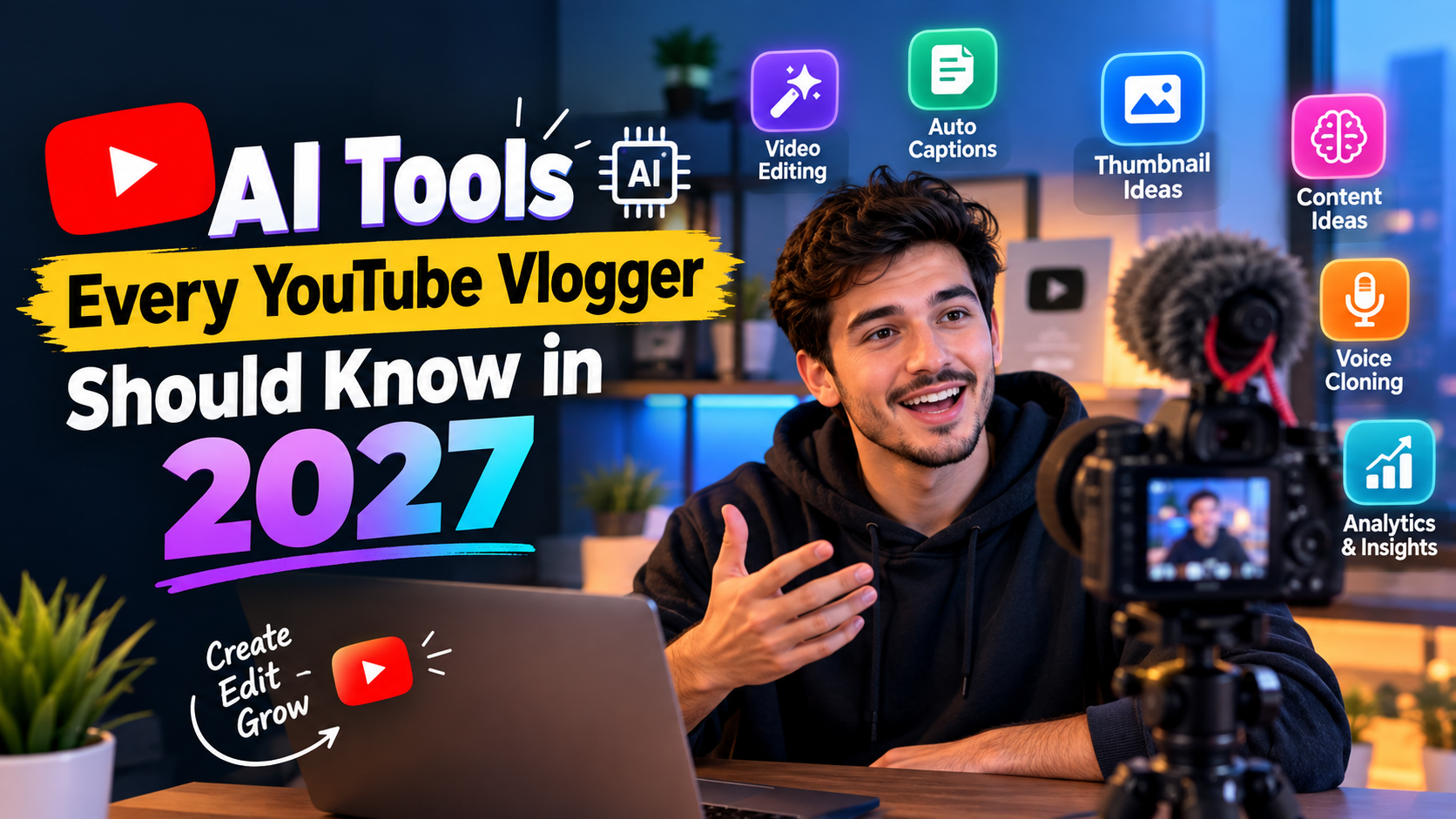
The same go-getter attitude that worked on YouTube five years ago is not in vogue in 2027. The algorithms work faster, attention spans are lower, and the game of content to be uploaded daily has become greater. In case you’re a vlogger and person who simply will’t get more than everything back and forth with everything else, it’s no longer viable to perform everything by hand, that’s what? That is editing, scripting, creating a thumbnail design, the community handling and so forth. What the creators racing this year are not always most talented, or the most charismatic in front of the camera. It’s the folks who’ve determined which aspects of the process can be delegated to AI and which require their personal time and effort, such as storytelling, interacting with audiences and being a consistent presence.
This has been quite a few months that I have been testing out tools through every phase of a vlog’s production and up to engagement following the upload.The conclusion of the last few months of testing across the vlogging continuum from pre-production to post-upload engagement is clear. It’s not about the tools they use, it’s about who’s using the right five, or six, vloggers are using the right five tools, in-depth, not the 20 more-or-less-finished! tools. These are the components of the vlogging workflow that you’ll want to include in 2027.
1. AI Chatbots AI Audio Transcription
For the most “unscripted” vlogs, at least, there is a loose structure to them. As long as you get it in your head and rambling for 15 minutes, hoping something worthwhile comes out, is a great way to waste many hours of time that you don’t have! There are tools such as ChatGPT, Claude, and dedicated video-script generators that can help you generate a beat sheet from a general concept.There are some tools, like ChatGPT, Claude, or specialized video-hook generators, that can help you create a beat script from a basic idea, such as “day in my life as a freelance photographer”. It’s not that AI can write your character for you – it’s getting rid of the void, leaving room to improvise.
2. Smart Editing Software
Chasing the time-saver – editing – remains the biggest blocker for most vloggers, and AI has jumped the furthest there. With the help of AI tools such as Descript, Adobe’s Premiere Pro AI enhancements and CapCut, handling can now be done automatically with tools that now make jump cuts, removal of filler words, as well as even rough colour grading possible. In particular, Descript has emerged as a go-to solution for editing video using a transcript, allowing you to trim a sentence out of the text, and the video snippet that was cut will go too. If you create three videos per week, the rate is not out of the question for them.
3. Thumbnail Optimization and Title Optimization
Might have the best video on the planet if the thumbnail fails to hold his attention, who cares? But AI-powered tools such as Canva’s Magic Studio or ThumbnailTest take the guesswork out of creating a clickable thumbnail by analyzing all that click-through data and recommending color schemes, expressions, and text placements that are statistically more likely to entice a click in your niche. Some tools now even automatically test thumbnails in small audience segments before reaching a larger audience and then settling on one. Add AI title generation that considers search intent and keyword competitiveness and you’ve bridged one of the largest chasms in ‘good content’ and ‘watched content.’
4. The following tools repair audio and voice recordings
Nobody wants to watch your videos if they don’t hear as well as they would like. Usually, doing such tasks as removing background noise, room echo, and wind noise requires real time audio engineering experience, but with AI tools such as the Enhance Speech feature in Adobe Podcast, or Krisp, it will take just seconds to get the job done. The one area that most lifestyle and travel bloggers may rely on more than any of the categories on this list is right with walking, driving or in the crowd where you might have to vlog.
5. Community & Comment Management Tools
This is a post-up category that most vloggers don’t even think about. YouTube is no longer only marking pages by engagement – the algorithm has grown more advanced to consider the back-and-forth in your comment sections. However, once a channel reaches a certain size, it becomes impractical not to have to read all the comments myself. This is where a good youtube comment finder comes into its own. A comment finder tool brings up the comments likely to engage in conversation or give you insight into what the audience cares about more of, as opposed to rotating through hundreds of comments looking for maybe a handful of (funny) questions or reactions. You can increase the retention of your next video by quick and “visible” (visible means visible to the algorithm) reply to the right comments – not all of them – and you will certainly be rewarded with better retention results on your subsequent upload per the algorithm’s logic.
6. Community Tab Asset Tools
One part of the YouTube programme that possibly isn’t getting used as much as it should, though, is the Community tab – particularly for vloggers who use it to upload polls, behind-the-scenes photos or teaser images between uploads. The issue that YouTube does not have an easy method to keep that content once it has been uploaded, and there’s no way to save the images your audience seems to love, whether you’re looking to master repurpose and republish them on Instagram or create a highlight reel or archive your own best moments on the platform. This is where a youtube community image downloader comes in handy. It allows you to save the images you have posted in your Community, and use them the next time for your other posts without having to retouch them each time or hire someone else to do it for you. When video blogging is not an afterthought but a viable second content channel for vloggers, being able to archive and repurpose the visual content be of surprise to them, as much time as a month of consistent vlog postings saves them.
7. Toolitikken til analytikk og trend forutsigelse
Last but not least, if you’re looking to set up a 2027 vlogging project, AI-powered analytics is an essential component. The new native YouTube Studio has been enhanced, but third-party apps such as TubeBuddy and VidIQ now add predictive modeling components to your data to alert you to which topics are “buoying up in your niche” and when a topic is likely to be trending up, and which formats are “exhausting your audience.” Checking and adjusting on these signals on a weekly basis – not when your video isn’t getting the traction you need – make for subtle changes as opposed to major swings and swings back, which can confuse your most loyal audience.
Putting It Together
None of these tools is a shortcut to the real knack of being a good vlogger: turning up new, sincere you, moving to the aid of a story, and nurturing a relationship with an audience over time. They do what they do to take down the friction off that work. A scripting tool prevents you from being lost in front of a blank page. Editing Software brings your raw footage to published in less time. Thumbnail tools ensure that people DO click. No matter where you’re shooting, in a food court for example, using audio cleanup will make you sound like a pro. Then on the engagement side, a nice YouTube comment finder coupled with a YouTube image downloader for community uploads means you can truly engage with your audience rather than just talk at them.
Those who succeed in 2027 aren’t the ones who are trying to use the latest AI tool. They’re the ones who’ve gotten some lean, reliable stack going around the very limited number of tools that help them with something they’ve identified as a real pain in their process: so they spend the extra time, creating videos people want to see, and are happy with the results.