
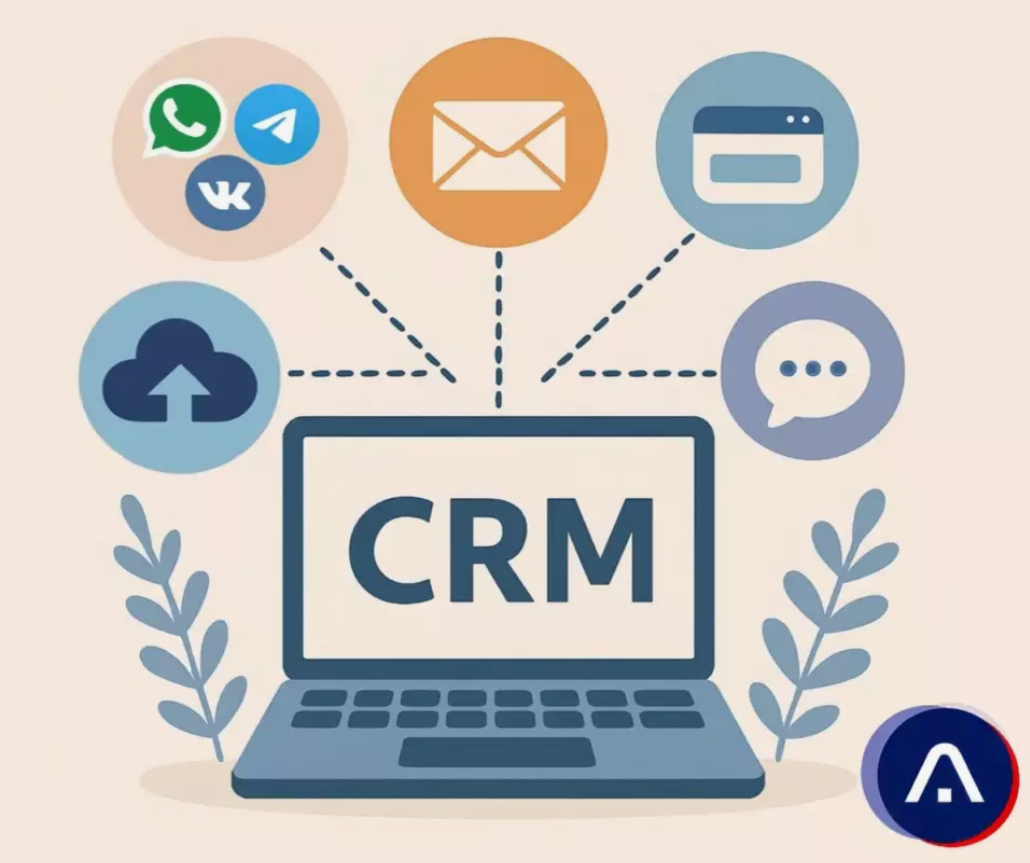
A sales development rep opens their inbox to 140 unqualified leads from last week’s campaign. By the time they’ve manually reviewed each one—checking company size, browsing LinkedIn profiles, cross-referencing email engagement—the best prospects have already been contacted by a faster competitor. This bottleneck has defined B2B sales operations for years, but it’s now being resolved by a fundamentally different approach. A smart lead management system powered by AI no longer waits for a human to review, score, and route each lead. It does this continuously, in real time, at a scale no sales team could match manually. This article breaks down exactly how CRM AI assistants are replacing manual qualification in 2026, what tasks they now automate, and how sales teams should implement this shift without losing control over data quality and judgment.
Why Is Manual Lead Qualification Becoming Obsolete?
Manual lead qualification is becoming obsolete because it can’t match the speed, consistency, or scale that modern lead volumes demand. Reps reviewing leads by hand introduce delays, apply inconsistent criteria, and hit a hard capacity ceiling—while a smart lead management system processes the same signals instantly and without fatigue.
The Speed Problem
Response time is one of the strongest predictors of whether a lead converts into a real conversation. A lead who fills out a demo request form expects contact soon after, not a day or two later once a rep works through a backlog. Manual qualification depends entirely on rep availability, which means leads submitted overnight, during busy periods, or outside business hours often sit untouched until someone has time to review them.
The Consistency Problem
Ask five reps what makes a lead “qualified,” and it’s common to get five different answers. One rep might weigh company size heavily; another might prioritize job title or recent website activity. This subjectivity means identical leads can be scored, prioritized, or even dismissed differently depending on who happens to review them. Over time, this inconsistency erodes trust in whatever qualification process exists and makes it difficult to diagnose why certain leads convert while similar ones don’t.
The Scalability Problem
Marketing teams have gotten significantly better at generating volume—through content, paid campaigns, webinars, and outbound sequences—but sales headcount rarely grows at the same rate. The result is a widening gap between how many leads arrive and how many a team can manually review with any real diligence. Reps end up spending hours qualifying prospects instead of having sales conversations, which is a poor use of the most expensive resource on the team: rep selling time.
What Is a CRM AI Assistant and How Does It Qualify Leads?
A CRM AI assistant is a machine learning-powered feature embedded in a smart lead management system that automatically analyzes behavioral, firmographic, and engagement data to score, prioritize, and route leads without manual review. It replaces subjective human judgment with a consistent, data-driven qualification process that runs continuously in the background.
Unlike a chatbot that interacts directly with a lead, a CRM AI assistant typically works behind the scenes, pulling data from every touchpoint a lead has had with the business and converting that activity into an actionable score or recommendation.
Core Data Points AI Assistants Analyze
- Website and content engagement — pages visited, time spent, resources downloaded, and repeat visits
- Email interaction history — open rates, click behavior, and reply sentiment across campaigns
- Firmographic fit — company size, industry vertical, job title, and seniority relative to the ideal customer profile
- Historical conversion patterns — similarities between the current lead and previously closed-won or closed-lost accounts
- Communication recency and frequency — how recently and how often a lead has engaged, which often signals active buying intent
How AI Scoring Differs from Traditional Lead Scoring Rules
Traditional lead scoring relies on static rules set manually by a sales or marketing team—for example, assigning 10 points for a demo request or 5 points for a whitepaper download. These rules stay fixed until someone manually updates them, regardless of whether they still reflect what actually predicts conversion.
AI-driven scoring within a smart lead management system works differently. It continuously analyzes outcomes—which leads converted, which didn’t, and what patterns preceded each result—and adjusts its scoring model accordingly. This means the system can identify non-obvious correlations, such as a specific sequence of page visits that historically precedes a purchase decision, something a manually built rule set would be unlikely to capture.
What Specific Tasks Are CRM AI Assistants Automating?
CRM AI assistants are automating lead scoring, predictive routing, conversational pre-qualification, and intent detection—tasks that previously required manual review at every stage. Together, these functions allow leads to be evaluated, prioritized, and assigned to the right rep within moments of engagement, rather than hours or days later.
Automated Lead Scoring
Instead of a static score assigned once, AI assistants update lead scores in real time as new activity occurs. If a lead who was moderately engaged suddenly visits the pricing page three times in one day, the system recalculates their score immediately and can trigger an alert once they cross a defined “sales-ready” threshold. This weighted scoring considers multiple data dimensions simultaneously, something manual review realistically can’t replicate at scale.
Predictive Lead Routing
Once a lead is scored, the system can automatically match them to the most appropriate rep based on fit, territory, product specialization, or current capacity. This removes the delay that typically occurs when a lead sits in a shared queue waiting for someone to claim it, and it reduces the risk of leads being routed to a rep who isn’t well-positioned to close that specific type of account.
Conversational Qualification (AI Chat/Voice Assistants)
Many smart lead management systems now include AI chat or voice assistants that engage leads directly before a human rep ever gets involved. These tools ask qualifying discovery questions, confirm basic fit criteria, and in many cases book a meeting directly onto a rep’s calendar—all within the same conversation the lead initiated. This compresses what used to be a multi-step, multi-day qualification process into a single interaction.
Intent and Buying-Signal Detection
Beyond scoring individual leads, AI assistants can detect broader buying signals at the account level—for example, when multiple contacts from the same company engage with content within a short window, which often indicates a coordinated buying committee forming. This account-level intent detection gives reps visibility into opportunities that individual lead scoring alone would miss.
| Task | Manual Qualification | AI-Led Qualification |
|---|---|---|
| Response time | Hours to days | Seconds to minutes |
| Scoring consistency | Varies by rep | Standardized, data-driven |
| Availability | Business hours only | Continuous, 24/7 monitoring |
| Data points considered | Limited, rep-dependent | Hundreds of signals evaluated simultaneously |
What Are the Business Benefits of AI-Led Lead Qualification?
AI-led lead qualification shortens sales cycles, increases rep productivity, and improves the accuracy of lead prioritization by removing manual bottlenecks from the process. Because a smart lead management system evaluates leads continuously and objectively, sales teams spend more time on qualified conversations and less time deciding where to focus.
Faster Sales Cycles
When leads are scored and routed the moment they show sales-ready behavior, the time between initial interest and first meaningful contact shrinks significantly. Fewer leads go cold while waiting in a manual review queue, which directly affects how many prospects actually make it into a real sales conversation.
Higher Rep Productivity
Reps freed from manually screening every inbound lead can redirect that time toward selling activities—discovery calls, proposal development, and closing conversations. Over a full week, the cumulative time savings from not manually qualifying dozens of leads can meaningfully increase the number of substantive sales conversations a rep has.
Improved Lead Prioritization Accuracy
Because AI scoring draws on actual historical conversion data rather than gut feel, prioritization tends to reflect what has genuinely predicted success in the past, not just what seems intuitively promising to an individual rep. This reduces the number of high-potential leads that get deprioritized simply because they didn’t match a rep’s personal assumptions about what a good lead looks like.
Better Marketing-Sales Alignment
One of the most persistent friction points between marketing and sales teams is disagreement over what counts as a “qualified” lead. When both teams rely on the same AI-driven scoring criteria within a shared smart lead management system, the definition becomes objective and consistent, reducing the finger-pointing that often occurs when sales dismisses leads marketing considers strong.
What Limitations and Risks Should Businesses Consider?
AI-led lead qualification depends heavily on clean CRM data, carries a risk of over-reliance that sidelines human judgment on complex deals, and can inherit bias from historical conversion patterns. Businesses adopting this approach need transparency into how scores are generated to maintain rep trust and catch errors before they affect pipeline decisions.
Data Quality Dependency
An AI assistant is only as reliable as the data it analyzes. If a CRM contains incomplete contact records, outdated company information, or inconsistent activity logging, the resulting lead scores will reflect those gaps. A lead scored poorly simply because their firmographic data was never properly entered represents a real, avoidable loss.
Over-Reliance on Automation
Not every deal fits neatly into a data-driven scoring model. Complex enterprise sales, strategic accounts, or relationship-driven opportunities often involve nuance that historical patterns don’t fully capture. Teams that treat AI scores as absolute rather than directional risk deprioritizing genuinely promising opportunities that simply don’t match the model’s learned patterns.
Bias in Historical Data
Because AI models learn from past outcomes, they can inadvertently reinforce existing patterns rather than identify new opportunities. If a company’s historical customer base skewed toward a particular industry or company size, the model may underscore leads from emerging or non-traditional segments, even when those segments represent legitimate growth potential.
Transparency and Explainability
Reps and sales managers need to understand why a lead received a particular score, not just what the score is. A “black box” system that produces scores without explanation tends to lose rep trust quickly, especially when a highly scored lead turns out to be a poor fit or a low-scored lead unexpectedly converts. Transparent scoring logic—showing which factors contributed most to a given score—helps teams trust and correctly interpret the system’s output.
How Should Sales Teams Implement AI-Led Lead Qualification?
Sales teams should implement AI-led lead qualification gradually, starting with a data quality audit and running AI scoring alongside manual qualification before fully transitioning authority to the system. This phased approach validates accuracy against real outcomes and builds rep confidence before manual processes are retired.
Step-by-Step Implementation Framework
- Audit current CRM data quality and completeness. Identify gaps in firmographic fields, activity tracking, or duplicate records that would undermine scoring accuracy.
- Define what “qualified” means for your business. Align sales and marketing on the specific criteria and outcomes the AI model should be trained to recognize.
- Select a CRM AI assistant with transparent scoring logic. Favor systems that clearly show which factors drove a given score over fully opaque models.
- Run AI scoring in parallel with manual qualification initially. This allows direct comparison without immediately removing human oversight.
- Compare AI-flagged leads against actual conversion outcomes. Validate that high-scored leads are genuinely converting at higher rates before trusting the system fully.
- Gradually shift qualification authority to the AI system. Reduce manual review incrementally as confidence in accuracy grows.
- Establish human review checkpoints for high-value or ambiguous leads. Reserve manual judgment for strategic accounts or edge cases the model handles poorly.
Best Practices for Sustained Accuracy
- Retrain scoring models regularly using fresh closed-won and closed-lost data
- Maintain clean, standardized data entry practices across the entire sales team
- Set clear escalation rules so ambiguous or high-value leads still receive human attention
- Monitor for scoring drift over time, particularly after major shifts in target market or product positioning
Real-World Example: AI Qualification in Practice
Consider a mid-sized B2B software company receiving a steady flow of inbound leads from content marketing, paid search, and webinar registrations.
Problem: The sales team previously reviewed each lead manually before assigning it, causing a 24–48 hour delay between form submission and first contact—enough time for engaged prospects to lose momentum or explore competitors.
Approach: The company implements a smart lead management system with a built-in AI assistant that scores leads based on engagement depth, firmographic fit, and behavioral signals like pricing page visits.
Implementation: When a lead visits the pricing page twice within an hour and matches the company’s target firmographic profile, the AI assistant immediately flags them as sales-ready and routes them to the rep responsible for that territory, along with a summary of the lead’s engagement history.
Outcome: The rep enters the conversation already aware of what the prospect has viewed and why they’re likely interested, allowing the first call to focus on qualification questions the AI has already partially answered, rather than starting from zero.
Key Takeaways
- Manual lead qualification struggles against modern lead volumes because it depends on limited rep hours and inconsistent, subjective judgment criteria.
- A smart lead management system with AI scoring continuously evaluates behavioral and firmographic data, updating lead priority in real time rather than through periodic manual review.
- AI-led qualification compresses response times significantly, which directly affects conversion likelihood since lead interest tends to decline the longer contact is delayed.
- Data quality is the foundation of AI scoring accuracy—incomplete or outdated CRM records will produce unreliable results regardless of how sophisticated the model is.
- Human oversight remains necessary for strategic accounts, complex deals, and edge cases where historical data patterns don’t fully apply.
- Successful implementation requires a phased rollout, running AI scoring alongside manual processes initially to validate accuracy before fully transitioning authority.
Conclusion
The shift away from manual lead qualification isn’t about removing sales judgment from the process—it’s about applying that judgment where it actually matters, rather than spending it on repetitive screening work a smart lead management system can now handle more consistently and faster. AI assistants solve the speed, consistency, and scalability problems that manual qualification was never built to handle at modern lead volumes. The businesses seeing the strongest results in 2026 aren’t the ones blindly trusting automated scores, but those pairing clean CRM data and transparent AI logic with clear human checkpoints for the deals that genuinely need a person’s attention. For any sales team drowning in inbound volume, the practical question isn’t whether to adopt AI-led qualification, but how quickly clean data and clear criteria can be put in place to make it reliable.