
Modern manufacturing facilities generate continuous streams of high-frequency sensor telemetry, operational logs, and machine vision frames. Yet, in many production environments, this operational data remains isolated from the original engineering geometry and design tolerances established upstream. Bridging Computer-Aided Design (CAD) systems, high-throughput relational databases, and edge analytics infrastructure is essential to realizing closed-loop smart manufacturing.
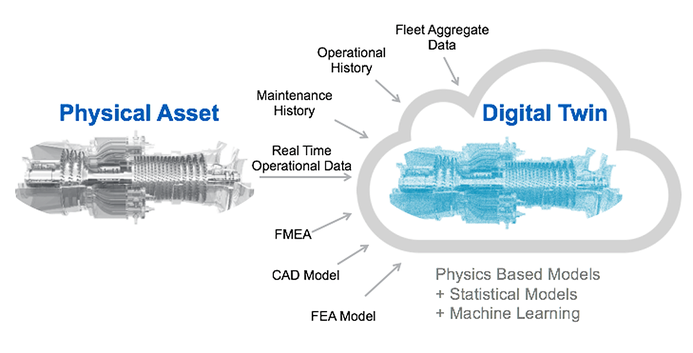
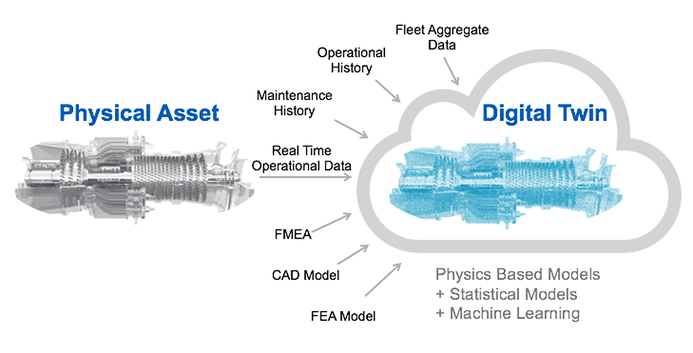
Academic research on AI-driven digital twins and Industry 4.0 systems demonstrates that synchronizing contextualized CAD geometry with real-time operational feedback loops transforms static models into dynamic digital twins capable of predictive maintenance, automated anomaly detection, and autonomous production tuning.
The Industrial Data Fragmentation Problem
Historically, manufacturing software stacks operated within rigid functional silos. Engineering design resided in proprietary CAD and Product Lifecycle Management (PLM) files. Enterprise resource planning and transactional histories sat in relational databases, while shop-floor machine control was relegated to isolated Programmable Logic Controllers (PLCs) and Supervisory Control and Data Acquisition (SCADA) networks.
| Data Layer | Primary Data Formats | Ingestion Latency | Key Systems |
|---|---|---|---|
| Design Layer | STEP, IGES, Parasolid, Native CAD Assemblies | Static / Batch | CAD, CAM, PLM, CAE |
| Enterprise Data Layer | Relational Tables, SQL Schemas, JSON Blobs | Milliseconds to Seconds | ERP, MES, Time-Series Databases |
| Edge Operational Layer | OPC-UA, MQTT, Modbus, Analog Sensor Streams | Microseconds to Milliseconds | PLCs, Industrial PCs, Edge Gateways |
When operational technology (OT) operates disconnected from the initial design assumptions, field failures require retrospective engineering teardowns. By establishing real-time data pipelines that link physical asset telemetry directly back to CAD baselines, manufacturing data engineers can build predictive models that assess stress, thermal expansion, and mechanical wear in real time.
1. Upstream CAD and 3D Asset Integration
The foundation of an asset-centric digital twin begins with CAD geometry. A 3D CAD model contains nominal dimensions, geometric dimensioning and tolerancing (GD&T) specifications, kinematic relationships, and structural material properties.
For data scientists and machine learning engineers, transforming non-uniform rational B-spline (NURBS) surface geometry into data structures suitable for tensor computing involves converting solids into finite element meshes or point clouds. High-precision drafting suites and engineering design software from CadSoft USA provide the parametric foundations and component modeling data required to establish clean digital geometry before assemblies enter physical prototyping.
Once spatial geometry is defined, finite element analysis (FEA) and computational fluid dynamics (CFD) generate simulated baseline stress distributions. Machine learning models train against these physics-based baselines to identify operational deviations long before mechanical failure occurs.
2. High-Performance Hardware for Heavy Engineering and Data Tasks
Simulating complex physical systems and training multi-modal machine learning models demands significant local compute resources. Data scientists and manufacturing engineers frequently encounter severe performance throttling when processing dense point clouds, running local neural network inferences, or compiling massive CAD assemblies.
- Workstation Tuning & Thermal Stability: Sustained multi-threaded loads during simulation and local model evaluation push CPUs and dedicated GPUs to thermal limits.
- Storage and Memory Diagnostics: System stalls during large file ingestion often stem from storage controller overhead, fragmented system paging, or unoptimized memory timings. Following workstation diagnostic tutorials and hardware optimization walkthroughs from Maximum PC Guides enables engineering teams to eliminate local compute bottlenecks, benchmark system stability, and optimize Windows-based engineering workstations for intense numerical processing.
3. Relational Schemas and Time-Series Data Pipelines
At the core of an integrated manufacturing architecture lies the data management tier. In industrial telemetry, ingestion pipelines must handle heterogeneous data structures: high-frequency time-series measurements (vibration, amperage, temperature) paired with structured transactional metadata (batch IDs, material lots, operator logs).

Manufacturing architectures commonly pair specialized time-series storage with relational database management systems (RDBMS). Relational databases maintain metadata integrity, enforce asset hierarchies, and support complex multi-table joins across bill-of-materials (BOM) records.
Engineering enterprise data pipelines requires precise query execution plans, proper indexing strategies, and optimized connection pooling. Implementing structured database administration practices and relational tuning frameworks from SQL Solutions helps database administrators minimize query latency, avoid index fragmentation on transaction-heavy factory logging tables, and prevent server lockups during concurrent analytics workflows.
4. Edge Analytics and Real-Time ML Inference
Streaming every raw sensor reading from thousands of factory floor assets directly to central cloud data warehouses creates prohibitive bandwidth costs, excessive latency, and network security risks.
Industrial edge computing addresses this constraint by deploying localized compute directly on the shop floor. In an edge analytics deployment:
- Protocol Normalization: Industrial edge runtimes interface with fieldbuses via protocols like OPC Unified Architecture (OPC-UA) and MQTT.
- Feature Extraction: High-frequency vibration signals (often sampled at 10 kHz to 50 kHz) are processed locally using Fast Fourier Transforms (FFT) and spectral energy analyses.
- Low-Latency Inference: Pre-trained machine learning models (such as autoencoders for anomaly detection or 1D convolutional neural networks) run inferences in sub-second cycles directly adjacent to the machinery.
- Targeted Upstream Transmission: Only extracted features, alert conditions, and aggregated statistical summaries are pushed upstream to central databases, conserving network bandwidth.
According to research on edge AI integration in smart manufacturing, running inference on localized industrial hardware lowers latency to deterministic millisecond thresholds while insulating critical production operations from external cloud connectivity dropouts.
5. Enterprise Tech Modernization and Digital Ecosystems
Bridging CAD, databases, and edge analytics requires an adaptable enterprise technology ecosystem. As organizations expand their industrial IoT footprints, engineering teams must evaluate modern data fabric architectures, private 5G factory networks, containerized edge runtimes, and evolving cybersecurity standards.
Following updates on regional server architectures, enterprise IT modernization patterns, and digital software infrastructure through Techmedya keeps IT and OT practitioners informed on modern hosting paradigms, hardware security developments, and software ecosystem shifts.
Architecture Summary: Bridging the Silos
| System Component | Core Technology | Primary Functional Output |
|---|---|---|
| Design / Modeling | Parametric CAD & Simulation Solvers | Baseline geometry, nominal tolerances, and physics-based limits |
| Compute Workstations | Optimized multi-core CPUs and dedicated GPUs | Fast CAD rendering, meshing, and local model experimentation |
| Data Persistence | Relational SQL & Time-Series Engines | Immutable operational records, queryable asset registries, and telemetry history |
| Edge Tier | Embedded Linux, Industrial Runtimes, Micro-inference Engines | Deterministic anomaly detection, stream filtering, and real-time machine protection |
By joining physical engineering designs with scalable data storage and local edge analytics, manufacturers can move beyond reactive maintenance toward autonomous, self-optimizing production lines.