
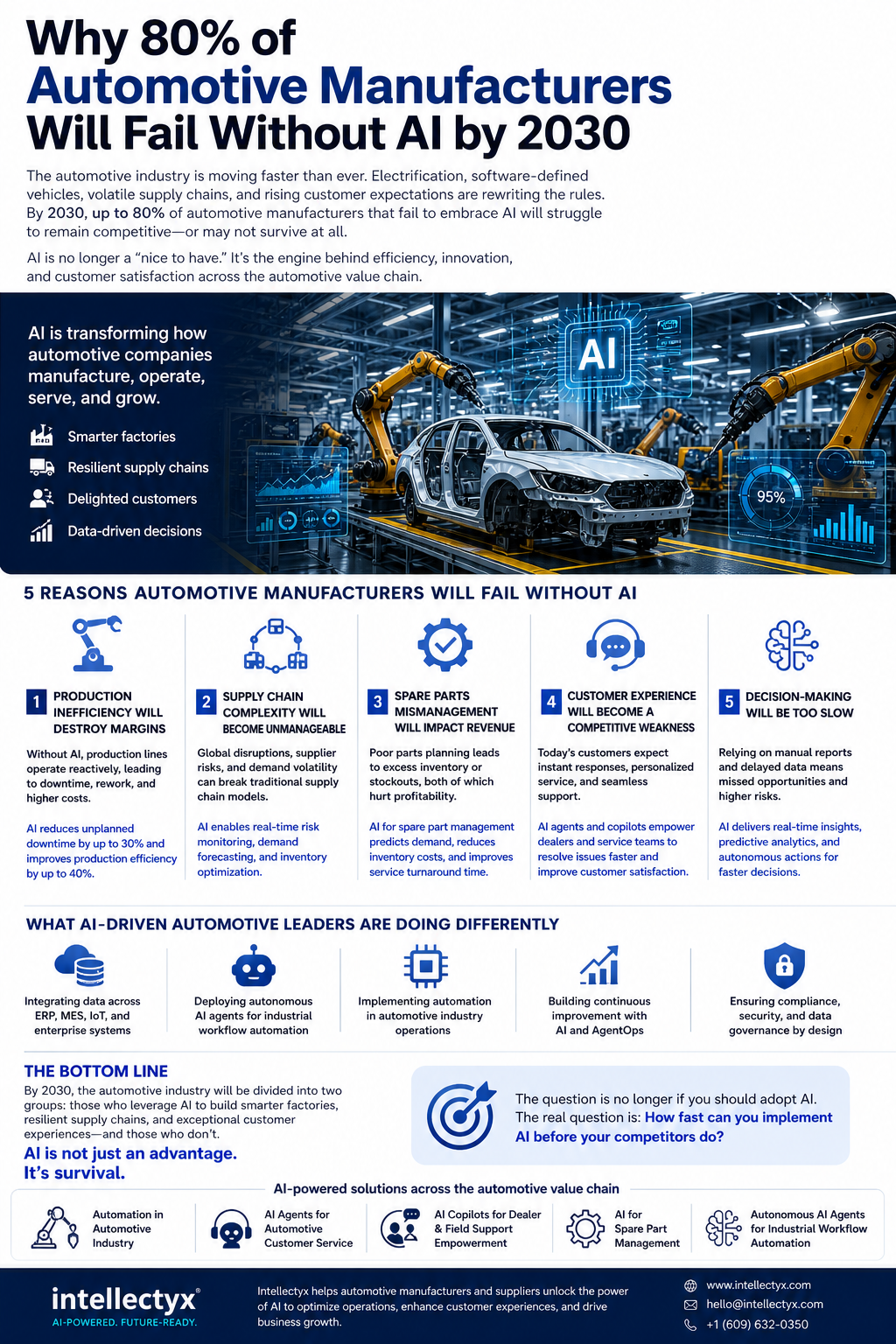
Artificial intelligence is reshaping the automotive industry, from predictive maintenance and quality inspection to autonomous production planning and intelligent supply chains. While many manufacturers invest heavily in AI technologies, successful implementation depends on something even more important: strong leadership. Defining automotive AI leadership roles and responsibilities ensures AI initiatives move beyond pilot projects and deliver measurable business value.
As automotive companies accelerate digital transformation, leaders must align AI strategy with manufacturing goals, workforce readiness, regulatory compliance, and operational efficiency.
Why AI Leadership Matters in Automotive
AI projects often fail because of poor governance rather than poor technology. Without clear ownership, organizations struggle with disconnected data, unclear objectives, integration challenges, and resistance to change.
Effective AI leadership helps manufacturers:
-
Align AI investments with business objectives
-
Prioritize high-value manufacturing use cases
-
Ensure regulatory and cybersecurity compliance
-
Build cross-functional collaboration
-
Measure ROI and continuous improvement
A dedicated AI leadership structure creates accountability throughout the AI lifecycle—from strategy and implementation to optimization.
Key Automotive AI Leadership Roles
Chief AI Officer (CAIO)
The Chief AI Officer develops the organization’s overall AI strategy and ensures AI initiatives support long-term business goals.
Responsibilities include:
-
Creating enterprise AI roadmaps
-
Prioritizing AI investment opportunities
-
Managing AI governance
-
Coordinating AI initiatives across departments
-
Measuring AI business outcomes
The CAIO serves as the bridge between executive leadership and technical teams.
AI Program Manager
Large automotive manufacturers often run multiple AI projects simultaneously. The AI Program Manager oversees implementation timelines, budgets, vendor coordination, and resource allocation.
Key responsibilities include:
-
Managing AI deployment schedules
-
Tracking project milestones
-
Coordinating engineering and manufacturing teams
-
Monitoring KPIs
-
Managing implementation risks
Manufacturing AI Lead
This role focuses specifically on factory operations.
Responsibilities include:
-
Identifying automation opportunities
-
Optimizing production workflows
-
Supporting predictive maintenance initiatives
-
Improving quality inspection systems
-
Monitoring production performance
Manufacturing AI Leads work closely with production managers, maintenance teams, and process engineers.
Data & AI Engineering Manager
AI systems are only as good as the data supporting them.
The Data & AI Engineering Manager ensures:
-
Data quality
-
Data governance
-
Machine learning infrastructure
-
Cloud architecture
-
AI model deployment
-
System scalability
This role manages the technical foundation required for enterprise AI.
AI Governance & Compliance Leader
Automotive manufacturers must comply with strict industry regulations, cybersecurity standards, and data privacy requirements.
This leader oversees:
-
AI ethics
-
Model governance
-
Risk management
-
Regulatory compliance
-
Data security
-
Audit readiness
As AI adoption grows, governance becomes increasingly important.
Cross-Functional Responsibilities
Successful AI leadership extends beyond technical expertise.
Strategy Development
Leaders identify where AI creates measurable business value by evaluating production bottlenecks, maintenance challenges, supply chain inefficiencies, and customer requirements.
Technology Selection
Leadership teams evaluate AI platforms, enterprise software, cloud providers, and AI development partners based on scalability, security, and integration capabilities.
Workforce Transformation
AI changes how employees work rather than replacing them entirely.
Leadership responsibilities include:
-
Employee training
-
Change management
-
AI adoption programs
-
Upskilling initiatives
-
Cross-functional collaboration
Performance Measurement
AI initiatives should deliver measurable outcomes.
Common KPIs include:
-
Reduced downtime
-
Improved production efficiency
-
Lower defect rates
-
Faster maintenance response
-
Inventory optimization
-
Energy savings
-
Return on AI investment
Skills Required for Automotive AI Leaders
Modern AI leaders combine technical knowledge with business expertise.
Important skills include:
-
Artificial Intelligence
-
Machine Learning
-
Manufacturing Operations
-
Industry 4.0
-
Digital Transformation
-
ERP Integration
-
Cloud Platforms
-
Data Analytics
-
Cybersecurity
-
Leadership & Communication
Strong AI leaders also understand lean manufacturing, quality management, and supply chain optimization.
The Role of AI Development Partners
Many automotive manufacturers also partner with external experts offering AI Services for Optimizing Automotive Manufacturing Processes to accelerate implementation. These services support predictive maintenance, AI-powered quality inspection, production planning, supply chain optimization, energy management, and intelligent factory automation. By combining internal AI leadership with specialized AI services, automotive companies can reduce deployment risk and achieve faster, measurable business outcomes.
An external AI development partner can assist with:
-
AI strategy workshops
-
AI proof of concept development
-
AI agent development
-
Manufacturing automation
-
Computer vision solutions
-
Predictive maintenance
-
Enterprise AI integration
-
AI governance frameworks
Working alongside internal leadership accelerates implementation while reducing project risk.
The Future of Automotive AI Leadership
As AI becomes embedded across manufacturing operations, leadership responsibilities will continue expanding. Future automotive AI leaders will oversee autonomous factories, AI-powered robotics, digital twins, intelligent quality systems, and multi-agent manufacturing environments.
Organizations that establish clear automotive AI leadership roles and responsibilities today will be better positioned to scale AI successfully, improve operational efficiency, and maintain a competitive advantage in an increasingly intelligent manufacturing landscape. Strong leadership ensures AI is not just another technology investment—but a long-term driver of innovation, productivity, and sustainable growth.