
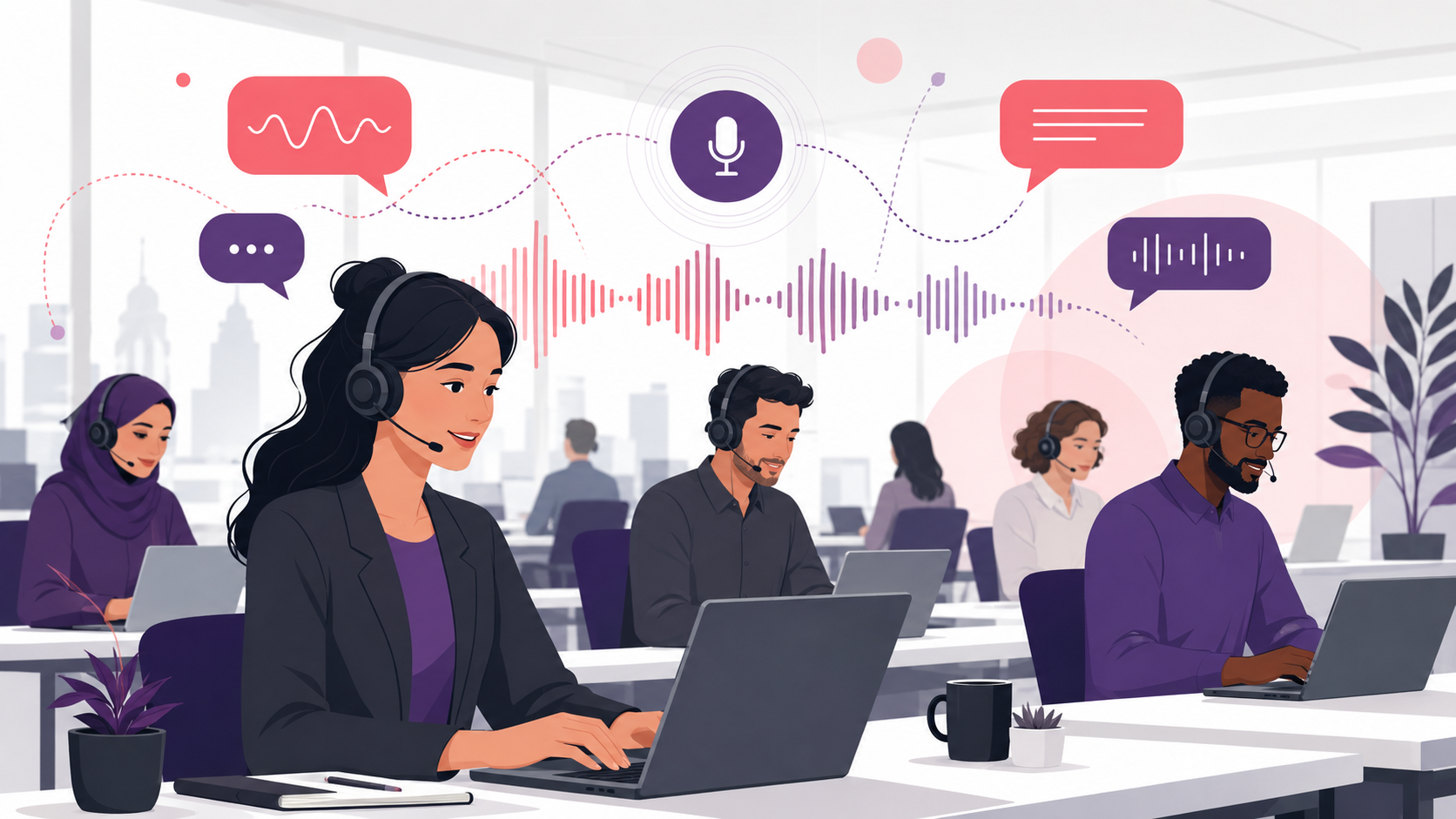
Most L&D teams aren’t scaling training the way they used to, mostly because they can’t. Budgets are flat, workforces are spread thinner across more regions and more languages, and the sheer volume of onboarding, compliance refreshers, and certification cycles keeps going up regardless of what the headcount looks like. Instructor-led sessions weren’t built to absorb that kind of load, and honestly, neither were most static e-learning modules. That’s more or less why voice-based conversational systems have gone from “interesting pilot” to a real line item on enterprise L&D roadmaps heading into 2026.
So, this guide is going to walk through how learning teams are actually using voice AI for enterprise learning right now, what separates a platform that’s genuinely ready for production from one that’s still basically a demo, and what to look at before anyone signs a vendor contract.
What Is Voice AI for Enterprise Learning?
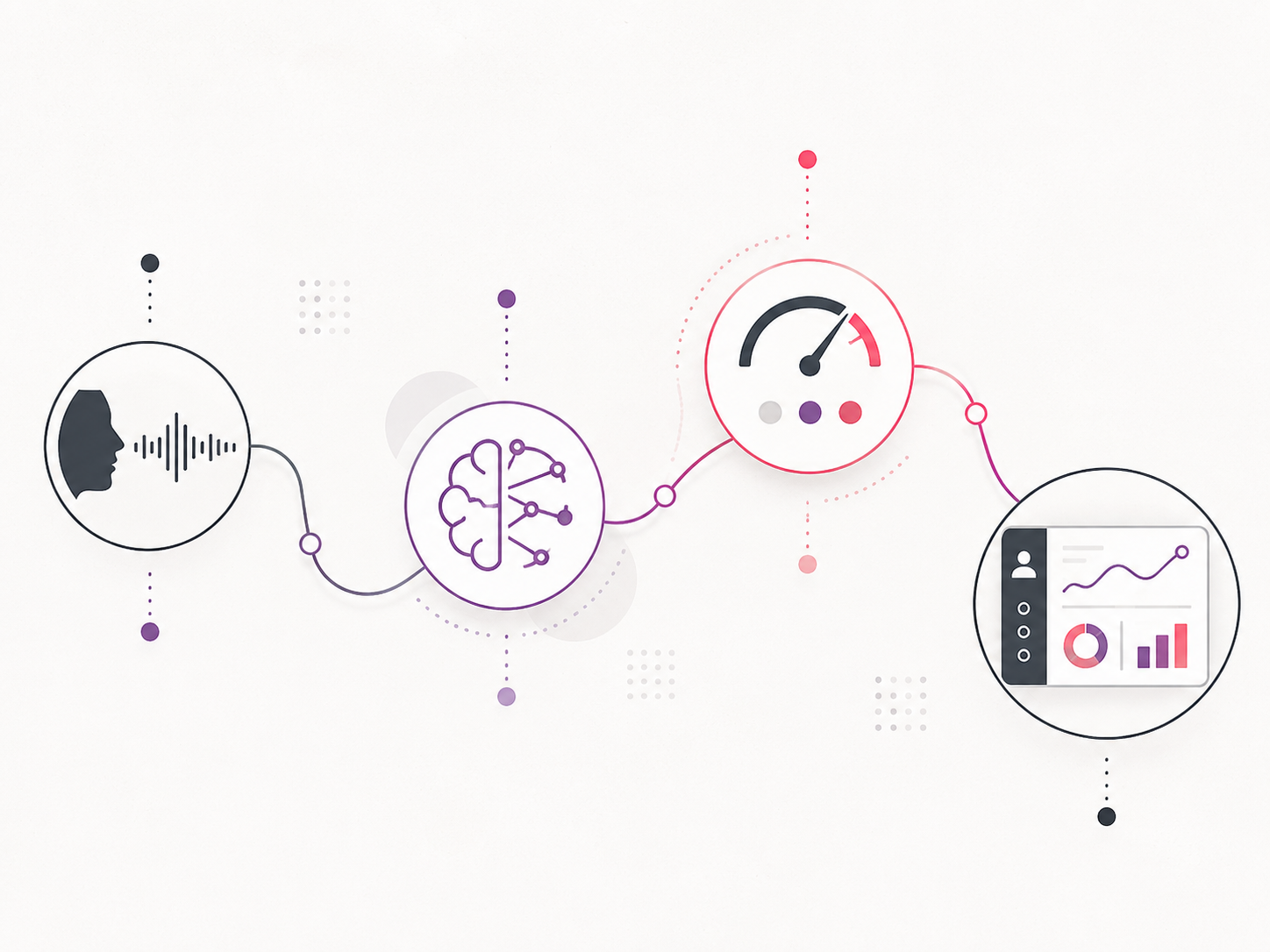
Technically speaking, voice AI for enterprise learning combines automatic speech recognition (ASR), natural language understanding (NLU), and text-to-speech (TTS) so a system can hold something close to a real spoken conversation with a learner role-plays, assessments, coaching sessions, compliance walkthroughs, that kind of thing without a human trainer needing to sit on every single call.
Older IVR-style training bots ran on rigid scripts. That’s mostly not the case anymore. Systems built on large language models can follow an open-ended answer, branch into whatever follow-up question actually makes sense, and score the response against a rubric while the conversation is still going. It’s a different category altogether from e-learning modules built around multiple-choice quizzes or a static video someone half-watches.
Where It Fits in the L&D Stack
Voice-based training usually sits next to an existing LMS, not in place of it. A few of the places it tends to show up:
- Pre- and post-training skill checks over phone or app
- Sales and support role-play with scored feedback attached
- Compliance and regulatory refreshers, especially across BFSI and NBFC
- Language and communication coaching for frontline and field staff
- Onboarding walkthroughs for teams that are distributed or fully remote
Why Enterprises Are Adopting Voice AI in L&D
There’s a handful of pressures that keep coming up when you talk to L&D leaders about this, especially at bigger, more distributed organizations doing a lot of frontline hiring.
Scale Without Proportional Headcount Growth
A trainer can probably run a dozen solid role-play sessions in a day. Maybe fewer, if the sessions run long. A voice system can run hundreds at once, and for a company bringing on a few thousand new hires every quarter BPO, retail, logistics that world that gap isn’t a nice-to-have. It’s kind of the whole point.
Consistency in Assessment
Two human evaluators score the same response differently more often than most L&D teams would like to admit, if they’re being honest about it. A rubric-driven voice system doesn’t have that problem; it applies the same logic to every learner every time, which matters a lot once a certification program has to survive an audit.
Multilingual and Regional Reach
For enterprises hiring across India’s regional markets, letting people train in whatever language they’re actually comfortable in instead of defaulting to English because that’s easier for the platform tends to move completion and comprehension numbers in a way that’s hard to ignore, particularly for frontline and field-based roles.
Data-Driven Skill Gap Identification
Every voice session throws off data almost as a byproduct: response time, sentiment, keyword usage, rubric scores. Roll that up across a team or a region, and the actual skill gaps start showing themselves, rather than relying on whatever a manager happens to notice.
Core Capabilities of a Modern Enterprise Voice System
A lot of tools marketed as “training” solutions aren’t really built for enterprise scale, if we’re being honest. Here’s roughly what a genuinely production-ready Voice AI Platform needs under the hood.
Natural Language Understanding and Context Retention
The system has to track context across the whole conversation. Not treat each learner response like it’s arriving in a vacuum. Skip this and a role-play stops feeling like a role-play; it starts feeling like a survey with extra steps.
Multilingual and Code-Switching Support
Learners mix languages mid-sentence all the time, especially across Indian and Southeast Asian markets. A platform that can’t handle Hindi and English blending together in one sentence is going to produce bad scores for reasons that have nothing to do with the learner’s actual ability.
Real-Time Scoring and Rubric Configuration
L&D teams need to be able to change scoring criteria tone, accuracy, objection handling, compliance language on their own, without filing an engineering ticket every time something needs adjusting.
Integration with LMS and HRMS Systems
Scores, completion status, transcripts. All of it needs to sync into whatever LMS or HRMS is already in place. Manual exports and CSV wrangling defeat most of the point.
Analytics and Reporting Dashboards
You want dashboards that can be cut by cohort, region, manager, module, whatever slice actually matters to the person looking at it. Anything less and the data just sits there.
AI Agents in Corporate Training Workflows
In a training context, Voice AI Agents play the simulated counterpart a mock customer, a difficult caller, a compliance auditor whichever the scenario calls for, that a learner practices against before ever running into the real version. These agents can be tuned for persona, difficulty, and how much they push back, so a curriculum can actually ramp up instead of throwing every learner at the hardest scenario on day one.
That matters most in sales and other customer-facing roles, where a badly handled live conversation, a lost deal, a compliance slip, or a customer who walks away costs a lot more than a simulated one ever will.
Common Deployment Patterns
- Pre-hire assessment: Checking communication skills as part of the hiring process itself.
- Structured onboarding: Walking new hires through product knowledge, step by step.
- Ongoing certification: Recurring checks tied to compliance or quality standards.
- Manager coaching support: Objective performance summaries that back up regular 1:1 conversations.
Comparing Use Cases: Learning vs. Customer-Facing Deployments
Worth separating training deployments from the more commonly discussed use of Voice AI for Customer Support here, since they run on the same underlying infrastructure but are aiming at pretty different things. Customer support exists to resolve a live query as fast and cleanly as possible. Training exists to build and assess a skill over time, and the “customer” on the other end isn’t real; it’s simulated. Anyone evaluating a single vendor for both should double-check that the platform keeps live-customer configurations separate from training-environment ones. Nobody wants a practice session accidentally routing into a real customer queue.
Key Features to Evaluate Before Choosing a Platform
A demo alone won’t tell you much. Push vendors through something closer to this list before committing to anything:
- Latency and turn-taking accuracy lag kills the realism fast, and it drags down assessment quality with it
- Data security and compliance certifications are not optional for BFSI, NBFC, or healthcare training
- Customization of personas and difficulty tiers: a curriculum should ramp up, not repeat the same scenario forever
- Reporting granularity: can the data actually be sliced by cohort, trainer, region, module, or does it all come out flat
- API and webhook support, so results sync into whatever HR stack already exists
- Language coverage that’s been confirmed, not assumed, for the specific regional languages the workforce actually uses
Implementation Best Practices
The rollouts that actually stick tend to go in phases instead of one big launch:
- Start with one use case, a single compliance module, or one sales scenario before trying to expand.
- Bring trainers into rubric design early; subject matter experts should set the scoring bar, not just engineering.
- Get feedback to learners quickly, right after the session rather than days afterward.
- Benchmark against whatever process is being replaced: completion rates, scoring consistency, all of it.
- Be upfront about data privacy from the start, especially if sessions get recorded or transcribed for scoring.
Measuring ROI: KPIs for Enterprise Voice AI in Learning
Adoption alone doesn’t justify a budget line to most finance teams. These are the metrics worth watching from the pilot onward:
- Training completion rate: the share of assigned learners who actually finish within the target window
- Assessment consistency: how much scores vary across cohorts run on the same rubric
- Time-to-competency: average time from onboarding start to certification
- Cost per trained employee: total spend divided by employees who actually get certified
- Manager time saved: hours that used to go into manual role-play facilitation, now freed up for real coaching
Track this from the first week of the pilot, and there’s real data to justify scaling voice AI for enterprise learning beyond one department or region, rather than just a hunch that it’s working.
Conclusion
Voice-based training is becoming core infrastructure for enterprise L&D teams rather than something sitting off to the side as an experiment. The organizations getting real results tend to be the ones checking platforms against specific technical capabilities and KPIs, piloting narrow use cases before trying to scale anything, and keeping subject matter experts in the room for rubric design the whole way through, not just at the start. As workforces keep getting more distributed and hiring keeps getting more multilingual, the gap between teams running structured, data-backed assessment and teams still leaning on manual facilitation alone is probably only going to widen from here.