
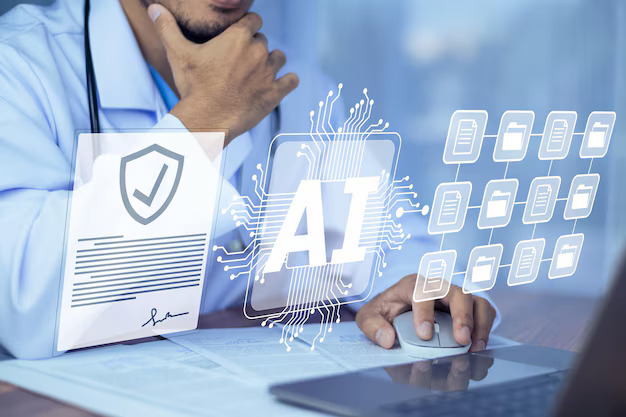
Ask any physician what eats up their day, and documentation almost always tops the list, right alongside patient care itself. Studies tracking EHR activity logs found physicians spending an estimated 4.5 hours a day completing electronic health records, and that number climbs even higher in hospital settings where clinicians spend close to 40% of their work day on the EHR, with interns spending the most time. That is not a minor inconvenience. It is a structural problem that pulls doctors away from patients and pushes their real work into evenings and weekends.
This is exactly the gap generative AI has stepped into. Rather than replacing clinical judgment, tools built as an AI clinical documentation platform listen to the natural conversation between a doctor and patient and turn it into a structured note, cutting out the manual typing that used to happen after the visit ended. For a field that has spent two decades bolting digital records onto analog workflows, this is the first shift that actually removes work instead of adding another screen to stare at.
Why the Old Documentation Model Was Bound to Break
Documentation was never supposed to consume this much of a clinical day. Research examining outpatient consultations found documentation alone accounted for about 35 percent of physician time, and the shift from paper charts to electronic ones did not fix this. If anything, one meta-analysis found physicians’ documentation workload rose from roughly 16 percent of total work time before electronic records to about 28 percent afterward.
Primary care has it the worst. Physicians in that specialty typically log 36.2 minutes on the EHR per visit, including 6.2 minutes of after-hours pajama time and 7.8 minutes on the electronic inbox, against a scheduled visit length of just thirty minutes. When the paperwork takes longer than the appointment itself, something in the system is clearly misaligned. That mismatch is the entire reason ambient AI scribes found such fast traction the moment they became reliable enough for daily use.
What Actually Happens Behind the Scenes
Once a conversation ends, older transcription tools would hand a clinician a wall of raw text and leave them to sort it into a usable note. Generative models work differently. They are trained to recognise which parts of a rambling, real-world conversation belong in a clinical record and which parts are small talk, even when a patient mentions a symptom early on and circles back to it minutes later after a detour about their weekend. Understanding this distinction is exactly what a well-built clinical documentation process is designed around: capturing the encounter, filtering out the noise, and organizing what remains into something a physician can review in seconds rather than minutes.
The results are already measurable. A randomized trial run across fourteen specialties at UCLA tracked roughly 72,000 encounters and found that note-writing time dropped from four minutes thirty seconds to three minutes forty-nine seconds, a reduction of around ten percent compared to physicians working without the tool. Elsewhere, physicians using an ambient scribe across Mass General Brigham reported saving close to four hours a week on documentation, time that went straight back into patient care or, just as importantly, back into their own evenings.
None of this means the technology gets a free pass on accuracy. A study published in the Journal of Medical Internet Research found errors in a notable share of AI-generated notes, with omissions being the hardest type for physicians to catch. That is precisely why every serious deployment still requires a clinician to review and sign off on the final note rather than trusting the output blindly.
From Raw Conversation to a Finished Chart Note
The real technical leap is in how the note gets built, not just how it gets transcribed. Good systems do not simply summarize; they map spoken symptoms, history, and assessment language into the specific sections a chart expects, formatted the way a payer or auditor expects to see them. That is the layer where clinical note generation becomes the difference between a tool that saves five minutes and one that actually holds up under a compliance review. Getting this piece wrong is what turns a promising pilot into a scribe nobody trusts by month three.
Adoption Is Moving Faster Than Most Predicted
Scepticism about new health IT usually slows things down for years. This time it has not. Survey data on nonfederal US hospitals found that 31.5% reported using generative AI in 2024 and 24.7% planned to do so within a year, putting roughly half of American hospitals on track to be using it by the close of 2025. Kaiser Permanente alone rolled its ambient documentation platform out across 40 hospitals and more than 600 medical offices, described as the largest generative AI deployment in healthcare history. PubMed Central
The physician backs this up. By 2026, 70% of physicians in the UCSF health system were using AI scribes daily, and at Kaiser Permanente, 7,260 physicians used AI scribes across more than 2.5 million patient encounters over fourteen months. One health system administrator put it plainly: turning the tool off now would risk losing doctors who have come to expect it as part of how they practice.
Where This Leaves Clinicians and Patients
The bigger story here is not about saved minutes, though those matter plenty. It is about what physicians do with the time they get back. Less pajama time on the EHR means more presence with patients during the visit and more actual rest after it. Burnout research has already linked a heavy after-hours documentation load to emotional exhaustion, so a tool that quietly removes that load is solving a well-being problem as much as a workflow one.
The next few years will likely settle the remaining questions around accuracy, review standards, and reimbursement. What already seems settled is the direction. Clinical documentation is moving from something a physician does after seeing a patient to something that happens automatically while they focus on the person in front of them, and that shift alone may end up mattering more than any single feature these platforms ship.