
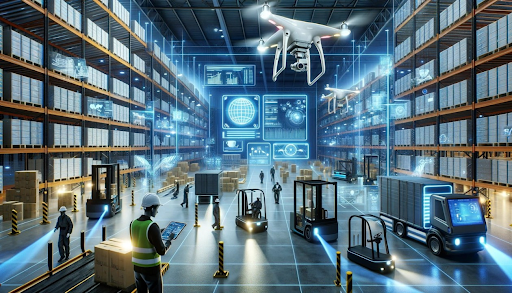
Warehouses have become the backbone of modern supply chains, supporting industries such as e-commerce, manufacturing, healthcare, retail, and logistics. As businesses continue to embrace automation and digital transformation, warehouses are becoming smarter, larger, and more connected. Alongside these advancements comes the growing need for intelligent security that can protect valuable inventory, equipment, and sensitive operational data.
Artificial intelligence (AI) and data science are reshaping the way warehouses approach security. Rather than relying solely on traditional alarms, modern systems can analyze data in real time, recognize unusual activity, reduce false alarms, and help security teams respond faster. These innovations are creating safer facilities while improving operational efficiency across the entire warehouse ecosystem.
The Evolution of Warehouse Security
Traditional warehouse security focused primarily on basic intrusion alarms, locks, and CCTV cameras. While these systems provided an important layer of protection, they often required manual monitoring and generated false alarms that consumed valuable time and resources.
Today’s warehouses operate in environments filled with connected devices, automated machinery, barcode scanners, robotics, and Internet of Things (IoT) sensors. Security systems must be capable of monitoring this complex infrastructure while identifying genuine threats in real time.
AI-powered technologies allow warehouses to move from reactive security toward predictive and intelligent protection.
AI Brings Intelligence to Alarm Systems
Modern warehouse alarm system solutions increasingly incorporate artificial intelligence to improve detection accuracy and response times. Instead of simply detecting movement or unauthorized entry, AI algorithms analyze behavioral patterns, distinguish between routine operations and suspicious activities, and prioritize alerts based on potential risk.
For example, an AI-powered system can recognize the difference between scheduled employee movement during working hours and unexpected activity in restricted areas after closing time. This significantly reduces false alarms while ensuring that genuine security threats receive immediate attention.
By learning from historical events, AI systems become increasingly effective at identifying anomalies that may indicate theft, unauthorized access, or operational risks.
The Role of Data Science in Warehouse Security
Data science plays an equally important role by transforming large volumes of security data into meaningful insights. Every day, warehouses generate information from surveillance cameras, access control systems, environmental sensors, inventory management platforms, and alarm events.
Data scientists use analytical models to identify trends, detect vulnerabilities, and improve security strategies. Historical alarm data can reveal recurring incidents, highlight high-risk locations, and support better resource allocation.
Predictive analytics also helps organizations anticipate maintenance requirements, identify equipment failures before they occur, and reduce operational disruptions.
Reducing False Alarms With Machine Learning
False alarms remain one of the biggest challenges in warehouse security. Frequent unnecessary alerts consume valuable resources, interrupt daily operations, and may reduce confidence in the monitoring system.
Machine learning algorithms continuously analyze alarm patterns and environmental conditions to improve detection accuracy. By learning normal operating behavior, these systems become better at recognizing genuine threats while filtering out harmless events.
As a result, security personnel can focus their attention on incidents that truly require investigation, improving both efficiency and response effectiveness.
Intelligent Video Analytics
Modern surveillance systems have evolved far beyond simple video recording. AI-powered video analytics can monitor warehouse activity continuously while automatically detecting unusual behavior.
These systems can identify unauthorized access, monitor restricted zones, recognize abandoned objects, detect perimeter breaches, and alert operators to suspicious movement.
Instead of relying on staff to watch multiple camera feeds throughout the day, intelligent software analyzes video streams in real time and immediately highlights events requiring attention.
This combination of AI and computer vision strengthens warehouse security while reducing the workload for security personnel.
Supporting Operational Efficiency
AI-driven security systems do more than prevent theft. They also contribute to smoother warehouse operations by providing valuable operational insights.
Access control data helps managers understand employee movement patterns and optimize workflows. Video analytics can identify congestion in loading areas or inefficient traffic routes within the warehouse.
Predictive maintenance powered by AI also helps monitor security equipment such as cameras, sensors, and alarm panels, ensuring systems remain operational before failures occur.
By integrating security data with warehouse management systems, organizations gain a more comprehensive view of facility performance.
The Future of Smart Warehouses
The future of warehouse security lies in intelligent automation. As robotics, autonomous vehicles, IoT devices, and cloud computing become more common, security systems will become increasingly interconnected.
Artificial intelligence will continue improving threat detection through advanced behavioral analysis and predictive modeling. Data science will provide deeper operational insights that support both security and business decision-making.
Cloud-based platforms will enable centralized monitoring across multiple warehouse locations, while automated incident reporting will simplify compliance and security management.
Organizations investing in AI-powered warehouse security today will be better prepared for the growing complexity of tomorrow’s logistics and supply chain environments.
Conclusion
Warehouse security is entering a new era driven by artificial intelligence and data science. Modern alarm systems now offer far more than intrusion detection—they provide intelligent monitoring, predictive analytics, automated threat detection, and actionable insights that improve both security and operational performance.
As warehouses continue adopting digital technologies, AI-powered security solutions will become increasingly valuable for protecting assets, supporting business continuity, and creating safer working environments. Businesses that embrace intelligent warehouse security today will be well positioned to meet the demands of an increasingly connected and data-driven future.