
The demand for high-quality visual content has grown rapidly across marketing, ecommerce, education, and digital media. Teams are expected to produce fresh images for ads, social media, product listings, and editorial use at a pace that traditional design workflows often struggle to support. As a result, AI-driven image generation tools have become part of everyday creative infrastructure rather than experimental technology.
Within this shift, multi-model platforms are gaining attention because they allow users to experiment with different visual workflows in one environment. Instead of relying on a single approach, creators can select tools based on task requirements, such as realism, stylization, or editing precision. Platforms like Image 2 reflect this direction by offering multiple AI image workflows designed for different creative needs, helping teams adapt more efficiently to varied production demands.
Expanding Creative Workflows with Unified AI Tools
Modern content teams often manage multiple formats at once—product photography, marketing banners, blog visuals, and short-form social media graphics. Each format has different requirements, and switching between separate tools can slow down production. This is where unified AI platforms are becoming more relevant.
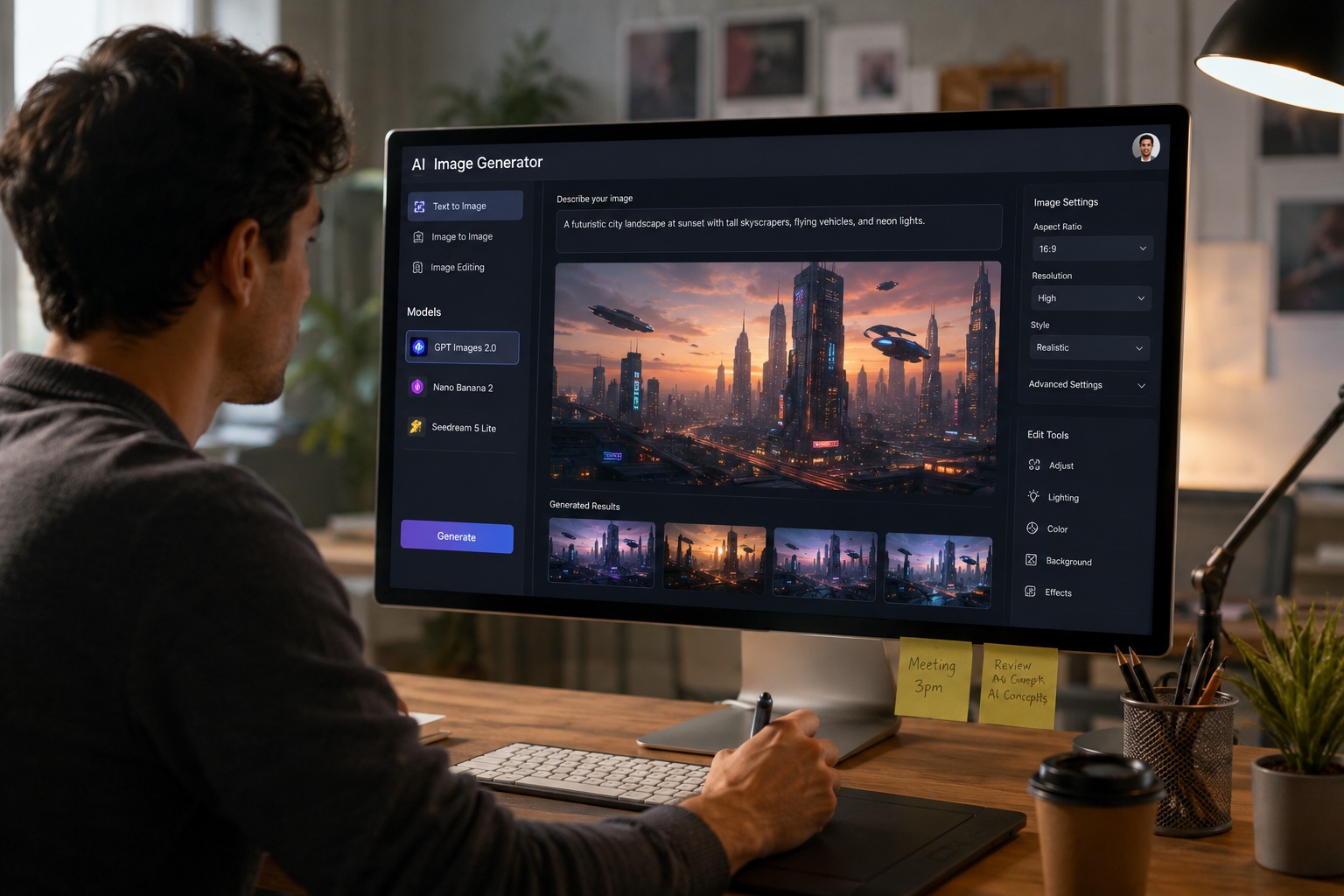
For example, Image 2 brings together multiple image generation workflows, including systems such as GPT Images 2.0, Nano Banana 2, and Seedream 5 Lite, allowing users to choose the most suitable approach for a specific task. Image 2 This type of structure supports flexibility without forcing creators into a single visual style or editing method.
Instead of treating AI as a one-size-fits-all solution, this approach aligns better with real production environments. A marketer designing ad creatives may prioritize fast conceptual output, while a product designer may focus on precision and consistency. Having multiple workflows in one place reduces friction and supports a more adaptive creative process.
Text-to-Image Generation in Practical Production Workflows
One of the most widely used applications of AI image tools is text-to-image generation. This workflow allows users to turn written descriptions into visual concepts, which is particularly useful in early-stage ideation. Designers and marketers often rely on this process to explore directions before committing to full-scale production.
In practical settings, text-to-image generation supports tasks such as brainstorming ad concepts, visualizing product ideas, or creating mood boards for campaigns. Rather than replacing design expertise, it complements it by accelerating the exploration phase. Teams can generate multiple variations quickly, compare outcomes, and refine prompts based on creative direction.
Platforms like Image 2 integrate this capability within broader workflows, making it easier to transition from idea generation to refinement. This reduces dependency on multiple tools and helps maintain consistency across visual outputs. As organizations continue to prioritize speed and adaptability, text-to-image systems are becoming a standard part of content pipelines rather than isolated experimental tools.
Image Editing and Refinement for Real-World Use Cases
Beyond generation, image editing and refinement play a critical role in professional workflows. Businesses rarely use raw outputs directly; instead, they adjust lighting, composition, style, or context to match brand guidelines or campaign needs.
AI-driven image-to-image editing allows users to modify existing visuals while preserving structure or core elements. This is particularly useful in ecommerce, where product images must remain consistent across listings, or in advertising, where variations of a single concept are needed for A/B testing.
Within Image 2, workflows are structured to support iterative refinement rather than single-step generation. Users can adjust visuals gradually, improving alignment with creative direction without restarting the process. This approach is especially useful for teams working under tight deadlines, where efficiency and control are equally important. It also helps reduce repetitive manual editing, allowing designers to focus more on creative decisions than technical adjustments.
Marketing, Ecommerce, and Social Media Applications
AI-generated visuals are now widely used across marketing and ecommerce environments. Social media teams rely on fast content production to maintain engagement, while ecommerce businesses require consistent product imagery across platforms and campaigns.
In marketing, AI tools support the creation of ad concepts, promotional banners, and campaign visuals. These assets often need multiple variations for different audiences, and AI workflows make it easier to produce them efficiently. In ecommerce, product visualization can be enhanced through background adjustments, style consistency, and contextual scene generation.
Platforms such as Image 2 support these use cases by combining multiple visual workflows in one system. This allows teams to experiment with different outputs for thumbnails, posters, or digital ads without switching platforms. As visual communication becomes more central to digital strategy, the ability to generate and refine images quickly is becoming a practical requirement rather than a competitive advantage alone.
The Future of Multi-Workflow AI Image Systems
The future of AI image generation is likely to move toward more integrated and flexible systems rather than standalone tools. As creative demands continue to diversify, users need platforms that can adapt to different tasks without requiring complex setup or fragmented workflows.
Multi-model environments reflect this direction by offering multiple approaches within a single interface. Instead of relying on a single generation style, users can select workflows based on intent, whether that involves conceptual design, detailed editing, or marketing production.
Tools like Image 2 illustrate how this shift is unfolding in practice, combining different AI image models and editing capabilities into one structured environment. GPT Image 2 image generator As adoption grows, the focus is likely to remain on usability, flexibility, and integration with broader creative systems rather than isolated model performance.
Conclusion
AI image generation has evolved from experimental use into a practical component of modern creative workflows. From early-stage ideation to final marketing assets, these tools now support a wide range of production needs across industries.
Multi-model platforms such as Image 2 demonstrate how combining different workflows can improve flexibility and efficiency without locking users into a single approach. By supporting generation, editing, and refinement in one environment, they align more closely with how real creative teams operate.
As visual content demands continue to increase, the role of adaptable AI systems will likely expand further, shaping how designers, marketers, and content teams approach production in the years ahead.