
Hospitality is built on service quality. A guest remembers how quickly food arrives, how smoothly staff manage requests, how clean the environment feels, and how easy the experience becomes from entry to exit. Restaurants, hotels, resorts, cafes, banquet halls, food courts, and event venues all face the same challenge. Guests expect faster service, but staff teams already handle too many repeated tasks during busy hours.
That is where a Serving Robot becomes useful. A serving robot can support food and beverage movement, reduce repeated walking for staff, and create a more modern guest experience. The goal is not to remove the human side of hospitality. The goal is to help staff focus more on guest care, table attention, service quality, and personal interaction.
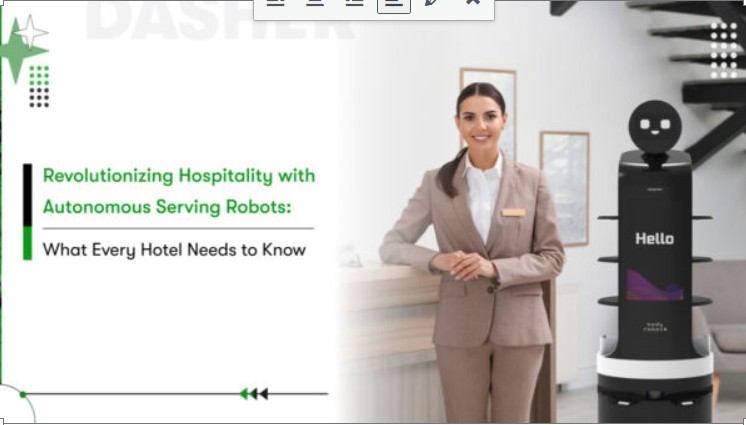
Dasher by Kody Robots fits this hospitality shift as a service-support robot for restaurants, hotels, resorts, cafes, food courts, and event spaces. For businesses across India, the UK, Europe, the USA, Canada, and GCC, service robotics can support stronger operations and better guest satisfaction.
Key Takeaways
- A Serving Robot helps hospitality businesses reduce repeated food and beverage movement.
- A strong Robotics Solution for Hospitality supports staff instead of replacing human service.
- Dasher can support restaurants, hotels, resorts, cafes, food courts, banquets, and catering environments.
- A serving robot works best when routes, staff roles, and handoff points are planned clearly.
- A Navigation Robot approach can help guests move through hospitality venues more easily when guidance is part of the service model.
- Robots in Restaurants can improve service speed, staff productivity, guest recall, and peak-hour control.
Why Hospitality Businesses Are Exploring Robots
Hospitality teams work under constant time pressure. A restaurant may fill quickly during dinner hours. A hotel breakfast area may receive heavy guest traffic in a short window. A resort event may require coordinated food movement across a large space. A banquet hall may need multiple service rounds within minutes.
Manual service remains essential, but repeated walking creates operational strain. Staff may spend too much time moving between kitchen counters, service stations, dining tables, and guest areas. This repeated movement reduces time available for meaningful guest interaction.
A Serving Robot supports the movement layer of hospitality. Staff can focus on welcoming guests, checking table comfort, explaining menu items, resolving issues, and improving the overall experience.
For hospitality leaders, robotics is not about replacing warmth. Robotics is about protecting the time and energy needed to deliver warmth.
What Is a Robotics Solution for Hospitality
A Robotics Solution for Hospitality is a practical automation system that supports service operations inside guest-facing environments. Such a solution can help with serving, movement, navigation, catering support, and service consistency.
Dasher can support hospitality spaces where food or beverage movement happens repeatedly. The robot can become part of a structured workflow between preparation areas and guest zones.
Hospitality robots can support:
- Restaurant service
- Hotel dining areas
- Resort restaurants
- Banquet halls
- Cafes
- Food courts
- Event venues
- Catering operations
- Lounge service
- Large hospitality floors
A robot should not be added only for visual attention. A strong hospitality robot deployment should solve a real service challenge.
Serving Robot for Restaurants
Restaurants are one of the most practical use cases for service robotics. A Serving Robot for Restaurants can support food movement from kitchen areas to dining zones, especially when the restaurant handles high table volume or long walking routes.
Robots in Restaurants can support:
- Table delivery assistance
- Tray movement
- Beverage movement
- Food delivery from kitchen to service zones
- Peak-hour service support
- Family dining experiences
- Large dining floor operations
Human servers remain essential. Staff check orders, interact with guests, handle special requests, manage complaints, and create personal service moments. A serving robot helps reduce repeated carrying work so staff can spend more time on hospitality.
How Dasher Supports Restaurant Operations
Dasher can fit restaurant workflows where repeated movement creates pressure. The robot can support food and beverage delivery across planned routes and help teams reduce unnecessary back-and-forth movement.
A restaurant can use Dasher to support:
- Busy lunch and dinner shifts
- Family restaurant service
- Multi-table delivery support
- Large seating areas
- Themed dining spaces
- High-footfall restaurants
- Event dining within restaurants
The strongest value comes when staff and robot roles are clearly defined. For example, kitchen staff can prepare and load approved items. Dasher can move those items to a service point. Human staff can complete the final handoff and maintain guest interaction.
This model keeps hospitality personal while making service movement more efficient.
Robots in Hotels and Resorts
Hotels and resorts manage many guest-facing food and service environments. A hotel may have a main restaurant, lounge, cafe, banquet area, event space, and breakfast buffet. A resort may have larger walking distances, outdoor dining zones, poolside areas, and multiple guest activity areas.
A Serving Robot can support hospitality teams in these environments by reducing repeated item movement. Staff can stay more focused on guest comfort and service quality.
Hotels and resorts can use Dasher for:
- Restaurant service support
- Buffet area support
- Lounge food and beverage movement
- Banquet service assistance
- Event dining support
- Guest experience enhancement
- Internal service movement
Premium hospitality does not mean every task must be manual. Premium hospitality means every guest should feel served with care. A robot can support that care by reducing repetitive work for staff.
Smart Catering for Events and Banquets
Event catering requires timing, coordination, and presentation. A banquet or corporate event can involve hundreds of guests, multiple service rounds, and fast movement between preparation zones and guest areas.
Smart Catering can support modern hospitality teams that want more structured service delivery for events. A serving robot can help create a more organized catering flow while adding a memorable technology-led experience.
Dasher can support:
- Corporate events
- Banquets
- Conferences
- Exhibitions
- Weddings
- Resort functions
- Product launches
- VIP hospitality setups
A robot-led catering model works best when service routes are planned before the event. Clear loading points, serving zones, staff responsibilities, and timing schedules help the robot support the service team properly.
Navigation Robot in Hospitality Spaces
A Navigation Robot can also be useful in large hospitality venues. Hotels, resorts, convention centers, and large restaurants often have multiple areas that guests need to find.
Guests may need directions to:
- Restaurants
- Banquet halls
- Meeting rooms
- Lounges
- Reception areas
- Event zones
- Washrooms
- Parking access
- Resort activity areas
When navigation support is combined with hospitality service, the guest experience becomes smoother. A robot that supports movement, guidance, or service-related assistance can help guests feel more confident inside large venues.
For restaurants, navigation may be less important. For hotels, resorts, convention centers, and large food courts, guidance can improve the overall journey.
Benefits of Serving Robots for Hospitality Businesses
Better staff productivity
A serving robot can reduce repeated walking and carrying work. Staff can spend more time on guest interaction, service checks, and issue handling.
Better service speed
Food and beverage movement can become smoother when routes are planned clearly. Faster movement helps reduce waiting time during busy hours.
Better guest experience
Guests often enjoy service that feels modern, organized, and memorable. A robot can create a positive moment when service remains warm and human-led.
Better peak-hour support
Restaurants, hotels, and event venues often struggle during short rush windows. A robot can support repeated movement during those pressure periods.
Better staff comfort
Repeated carrying and walking can create fatigue. Reducing part of this workload can improve shift comfort for service teams.
Better brand differentiation
Hospitality businesses compete heavily. A serving robot can help a venue stand out, especially in family dining, modern restaurants, resorts, and event spaces.
Benefits for Guests
A robot should improve the guest experience, not distract from it.
Guests can benefit from:
- Faster service movement
- More available staff
- Cleaner service flow
- Memorable dining experience
- Easier guidance in large venues
- More organized event service
- Modern hospitality atmosphere
A guest does not want technology for the sake of technology. A guest wants a better experience. Dasher becomes valuable when the robot helps the service feel smoother.
Benefits for Hospitality Owners
Hospitality owners need ROI from every operational decision. A Serving Robot can support business value through repeated daily use.
Owners can benefit from:
- Improved service flow
- Reduced repetitive staff workload
- Stronger guest recall
- Better event appeal
- Smoother peak-hour handling
- More efficient dining operations
- Better brand positioning
- Support for staff shortages or high workload periods
A robot used every day in real workflows creates more value than a robot used only as a showpiece.
Why India Is a Strong Market
India has a fast-growing hospitality market across restaurants, hotels, resorts, cafes, food courts, banquet halls, and event venues. Cities such as Ahmedabad, Mumbai, Delhi NCR, Bengaluru, Pune, Hyderabad, Chennai, Jaipur, and Goa have strong demand for dining experiences and premium hospitality.
A Serving Robot fits India because many hospitality businesses handle high footfall, weekend rush, family dining, mall traffic, and event-based service demand. Guests also respond well to unique service experiences when the experience feels useful and well managed.
Dasher can support Indian hospitality businesses that want to improve service movement while creating a modern guest experience.
Why the UK, Europe, USA, Canada, and GCC Can Benefit
The need for hospitality robotics is global. Markets may differ, but service pressure is common.
In the UK and Europe, restaurants and hotels often focus on service quality, staff efficiency, and smooth guest experiences.
In the USA and Canada, hospitality operators often evaluate robotics through labor productivity, customer experience, and operational ROI.
In GCC markets, hospitality is closely connected with premium guest experience, luxury service, large venues, and innovation-led positioning. Restaurants, hotels, resorts, malls, and event spaces in the UAE, Saudi Arabia, Qatar, Kuwait, Bahrain, and Oman can use serving robots to support modern service expectations.
Across all markets, Dasher fits venues where repeated service movement affects staff productivity and guest satisfaction.
Buy or Lease Serving Robot
Hospitality businesses may not all need the same ownership model. Some venues may want long-term robot deployment across daily dining operations. Other venues may want robotic service for events, seasonal promotions, or trial deployments.
Buy or Lease Serving Robot is an important decision for restaurant owners, hotel managers, resort operators, and event companies.
Buying may fit businesses that need continuous use across restaurants, hotels, or food courts.
Leasing may fit businesses that want short-term event support, pilot testing, seasonal campaigns, or flexible deployment.
The right choice depends on:
- Service volume
- Venue size
- Event frequency
- Budget planning
- Guest experience goals
- Staff workload
- Long-term automation strategy
A high-volume venue may gain more value from long-term use. An event-heavy venue may start with flexible deployment.
What Hospitality Leaders Should Evaluate Before Adoption
A serving robot should be selected with practical planning.
Layout suitability
The venue should have clear paths, enough movement space, and suitable service routes.
Service volume
A robot creates stronger value where food and beverage movement happens frequently.
Staff workflow
Teams should know who loads the robot, who receives items, who completes service, and who handles guest interaction.
Guest profile
Family dining, modern restaurants, hotels, resorts, cafes, and experience-led venues can gain stronger guest engagement.
Safety planning
The robot should move in a way that feels safe and comfortable around guests and staff.
Support and maintenance
Training, routine checks, service support, and daily care affect long-term performance.
ROI expectation
Leaders should evaluate staff productivity, service speed, guest experience, and brand differentiation.
Common Mistakes to Avoid
Using the robot only for novelty
A robot may attract attention at first, but long-term value needs daily operational use.
Skipping staff training
Staff should understand how the robot fits the service model.
Choosing unclear routes
Poor routes create confusion. Clear paths improve performance.
Removing human hospitality
Robots should support people, not replace the warmth of service.
Ignoring guest flow
The robot should work with real guest movement, not against it.
Measuring results too early
A serving robot should be evaluated across repeated shifts, events, and service cycles.
Why Kody Robots Fits Hospitality Automation
Kody Robots fits hospitality automation through Dasher, a serving robot built for service-support use cases. Hospitality businesses need robotics that solve real workflow pressure, not technology that only creates short-term attention.
Dasher supports restaurants, hotels, resorts, cafes, food courts, banquets, and event venues by helping teams manage repeated food and beverage movement. The value is practical: smoother service, better staff availability, and a more memorable guest experience.
Conclusion
Serving Robot adoption is growing because hospitality businesses need smarter ways to improve service flow, staff productivity, and guest experience. Restaurants, hotels, resorts, cafes, food courts, and event venues all face repeated movement pressure during daily operations.
Dasher supports this need by helping hospitality teams manage food and beverage movement more efficiently. Human staff remain at the heart of hospitality, while robots handle the repetitive movement layer.
For hospitality businesses across India, the UK, Europe, the USA, Canada, and GCC, service robotics can create a stronger, smoother, and more memorable guest experience. Dasher gives hospitality leaders a practical path toward smarter service operations.