
I’ll be honest, I used to think returns were just a logistics problem. Like, figure out the shipping, give the money back, done. But after seeing what actually happens inside support queues during festive sale seasons? It’s chaos. Pure, exhausting, completely avoidable chaos.
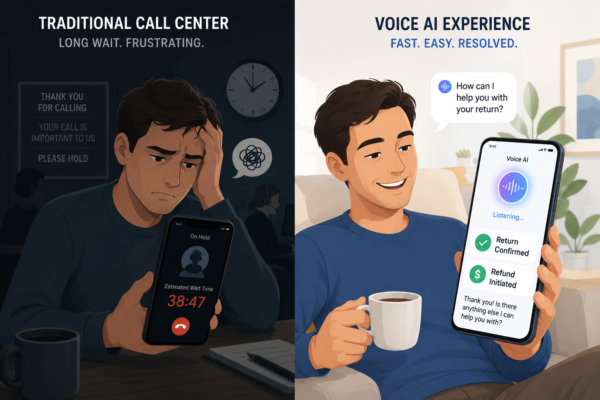
A customer calls in. Gets put on hold. Finally reaches someone who asks for the order number. Then the invoice number. Then confirms the address. Meanwhile, the customer is three minutes into a call that should’ve taken thirty seconds, and they’re already annoyed before anyone’s said sorry.
Voice AI for customer support is changing this, and faster than most people expect. Not in a “the robots are taking over” kind of way, but in a genuinely practical, solves-a-real-problem kind of way. Brands, not just big ones, are deploying voice AI specifically to untangle the return process, and customers are noticing the difference.
This piece gets into the actual mechanics of how it works, where it’s making the biggest impact, and what to think about before you adopt it.
Why the Returns Experience Is Broken (And Has Been for a While)
Nobody in e-commerce wants to say this out loud, but returns handling is where most brands quietly give up on the customer experience. The buying journey gets all the UX love. The return journey? An afterthought.
Here’s what customers actually deal with:
- Wait times that make no sense: Holding 20 minutes to say “I want to return this” when the answer is either yes or no
- Agents who give different answers: One says 15 days, another says 30, someone else says it depends on the product. Which is it?
- Manual lookups that slow everything down: The agent is typing while you’re waiting, pulling up the order, checking the policy, and cross-referencing the date
- Zero proactive updates: Once you drop that package off, you’re guessing. Is the refund coming? Did they receive it? Who knows
- Language gaps: A customer in Surat who’s more comfortable in Gujarati shouldn’t have to explain a defective product in English to get a resolution
Each of these is a loyalty leak. Customers don’t forget a bad return; they just quietly don’t come back.
How Voice AI for Customer Support Actually Works in Returns
This is where it gets interesting. Voice AI for customer support isn’t a FAQ bot dressed up with audio. It’s a system that’s connected to your order data, your return policy logic, and your logistics partners, and it holds an actual conversation that moves toward a resolution.
Here’s how a return interaction typically unfolds:
Step 1: The Customer Is Recognized Immediately
No “please enter your 16-digit order number followed by the pound key.” The AI matches the caller to their account using phone number, a simple spoken order ID, or, in more advanced setups, voice recognition. It already knows who you are before you finish saying hello.
Step 2: The Full Order Context Is Already There
The AI has pulled the order history before the customer finishes their first sentence. It knows what was bought, when, from which seller or warehouse, and what the delivery date was. The customer doesn’t recap anything; they just say what the problem is.
Step 3: Eligibility Gets Checked in Real Time
This is the part that used to require an agent to manually check a policy document. The AI does it automatically, cross-referencing the purchase date, product category, and applicable return window. If it qualifies, it moves forward. If it doesn’t, it explains exactly why, in plain language, without being defensive about it.
Step 4: Label Gets Generated, Refund Gets Triggered
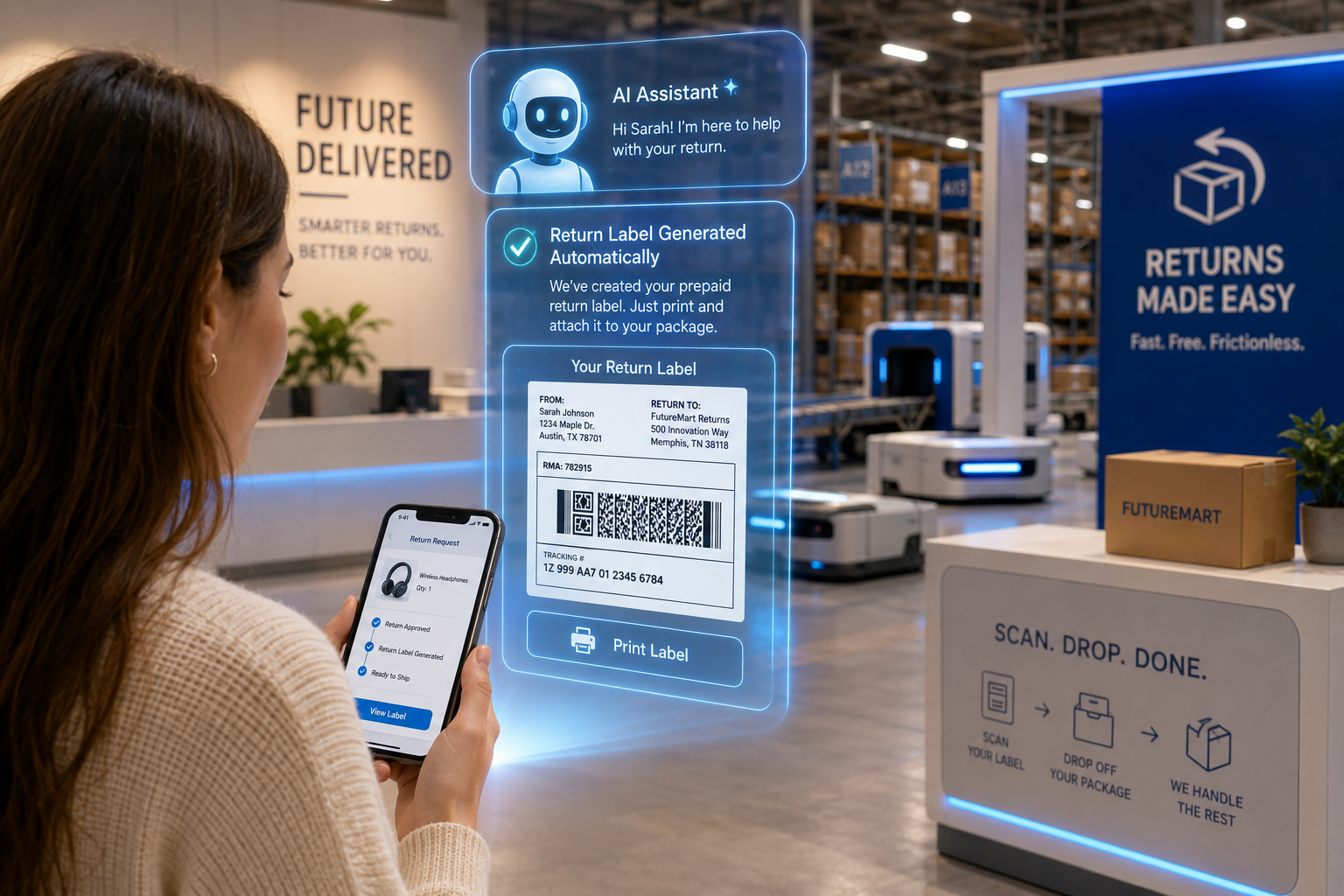
The return label goes to the customer’s email or WhatsApp. The refund workflow starts on the backend. All of this happens inside the same conversation. No “we’ll send you an email within 24-48 hours.” It’s done.
Step 5: Follow-Ups Happen Without Anyone Asking
Status updates, package received, refund initiated, and refund credited go out automatically. The customer never needs to call back just to know where things stand.
Where Brands Are Actually Seeing the Difference
Real impact, not theoretical. These are the shifts brands report once voice AI handles returns:
Call Duration Drops Sharply
- Typical agent-handled return call: 7-12 minutes including verification, lookup, and label generation
- Voice AI-handled: under 90 seconds for standard cases
- That’s not just efficiency, that’s a completely different customer experience
Support Teams Stop Drowning During Sale Seasons
Big sale periods, such as Diwali, end-of-season, and new launches, create return surges. Brands that used to scramble to hire temporary agents are now letting voice AI absorb the spike. No training lag, no quality inconsistency, no overtime.
Repeat Contacts Go Down Significantly
When the resolution is clear and the updates are automatic, customers stop calling back. A reliable Voice AI Platform typically cuts return-related repeat contacts by 35-45%. That’s not a small number when you’re talking about thousands of daily interactions.
First-Call Resolution Actually Becomes the Norm
It’s always been the goal. Voice AI makes it the default at least for the large majority of straightforward return requests that don’t need human judgment.
Voice AI for Returns Across Different Product Categories
The way returns work varies by what’s being returned. Voice AI handles this with category-specific logic, which is one of the underappreciated things about how these systems are actually built.
Fashion and Apparel
- Asks guided questions about the fit issue before jumping to return “Was it too large, too small, or different from the photo?” and often offers an exchange instead
- Handles size swaps without starting a new order flow
- Deflects a meaningful chunk of returns by routing customers toward the right size or alternative
Consumer Electronics
- Checks warranty status and purchase date before anything else
- Offers troubleshooting before initiating a return actually solves some problems right there
- Routes defective units to the correct service center rather than starting a standard return
Health and Beauty
- Navigates opened-product restrictions without making customers feel judged about it
- Offers store credit or coupon alternatives when physical returns aren’t policy-eligible
- Handles this category with more sensitivity than most human agents who are rushing through a queue
Home and Furniture
- Manages large-item return pickups scheduling, courier coordination, and pickup window reminders
- Handles partial returns within a bundled order (the chair broke, not the whole set)
- Sends automated pickup reminders so the return doesn’t get missed
Multilingual Returns Support: Why It’s Not Optional Anymore?
This point doesn’t get enough attention. If your returns process only functions well in English, a significant portion of your customer base is having a worse experience than they should, and you probably aren’t measuring it because they just silently churn.
For brands working in India, this is especially stark. A customer in rural Maharashtra who bought a product on your app didn’t experience a language barrier during the purchase. Regional-language storefronts have largely solved that. But then, the moment something goes wrong, and they need support, suddenly they’re navigating English prompts, formal language, and support agents who may or may not code-switch comfortably.
Businesses investing in AI in Customer Support India are increasingly building multilingual voice AI as the first layer of their returns flow Hindi, Tamil, Kannada, Marathi, Gujarati, and Bengali. The customers who get support in their own language trust the outcome more. They escalate less. They come back more.
This isn’t a nice-to-have anymore. It’s a market reality.
What to Actually Look for When Evaluating a Solution
There are a lot of voice AI vendors making similar claims. Here’s where to actually press:
- How deep is the OMS integration? Surface-level API connections break under edge cases. Ask specifically what happens when order data is incomplete or inconsistent
- Can return policy logic be customized? Generic rule sets cause mismatches. Your return windows, category exceptions, and seller-specific rules should be configurable
- What languages are supported natively vs. translated? There’s a real difference between an AI that thinks in a language and one that translates from English on the fly
- What does escalation actually look like? The handoff to a human agent should carry the full conversation context, not start over
- What analytics come out of it? Return reason data by category, by SKU, by region. This is product intelligence, not just support data
The right Voice AI for Customer Support does more than close tickets. It tells you why returns are happening in the first place.
Honest Answers to the Concerns That Come Up
“Customers will be frustrated by talking to a machine.“ They’re already frustrated by hold times, by inconsistent answers, by having to call back three times. A voice AI that resolves the issue in 90 seconds without any of that friction isn’t “a machine people tolerate.” It becomes the preferred channel.
“What happens with complicated cases?“ Standard return requests are handled fully by the vast majority. Anything outside the norm gets escalated to a human agent who already has the full transcript and doesn’t need the customer to start over. That’s actually better escalation than most call centers manage today.
“The cost seems high.“ Run the numbers against your current cost-per-contact. If you’re spending ₹180-₹350 per return call, and voice AI brings that under ₹40 while handling 3x the volume, the math sorts itself out pretty quickly.
Conclusion
Returns will always exist. That’s not the problem. The problem is that for most e-commerce brands, the returns experience is still designed around what’s convenient for the business, not what’s easy for the customer. And customers notice. They don’t always say something. They just quietly stop buying.
Voice AI flips that dynamic. It puts resolution speed, language access, and proactive communication back in the customer’s corner without adding headcount or burning out support teams. Brands that have made this shift aren’t just seeing better CSAT scores. They’re seeing customers who, surprisingly, don’t mind returning something because the process didn’t make them feel like they’d done something wrong.
There’s a version of returns that actually builds loyalty rather than destroys it. Voice AI is what gets you there.