
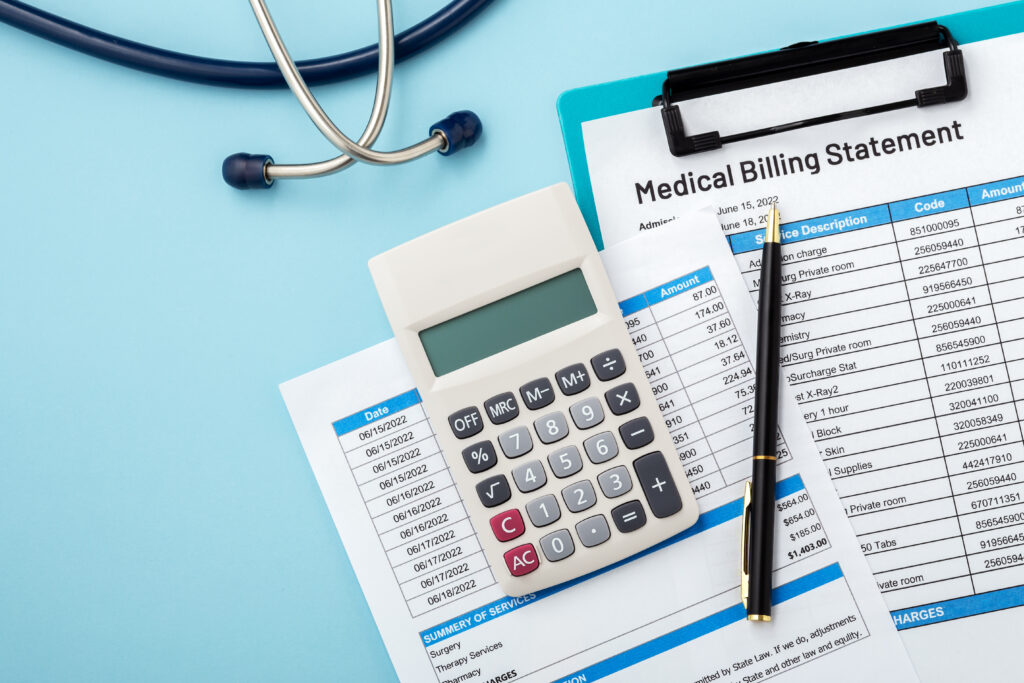
One of the most difficult administrative functions in healthcare industry is medical billing. Hospitals, clinics and private practices handle huge amounts of insurance claims that entail medical codes, payer regulations and compliance demands. Even the smallest mistakes in billing in Florida healthcare systems may lead to claim denial, sluggish reimbursement, and extra workloads.
Due to the ever-increasing amounts of healthcare data, manual auditing solutions are insufficient in identifying and resolving billing errors with efficiency. Machine learning is becoming a great solution that may assist healthcare organizations to analyze their billing data, find patterns, and detect possible errors prior to submitting their claims to insurers.
Understanding Medical Billing Errors in Healthcare Systems
Medical billing errors may be made in various phases of the revenue cycle. The wrong medical code, lack of documentation, wrong patient details and wrong insurance details are some of the most common ones. The mistakes tend to cause rejected or delayed claims which may interfere with the monetary flow of healthcare practices.
Healthcare providers in Florida are often involved in various insurance arrangements and shifting reimbursement policies. This has complicated the probability of billing discrepancies. Incase of any mistakes, the billing department should check the claims, amend the data, and re-file them, which may slow down the whole billing process.
How Machine Learning Works in Medical Billing
Machine learning relies on the analysis of data in large quantities to infer patterns, as well as recognizes anomalies. The algorithms can also screen thousands of claims in healthcare billing and compare them with historical data to detect irregularities.
Machine learning models are constantly improving because they work on additional information as opposed to traditional rule based systems which do not. They are able to understand what is a normal and what billing pattern is a hint of errors.
As an example, when there are specific procedure codes that are usually accompanied by certain diagnosis code, the system can tell when the pattern changes unanticipated. In case these mismatches are detected, the algorithm sets off an alarm to investigate the claim.
Identifying Coding Errors Through Data Patterns
One of the most frequent causes of claims denials is medical coding errors. The machine learning systems are capable of analyzing the past billing data to determine patterns that are related to proper coding practice.
The system notifies billing teams of the existence of codes out of the ordinary patterns of similar cases in the claim, and will stop the claim before it is sent to insurance. Such proactive practice will minimize the risk of claim rejection and enhance the quality of the general accuracy of billing processes.
The workload of the billing personnel in big healthcare systems can be decreased significantly with the implementation of automated pattern recognition in Florida, with high compliance rates sustained.
Predicting Claim Denials Before Submission
Medical billing is one of the areas where machine learning is most useful due to prediction of the potential of a claim denial. Machine learning models can identify the factors that can predispose the possibility of a rejection by comparing the outcomes of past claims.
These models test various variables which include payer rules, procedure codes, patient demographics, provider specialty. Upon preparing a claim, the system considers these factors and approximates the likelihood of the claim being denied.
When the risk is high, the billing teams are able to read the claim and rectify any mistake and send it to the insurance provider. This minimizes resubmissions and increases the reimbursement cycles.
Improving Revenue Cycle Efficiency
Machine learning is not only used in detecting the errors but also in enhancing the performance of revenue cycle management. Automated data analysis aids the healthcare organizations to recognize the repetitive billing issues and enhance their internal workflow.
As an example, analytics tools may show the common procedures that are denied, errors in coding, or missing documentation. By solving these problems, healthcare leaders will be able to streamline their workflow and minimise the operational inefficiencies.
A significant number of healthcare providers collaborate with specialized services and, specifically, a florida medical billing company employing the latest analytics and machine learning tools to track billing data and identify anomalies and assist in enhancing the performance of the revenue cycle.
Such partnerships enable the medical providers to concentrate more on the patients and at the same time their billing practices are kept correct and efficient.
The Future of Machine Learning in Healthcare Billing
Machine learning technologies are gradually gaining more and more acceptance in healthcare systems. These tools will become even more precise in identifying billing problems and estimating claim results as more data will be arranged.
The next steps can be real time validation of billing, automatic compliance checks and assistive coding. Such innovations will enlighten the healthcare organizations to be financially afloat and to decrease the administrative burdens.
To healthcare providers in Florida, machine learning can be used in billing operations to help them raise the accuracy of claims, decrease the number of claims denied, and increase efficiency in their operations.
FAQs:
1.What are the most prevalent healthcare medical billing errors?
The most frequent medical billing mistakes are wrong procedure coding, lack of patient details, inadequate documentation and improper insurance information. These problems normally lead to denial of claims, or late payments.
2.What is the role of machine learning in billing errors reduction?
Machine learning uses big datasets of billing data to determine patterns and anomalies. In case anomalies are observed in claims, the system raises a red flag to be reviewed to ensure that the billing teams rectify the anomaly before sending them.
3.Are claim denials predictable using machine learning?
Yes. Historical claim data can be analyzed using machine learning models and used to determine factors that most often result in denials. This will enable the healthcare organizations to fix the possible problems before submitting claims to the insurers.
4.What is the significance of billing accuracy by healthcare givers?
Adequate billing will guarantee prompt reimbursements, less administrative effort and assist medical providers to be financially stable. It also makes sure that it complies with insurance and regulatory requirements.
5.Is the use of advanced billing analytics beneficial to healthcare providers in Florida?
Yes. Florida healthcare providers can utilize large volumes of patients and various insurance networks to gain significantly by adopting data driven billing systems which enhance accuracy and efficiency.
Conclusion
The machine learning is changing how medical institutions are running their billing systems. These technologies can be used to detect anomalies, predict the results of a claim, and analyze large data volumes to help providers identify the billing errors before they affect the revenue cycle.
Machine learning is a sure way to enhance the accuracy of claims and operational efficiency in Florida healthcare systems whose administrative complexity and insurance demands have the potential to raise the threat of billing errors.
With the implementation of data driven billing policies and the use of sophisticated analytics, healthcare companies will be able to lower the number of claim denials, improve the working process, and enhance the overall financial statistics.