
Healthcare in 2026 is no longer just digitized it is intelligently automated. Hospitals, diagnostic labs, telemedicine providers, and insurance networks are increasingly leveraging AI systems that not only analyze data but also retrieve and contextualize it in real time. At the center of this shift are RAG development companies building enterprise-grade solutions that combine large language models with structured medical data systems.
Retrieval-Augmented Generation (RAG) is redefining how healthcare institutions access knowledge, automate workflows, and enhance decision-making. Through advanced retrieval augmented generation services and strategic RAG system development, healthcare organizations are achieving safer, faster, and more reliable automation.
Let’s explore how this transformation is unfolding.
The Healthcare Automation Challenge
Healthcare generates enormous volumes of data:
-
Electronic Health Records (EHRs)
-
Diagnostic reports
-
Medical imaging summaries
-
Insurance documentation
-
Clinical guidelines
-
Research publications
Despite digital systems, data often remains siloed. Doctors and administrators spend significant time searching through fragmented databases, which slows diagnosis and increases operational inefficiencies.
Traditional AI chatbots and automation tools struggle because they rely solely on pretrained knowledge and cannot access updated hospital-specific data securely.
This is where retrieval-augmented AI changes the game.
What Makes RAG Different in Healthcare?
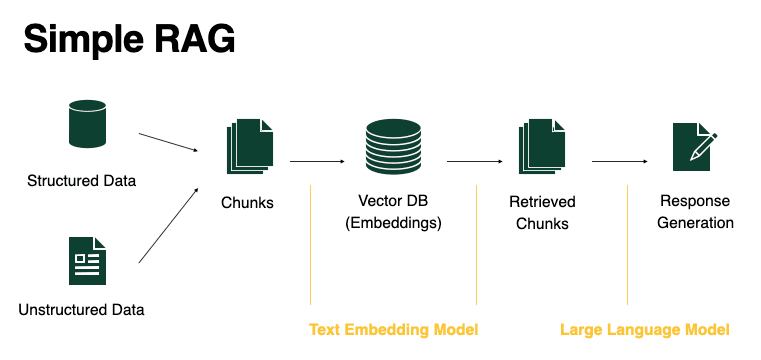
RAG architecture enhances large language models by connecting them to enterprise knowledge bases. Instead of generating answers from static training data, the system retrieves relevant information from approved medical databases before producing a response.
For healthcare automation, this means:
-
Context-aware patient data access
-
Real-time clinical guideline referencing
-
Secure query handling
-
Reduced hallucination risk
Modern retrieval augmented generation services are designed with strict compliance standards, ensuring patient data privacy and secure information handling.
Clinical Decision Support Powered by RAG
One of the biggest breakthroughs in 2026 is AI-driven clinical assistance.
With robust RAG system development, healthcare providers can:
-
Retrieve patient history instantly
-
Compare symptoms with updated medical guidelines
-
Generate evidence-backed recommendations
-
Flag potential drug interactions
Instead of manually searching medical databases, doctors receive contextual summaries within seconds.
This reduces cognitive overload and improves patient outcomes.
Automating Medical Documentation
Medical documentation consumes nearly 30–40% of physicians’ time. Manual note-taking, transcription errors, and repetitive record updates slow down healthcare workflows.
RAG-driven systems now:
-
Convert doctor-patient conversations into structured records
-
Pull relevant patient history automatically
-
Generate discharge summaries
-
Assist with coding and billing documentation
Because the system retrieves verified data before generating summaries, documentation accuracy improves significantly.
This level of automation is possible only through specialized RAG system development tailored to healthcare environments.
Transforming Patient Support and Virtual Assistants
Healthcare providers increasingly deploy AI assistants to support patients outside hospital settings.
Traditional chatbots often fail due to outdated knowledge or generic responses. RAG-based systems overcome this by retrieving accurate data from hospital knowledge bases before answering queries.
Examples include:
-
Appointment scheduling support
-
Insurance coverage clarification
-
Medication guidance
-
Post-surgery care instructions
Retrieval augmented generation services ensure responses align with hospital-specific policies and updated medical guidelines.
This enhances patient trust and reduces administrative burden.
Enhancing Medical Research and Knowledge Discovery
Healthcare research evolves rapidly. New studies, treatment protocols, and regulatory changes emerge constantly.
RAG-powered research assistants can:
-
Search large clinical databases
-
Summarize peer-reviewed research
-
Compare treatment effectiveness
-
Generate insights from internal hospital data
This accelerates evidence-based decision-making and helps institutions remain competitive.
In 2026, leading RAG development companies are integrating research automation with hospital knowledge systems to create powerful clinical intelligence platforms.
Improving Revenue Cycle and Insurance Processing
Healthcare automation extends beyond clinical use cases.
Insurance claims processing is complex and error-prone. Missing documentation, incorrect coding, or policy misinterpretation can delay reimbursements.
RAG-enabled systems can:
-
Retrieve policy-specific rules
-
Validate claims against patient records
-
Flag inconsistencies
-
Generate compliant documentation
By combining retrieval augmented generation services with financial workflow systems, healthcare providers reduce revenue leakage and administrative delays.
Ensuring Data Security and Compliance
Healthcare AI must comply with strict regulatory standards such as HIPAA and regional data protection laws.
Enterprise-focused RAG system development includes:
-
Role-based access controls
-
Encrypted retrieval pipelines
-
Secure vector databases
-
On-premise or hybrid deployment options
Unlike public AI tools, enterprise RAG systems operate within controlled environments, minimizing risk.
RAG development companies prioritize compliance-driven architecture to make automation safe and scalable.
Integration with Existing Healthcare Infrastructure
One of the biggest barriers to AI adoption in healthcare is legacy infrastructure.
Hospitals rely on established EHR systems and enterprise software platforms. RAG systems must integrate seamlessly without disrupting workflows.
Advanced retrieval augmented generation services support:
-
API-based integration with EHR systems
-
Structured and unstructured data ingestion
-
Real-time database indexing
-
Continuous model updates
This allows healthcare organizations to modernize operations without replacing core systems.
Real-World Impact in 2026
Healthcare institutions deploying RAG-powered automation are reporting measurable improvements:
-
Reduced administrative workload
-
Faster patient onboarding
-
Lower documentation errors
-
Improved clinical accuracy
-
Enhanced patient satisfaction
The shift from reactive workflows to intelligent automation is transforming how healthcare operates.
RAG development companies are not simply providing AI tools — they are building foundational knowledge systems for modern healthcare ecosystems.
Why Healthcare Needs Specialized RAG Development
Healthcare data is highly sensitive and structurally complex. Generic AI implementations often fail because they lack:
-
Medical terminology alignment
-
Regulatory compliance frameworks
-
Secure deployment models
-
Domain-specific training
Specialized RAG system development addresses these challenges by customizing:
-
Medical knowledge indexing
-
Secure retrieval pipelines
-
Healthcare-specific prompt engineering
-
Continuous monitoring systems
This tailored approach ensures high performance and reliability.
The Competitive Advantage for Healthcare Providers
In 2026, automation is no longer optional. Healthcare institutions that invest in RAG-powered AI gain significant competitive advantages:
-
Faster clinical workflows
-
Improved operational efficiency
-
Better data utilization
-
Reduced burnout among medical staff
By leveraging retrieval augmented generation services, organizations move beyond simple AI experimentation toward enterprise-grade intelligence systems.
The Road Ahead
As AI models continue to evolve, the integration of retrieval systems will become the standard for healthcare automation.
Future developments may include:
-
Multi-modal RAG systems combining text, imaging, and sensor data
-
AI-driven predictive patient risk modeling
-
Fully automated compliance auditing systems
-
Personalized treatment plan generation
RAG development companies will continue to innovate, creating secure and scalable systems that redefine healthcare automation.
Conclusion
Healthcare in 2026 demands intelligent systems that can retrieve, understand, and generate information securely. Traditional AI approaches fall short when dealing with sensitive and complex medical data.
Through advanced retrieval augmented generation services and enterprise-grade RAG system development, healthcare providers are transforming documentation, patient engagement, research workflows, and operational processes.
RAG development companies are playing a pivotal role in this evolution building AI systems that do not just generate responses, but deliver accurate, contextual, and compliant intelligence.
The future of healthcare automation is not just AI-powered it is retrieval-augmented, secure, and enterprise-ready.