
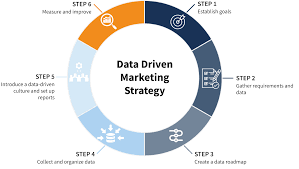
Data science has become a cornerstone of modern business strategy. Organizations today rely on data not just to understand past performance, but to predict trends, personalize experiences, and make confident decisions at scale. One of the areas most influenced by this shift is marketing, where data-driven approaches are redefining how brands connect with their audiences.
Data-driven marketing combines analytics, customer insights, and performance measurement to move beyond assumptions. Instead of relying on broad demographics or intuition, marketers now evaluate real behavior, preferences, and engagement patterns to guide every campaign decision. This shift allows businesses to respond faster to market changes while maintaining consistency across channels.
Why Data Quality Matters More Than Ever
While access to data has increased dramatically, not all data leads to good decisions. Inaccurate, incomplete, or outdated datasets can result in wasted budgets, ineffective targeting, and flawed messaging. This is why due diligence plays a critical role in data-driven marketing.
Due diligence ensures that data sources are reliable, collection methods are transparent, and analytical models are applied correctly. It helps teams validate assumptions before scaling campaigns and minimizes the risk of acting on misleading signals.
A deeper look at how this process strengthens marketing outcomes is explored in this article on marketing due diligence.
Data Science as a Strategic Advantage
When data science principles are applied effectively, marketing becomes both predictive and proactive. Machine learning models can anticipate customer needs, while behavioral analytics reveal patterns that may not be immediately visible through traditional analysis.
Data-driven teams are also better equipped to test hypotheses through experimentation. A/B testing, multivariate analysis, and real-time performance tracking enable continuous learning and refinement. This approach reduces guesswork and encourages evidence-based innovation across campaigns.
Building Trust in Data-Led Decisions
Trust is essential for data-led organizations. Stakeholders are more likely to support insights when they understand how conclusions were reached. Clear documentation, explainable models, and consistent evaluation standards help bridge the gap between technical analysis and business decision-making.
By fostering a culture that values accuracy, accountability, and continuous improvement, organizations can fully leverage data science as a long-term growth driver rather than a short-term tactic.
Conclusion
Data-driven marketing is no longer optional—it is a fundamental requirement in today’s digital-first environment. When paired with strong due diligence practices, data science enables smarter decisions, stronger customer relationships, and sustainable performance gains.
The future of marketing belongs to organizations that treat data not just as an asset, but as a responsibility—using it carefully, ethically, and strategically to create meaningful impact.