

It looks like a piece of cake to write job descriptions until you realize that they can be biased. Terms like “ninja,” or “dominant” or more may appear as neutral characteristics but, actually, they can prevent the right candidates from applying for the job.
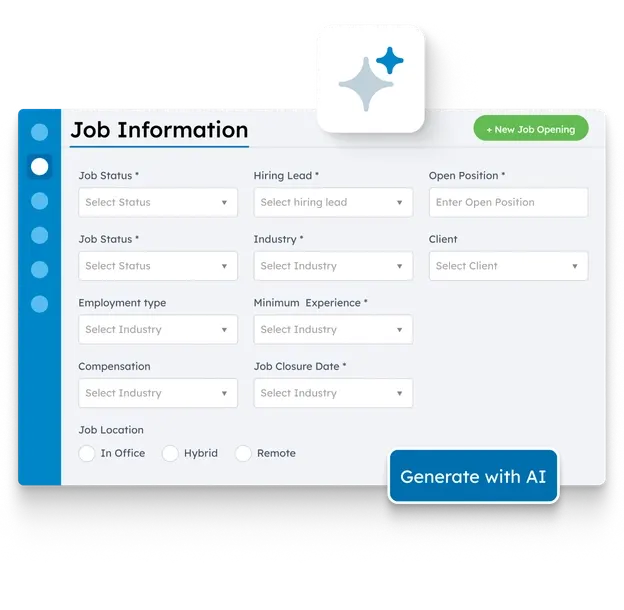
That is the point where AI job description tools come to the rescue. HR departments employ AI-powered tools to identify bias in job descriptions, normalize the language, and thus, get the benefit of a broader talent pool, without doing the rewriting jobs themselves.
We might ask ourselves what role Artificial Intelligence plays in the HR writing process and how it assists teams in creating job ads that are fair, inclusive, and balanced. Basically, it does not substitute recruiters but rather shows them the way to bias-free language that is understandable to everyone.
RD often lose touch with inclusivity when they:
- Employ gender-coded words like “dominant” or “supportive”.
- Have too many must-do skills in the requirements list.
- Put more emphasis on “culture fit” rather than skills.
- Use words that some of the applicants might not understand.
Such minor mistakes can limit the pool of applicants and thus damage the company’s image. On the other hand, inclusive language attracts a larger number of talents and is a reliable way of gaining their trust. That is the reason, why knowing the true worth of inclusiveness in job descriptions is even more important nowadays.
Why Inclusivity in Job Descriptions is Crucial
Just as bias in job ads, which are not always intentional, can be biased unintentionally, job descriptions may thus be culturally biased or unconscious ones. Regardless of the cause of bias, the result is the same – it shapes the profile of the people who decide to send their CVs to you.
A study made by Harvard Business Review discovered that female candidates are less likely to apply to job openings with masculine-coded words such as “driven” and “decisive”, whereas “supportive” and “collaborative” words are more likely to attract them.
Writing an inclusive job description is not only having a just-sounding text, it is also a way of unlocking the potential of candidates who might have been overlooked. For HR departments that want to recruit without prejudice, it is the first step to achieving real diversity in the work environment.
Inclusivity in job descriptions is a business boon, here is how:
- More extensive talent search: Use of inclusive language in a job posting attracts a greater number of qualified applicants from varied backgrounds.
- Enhanced candidate experience: The use of simple and neutral language equips the candidates with an understanding of the employer’s expectations free of any bias or confusion.
- Hiring quality gets better: The diversity of the pool of candidates raises the probability of discovering those who can bring new ideas and different points of view.
- Employer image gets stronger: Inclusively communicated messages feature a candidate-friendly, modern, people-first company culture, which the candidates trust.
- Teams with higher performance: Diversity within teams, which results from fair hiring practices, usually leads to better team performance and quicker innovation.
To sum up, inclusive hiring is not only a way to promote fairness, but it also reinforces every stage of recruitment, which is exactly the point where AI is starting to make a difference.
Role of AI in Diversity Hiring
Artificial Intelligence is not there to take over the judgment of the HR department. AI’s role is to help the HR department become more aware by showing them what they might not have noticed.
One of the first things that the AI software can do is to go through the job descriptions of thousands of companies and find which ones are biased.
It can find that a certain job description is using words that sound too “masculine” or that the description is at least a little bit biased towards a certain age group or skill level.
Several key technologies are making this possible:
- Explainable AI (XAI): Helps to explain with the help of transparency by outlining the justifications why certain words or phrases are highlighted.
- Natural Language Processing (NLP): Analyzes the tone, sentence structure, and vocabulary of the job description to find bias or identification of the use of the wrong phrases.
- Bias detection models: First, they take the job ad and neutral language dataset then analyze to find the phrases in the job ad that are likely to be gender or demographic biased.
- Context-aware algorithms: Do not limit themselves with keywords. They get the meaning of the words and hence find instances where “young”, “energetic” or “aggressive” words are used in a context that can be an issue of discrimination against qualified candidates.
- AI-powered language scoring tools: Determine the standard of inclusivity and provide suggestions by which the content can be made more balanced and attractive.
On the example of Textio, a prominent AI-powered writing platform, it identifies words that may support one gender over the other or one age group more than the other. The system then provides a percentage that stands for how open or exclusive the text can sound.
This gives a data-based viewpoint to the team of recruiters before the job advertisement is published.
Businesses that have implemented AI hiring software for startups have obtained definite outcomes. HR team members shared that by using AI-driven writing recommendations they were able to increase the number of women applicants by 23% during a period of three months.
Once these technologies have been used to create fairer language, the following question is how AI job description tools apply them to promote diversity in hiring.
How AI Job Description Tools Promote Diversity
Usually, AI for job description tools are a mix of concepts from language models, data analysis, and bias-detection algorithms. They act as HR’s assistants daily and here is the list of their practical functions:
1. Detecting Biased Terms
Artificial intelligence tools comb the web and other resources looking for texts that contain gender-coded, age-biased, or culturally skewed words. Words like “energetic” or “fresh” might be subconsciously excluding older candidates. The program points out these and offers neutral alternatives.
2. Balancing Tone and Language
An inclusive job description also should be free from sounds of the writer being too assertive or passive. AI tools evaluate the balance of the tone and keep the writer informed if the neutrality is preserved. As an illustration, “must dominate the market” into “lead market growth” still shows the strength but there is no bias.
3. Analyzing Sentence Structure
Often lengthy and complicated sentences may, without the writer knowing, be a kind of filter for people whose first language is not English. Artificial intelligence systems participate in language simplification and thus increased accessibility.
4. Comparing with Industry Benchmarks
One of the AI-based recruitment software features is the benchmarking of your employment advertisement against others with similar roles within different sectors. If your ad is demanding more qualifications or is using more masculine-coded words than the average ones, it points out the difference to you.
AI may drive diversity at the hiring stage, but its influence extends beyond fairness, improving results across the entire recruitment cycle.
Benefits That are Beyond Fairness
The use of inclusive language is not only a respectful way of communication, but it is also one of the main driving agents of better recruitment results. Transparent and unbiased job descriptions reach more qualified candidates and eventually lead to the company’s hiring success.
It is reflected in practice as follows:
1. Application Quantities are Increased
Inclusively written job descriptions address more potential candidates. The effect of omission of gender-coded words or acronyms, which can cause the alienation of certain groups of people, is that companies have the engagement of talented professionals who, in case of the absence of such a position, would have not applied for their company.
2. Improved Employer Branding
Usually candidates judge the culture of a company through communication. The use of inclusive phrases is a sign that the company respects diversity and equity among the employees. Therefore, not only candidates but also current employees become promoters of the company.
3. Higher Employee Loyalty
Once individuals are able to identify themselves and receive due respect from the beginning, they will stay longer. Equitable and inclusive recruitment approaches build the foundation of a great employee experience that lowers early departure and increases the loyalty of the team.
4. Stable Hiring Quality
Complete job descriptions reflect the attribute skills and responsibilities realistically. This approach enables recruiters to target candidates with the right skill set, thus resulting in better performance and fewer turnovers.
To make a long story short, inclusive recruitment is not only about ethical conduct, but it is also the wise thing to do. The conscientious use of language in job descriptions enhances both the image and the results of the company, thus it leads to the creation of a vibrant and loyal workforce.
Conclusion
Inclusive job descriptions are not only fair, but they also indicate that a company is committed to providing equal opportunities. HR departments using AI in recruitment can easily identify bias, adjust the tone, and create job postings that appeal to a wide range of talented and qualified individuals.
Artificial intelligence tools for writing job descriptions are not decisions of humans’ removal, but rather, they are decisions of humans’ enhancement. By combining data and empathy, recruiters can engage more effectively, make better hiring decisions, and have the ability to grow their teams with the right people.
Ultimately, inclusiveness facilitated by AI is not merely an effective hiring strategy but also a message about the company’s values.