
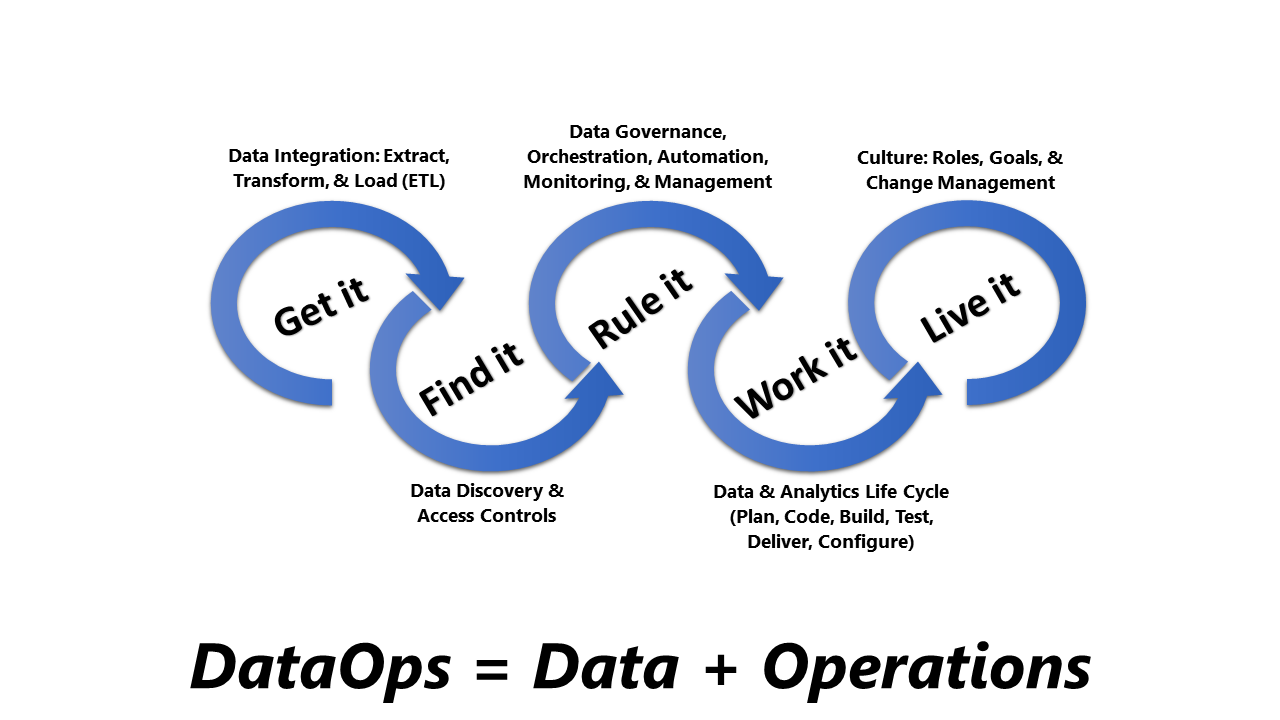
Most enterprises know their data environment has become too complex for humans alone. Systems multiply. Pipelines break at the worst possible times. Dashboards show numbers that do not match. Teams spend more hours fixing issues than generating insights. Everyone accepts this as the cost of doing business.
Agentic AI is changing this mindset.
Instead of expecting human teams to manually monitor, validate and orchestrate data workflows, businesses are starting to deploy AI agents that can sense what is happening across the data ecosystem, decide what needs to be done and take action without waiting for a human to click a button. It is the shift from AI that only analyzes to AI that autonomously operates.
And this shift is transforming enterprise data operations in ways that will define the next decade of modernization. In this article, we unpack what agentic AI really means for enterprises, how the technology works behind the scenes, the business value companies are already seeing and the concrete steps leaders can take today to start adopting AI agents in their data stack.
Why Traditional Data Operations Are No Longer Enough
For years, companies invested in modern data stacks with the hope that improved tooling would clean up operational chaos. Cloud warehouses, ETL platforms, observability dashboards and governance apps certainly helped, but they also introduced more moving parts. A typical enterprise today runs:
-
Dozens of ingestion pipelines
-
Multiple transformation layers
-
Several environments for dev, QA and production
-
A patchwork of monitoring tools
-
Governance and security solutions that rarely talk to each other
The result is a fragile ecosystem. Small schema changes break pipelines. Data quality issues go unnoticed until reports are sent to leadership. Real time data expectations collide with slow incident resolution. Ops teams stay stuck in fire fighting mode.
The truth is no human team can handle the operational load in real time at enterprise scale. Not consistently. Not at the speed the business needs.
This is exactly where agentic AI comes in.
What Agentic AI Actually Means in Enterprise Data
Agentic AI is not a chatbot or a recommendation system. It is an autonomous digital worker designed to achieve an outcome. The agent observes the system, reasons about the best sequence of actions and executes them, then learns from the results.
In data operations, an AI agent can:
-
Monitor pipelines, logs and metrics
-
Spot anomalies or quality issues
-
Identify root causes
-
Trigger corrective actions
-
Communicate status or escalate when needed
-
Orchestrate workflows dynamically
-
Optimize cost and performance
Instead of waiting for alerts, humans become supervisors. The agent handles tasks end to end. The team focuses on strategy and higher value work.
-
A useful way to think about it is this.
-
The cloud gave us scalable infrastructure.
-
AI agents are giving us scalable decision making.
Where Agentic AI Is Delivering the Most Value in Data Operations
Real enterprise use cases are emerging quickly, and the early results are compelling. The highest value areas fall into six categories.
1. Autonomous Data Quality Management
Instead of depending on static rules and human defined thresholds, agents can continuously assess data patterns, learn what normal looks like and flag anything unusual. More importantly, they can take corrective action.
For example, an agent can detect that a customer address column suddenly contains corrupted values. It can trace the issue back to a faulty source API, run a corrective cleanup script, validate the fix, then notify the data owner with a clear summary.
This reduces hours of manual triage to minutes and prevents downstream reports from being affected.
2. Intelligent Pipeline Orchestration
Traditional orchestration frameworks treat workflows as fixed sequences. If a failure occurs, everything stops until someone jumps in. AI agents change this model. They can dynamically reorder tasks, retry intelligently, provision more compute or reroute data through alternative paths.
This keeps the data flowing even when systems behave unpredictably.
3. End to End Incident Response
Data incidents are inevitable, but long resolution cycles should not be. Agents can automate the majority of the incident response process from detection to diagnosis to remediation. Most issues never need to reach a human unless they involve judgment, governance or cross team coordination.
The result is less downtime and fewer business disruptions.
4. Cost Optimization With Real Time Decisioning
Cloud data platforms are powerful but expensive when not managed well. AI agents can continuously monitor usage patterns, auto scale compute, identify inefficient queries, purge redundant data and optimize storage classes. This ensures cost efficiency without manual oversight.
5. Governance and Compliance Automation
Enterprises often struggle to maintain consistent governance because documenting, tagging and validating data manually is tedious. AI agents can auto classify data, enforce policies, monitor access and ensure compliance controls are followed.
This gives organizations confidence that governance is not an afterthought but a built in function.
6. Cross Platform Coordination
An enterprise data ecosystem contains dozens of tools. AI agents act as a connective layer between them. They eliminate the fragmentation by coordinating workflows across ingestion, transformation, analytics, ML, observability and security tools.
This creates a unified operational experience that teams have been asking for.
How Agentic AI Actually Works Behind the Scenes
To understand why this shift is so powerful, it helps to look at the internal architecture of an AI agent. While implementations vary, the core elements are consistent across platforms.
1. Perception Layer
The agent collects signals from the environment pipeline logs, metadata, schema changes, job statuses, user activity and more. This gives it a real time understanding of what is happening.
2. Reasoning Layer
Using LLMs and domain specific logic, the agent evaluates situations and makes decisions. This includes root cause analysis, impact assessment and sequencing of next steps.
3. Action Layer
The agent executes actions through API calls, scripts, orchestration tools or cloud services. Crucially, it does so safely with guardrails and policy constraints.
4. Learning Layer
All actions and results are fed back into the system, allowing the agent to continuously improve. Over time, it gets faster, more accurate and more reliable.
It is this closed loop system that allows agentic AI to operate autonomously rather than simply provide insights.
Why This Shift Matters for Enterprise Leaders
The impact of agentic AI goes beyond productivity. It represents a structural shift in how enterprises manage data.
You reduce dependency on manual talent
Data operations have always required deep expertise. Skilled engineers are rare and overwhelmed. AI agents take over repetitive, error prone, low value activities so human experts can focus on architecture, innovation and business needs.
You improve data reliability dramatically
With agents running checks and actions continuously, data quality becomes proactive instead of reactive. Decisions improve. Customer experiences improve. AI models improve.
You unlock real time operational resilience
When systems fail at 2 AM, operations continue. No waiting. No delays. No escalations that sit in inboxes until morning.
You accelerate modernization without big reorganizations
Implementing agentic AI does not require ripping out existing tools. Agents sit on top and orchestrate what you already have, making modernization smoother and less risky.
You set the foundation for enterprise wide AI transformation
AI strategy is not only about building models. It is about enabling your organization to operate at machine speed. Agentic AI gives you this capability in a practical and measurable way.
What Enterprises Are Seeing After Deploying AI Agents
Companies that have implemented agentic AI in data operations report:
-
40 to 70 percent reduction in incident resolution time
-
30 to 50 percent reduction in manual operational workload
-
25 to 45 percent improvement in pipeline reliability
-
Noticeable reduction in cloud data platform spend
-
Faster deployment of analytics and AI projects
-
Greater confidence from business stakeholders
The numbers vary across industries, but the direction is consistent. AI agents deliver measurable business outcomes quickly.
How to Start Deploying Agentic AI in Your Enterprise
The best part of this technological shift is that you do not need to overhaul your infrastructure. You simply need to introduce agents at the right points.
1. Start with one focused use case
Good starting areas include data quality monitoring, cloud cost optimization or incident response. Pick an area with clear metrics so success is visible.
2. Integrate agents with existing tools
Make the agent work with your warehouse, orchestration platform, observability suite and governance system. This avoids disruption.
3. Establish clear guardrails
Define what the agent can do automatically and what requires human approval. Guardrails build trust and ensure compliance.
4. Measure continuously
Track improvements in downtime, failure rates, cost and manual workloads. Use these numbers to expand deployments into other domains.
5. Shift your team mindset
Engineers should view agents as teammates, not replacements. When adopted correctly, AI agents free teams from the work they dislike and give them more time for strategic contributions.
The Future of Data Operations Will Be Autonomous
Every enterprise is racing to adopt AI. But the companies that will win are not the ones that deploy the most models. They are the ones that build an operational environment where data is reliable, systems self heal and teams focus on innovation instead of maintenance.
Agentic AI is the missing layer that makes this possible. Within the next few years, autonomous data operations will become a standard expectation just like cloud computing is today. Early adopters will gain a competitive advantage that compounds for years.
A Call to Action for Enterprise Leaders
If you are responsible for data, analytics, AI or digital transformation, now is the right time to explore agentic AI. You do not need a massive AI program. You do not need complex ML engineering. You simply need to start with one operational problem and let the agent prove its value.
The faster you begin, the sooner your data ecosystem becomes:
-
More reliable
-
More efficient
-
More cost effective
-
More future ready
Agentic AI is not a hype cycle. It is the next operating layer for the modern enterprise. The leaders who embrace it early will shape how their organizations scale, innovate and compete for years ahead.
If you want to understand what deploying AI agents could look like in your environment, start with a small exploration today. The transformation begins with a single step.