
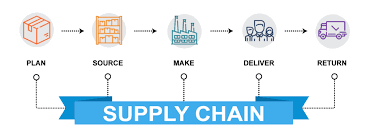
In the age of intelligent automation, the supply chain is transforming from a cost center into a competitive differentiator. Yet, volatility remains its biggest challenge. From global conflicts and port delays to sudden demand shifts and labor shortages, disruptions have become the new normal.
To stay ahead, enterprises are embracing a new technological force: Supply Chain AI Agents. These autonomous AI systems combine machine learning, generative reasoning, and real-time data analytics to make supply chains not just smarter, but self-optimizing.
They represent a breakthrough in Agentic AI, where digital agents can perceive their environment, reason through options, and take actions autonomously. When applied to logistics, these AI Agents turn reactive operations into predictive, adaptive, and resilient ecosystems.
Why Traditional Supply Chains Struggle
Most supply chains today operate on outdated logic. Systems are siloed, decisions are delayed, and optimization relies heavily on human intervention. A planner sees a delay, runs reports, and manually adjusts schedules, often too late to prevent cascading effects.
Even advanced analytics tools mostly offer visibility, not action. They can flag risks but cannot autonomously respond to them.
This is the critical gap AI Agents fill. Instead of waiting for humans to interpret data, these intelligent systems can:
-
Detecting anomalies in real time.
-
Predict disruptions before they occur.
-
Recommend or execute corrective actions automatically.
For example, if weather data predicts a port closure, an AI Logistics Agent can instantly reroute shipments, update carrier schedules, and notify customers, all without waiting for human approval.
This is not just automation. It is autonomous intelligence at scale.
What Are Supply Chain AI Agents?
A Supply Chain AI Agent is an autonomous software entity built using large language models (LLMs), generative AI reasoning, and reinforcement learning. It is capable of performing end-to-end tasks such as procurement, scheduling, demand forecasting, and supplier coordination.
These agents interact with enterprise data systems (ERP, WMS, TMS) and external feeds (IoT sensors, market APIs, weather updates) to continuously monitor, predict, and optimize operations.
Key Capabilities:
-
Perception:
The agent senses environmental data such as shipment delays, supplier updates, traffic patterns, and more.
-
Reasoning:
It interprets data contextually to predict future scenarios, such as demand spikes or material shortages.
-
Action:
The agent autonomously executes decisions, like reordering materials or optimizing delivery routes.
-
Collaboration:
It coordinates with other agents, for example, a Procurement Agent aligning with a Logistics Agent to rebalance supply priorities.
This multi-agent framework, known as Agentic AI Architecture, enables complex supply chain ecosystems to operate like intelligent organisms that are self-aware, self-learning, and self-correcting.
How AI Agents Make Supply Chains Predictive
Predictive logistics has existed in theory for years, but it required extensive manual modeling. AI Agents democratize predictive capabilities by continuously learning from live data and acting on it.
Here’s how they do it:
1. Real-Time Demand Forecasting
AI Agents use advanced machine learning models to analyze customer orders, market signals, social media trends, and seasonal variations. They identify micro-patterns that humans often miss.
When a surge in online searches signals rising demand for a specific product, the agent automatically alerts procurement, adjusts safety stock, and aligns production schedules.
2. Supplier Reliability Prediction
Agents evaluate suppliers not once a quarter, but every second. By analyzing delivery history, quality data, and even geopolitical events, they assign live reliability scores.
If a supplier in East Asia faces potential disruption, the AI Agent recommends alternate vendors or triggers pre-approved contracts elsewhere, ensuring business continuity.
3. Logistics Route Optimization
Using live GPS data, weather updates, and traffic feeds, AI Agents dynamically reroute shipments. They can balance cost, carbon emissions, and delivery speed simultaneously.
In a global pilot, an AI-enabled freight company achieved a 25% reduction in average delivery time and 18% lower fuel usage simply by allowing agents to manage route recalibration in real time.
How AI Agents Build Resilience
A predictive supply chain is only valuable if it can also adapt to change. AI Agents build resilience through autonomous learning and scenario simulation.
1. Continuous Learning from Events
When a disruption occurs, agents record it, analyze root causes, and learn from it. Over time, they develop an evolving knowledge graph that improves risk awareness.
For example, if storms disrupt shipping lanes annually, the agent learns to pre-route cargo seasonally without explicit programming.
2. Real-Time Contingency Planning
Agents run digital twins of supply networks to simulate “what-if” scenarios. They can model the effect of raw material shortages or strikes and suggest preemptive counter-strategies.
This allows leaders to make informed decisions faster, not days later, but within minutes.
3. Sustainable Resilience
AI Agents optimize not only for efficiency but also for sustainability. By analyzing CO₂ data, they recommend greener routes, reduce fuel waste, and select eco-certified suppliers.
Sustainability is no longer a checkbox. It becomes an intelligent parameter integrated into every decision.
Human-AI Collaboration: A New Operating Model
The introduction of AI Agents does not replace humans, it augments them. Instead of spending hours reconciling spreadsheets, planners now collaborate with digital teammates.
-
Procurement leaders receive intelligent recommendations rather than raw data dumps.
-
Logistics managers oversee exceptions while agents automate standard shipments.
-
Executives get actionable insights instead of static dashboards.
This co-pilot model allows humans to focus on strategy, creativity, and partnerships while AI Agents handle precision, prediction, and execution.
Use Cases of Supply Chain AI Agents
1. Predictive Procurement
A manufacturing enterprise deployed a Procurement AI Agent that autonomously tracks commodity price changes and initiates purchase orders when prices are optimal. The result was a 12% reduction in procurement spend within one fiscal quarter.
2. Intelligent Freight Management
A global logistics company adopted AI Freight Agents to predict and prevent delays. When severe storms threatened European ports, the agents rerouted cargo through alternative terminals, maintaining 98% on-time delivery.
3. Automated Demand Rebalancing
A retail brand used Inventory Agents to redistribute stock across regions based on live sales trends. During a flash sale, the system rebalanced inventory in under two hours, preventing stockouts and lost revenue.
These are not theoretical examples. They demonstrate that AI-driven autonomy is already reshaping logistics in measurable ways.
Overcoming Implementation Challenges
While the benefits are clear, adopting AI Agents requires thoughtful planning.
1. Data Unification
AI Agents rely on clean, connected data streams. Start by integrating ERP, CRM, and IoT systems into a single cloud layer.
2. Governance and Trust
Establish AI ethics, explainability, and compliance frameworks. Transparent decision logs are essential for trust and auditability.
3. Change Management
Educate teams on how to collaborate with AI Agents. Adoption accelerates when employees see agents as enablers, not threats.
Once the foundation is set, scaling from a single use case to enterprise-wide deployment becomes seamless.
The Business Impact
Early adopters of AI Agents in supply chain report measurable outcomes:
-
30–40% faster decision cycles due to real-time automation.
-
15–20% reduction in operating costs through predictive optimization.
-
25% improvement in on-time delivery rates across global routes.
-
Enhanced visibility and risk resilience across every operational layer.
McKinsey’s research aligns with these findings, suggesting AI-enabled supply chains can boost logistics productivity by up to 40%.
For enterprise leaders, the ROI is clear: agility, cost efficiency, and strategic differentiation.
How to Get Started with Supply Chain AI Agents
-
Define the Objective
Identify one or two high-impact challenges such as demand forecasting or freight optimization.
-
Choose an AI Agent Framework
Partner with an AI Agent development company that offers end-to-end design, deployment, and monitoring services.
-
Integrate Data and APIs
Ensure all relevant systems such as ERP, TMS, WMS, CRM, and IoT are accessible to the agent for contextual intelligence.
-
Run Pilot Projects
Start with controlled environments to validate performance and governance protocols.
-
Scale and Iterate
Once results are proven, expand the agent network across procurement, production, and distribution functions.
The future supply chain will not be a system of spreadsheets and dashboards, it will be a network of intelligent agents working 24/7 to anticipate change.
The Future: Agentic Supply Chains
AI Agents are not a passing trend. They represent the next frontier of digital transformation. As multi-agent ecosystems evolve, we will see:
-
Fully autonomous logistics orchestration that responds instantly to global events.
-
Generative AI planning that designs new supply routes or warehouse layouts dynamically.
-
Inter-company AI collaboration, where agents from different enterprises negotiate and coordinate directly through secure APIs.
The vision is bold but achievable: a supply chain that thinks, predicts, and adapts in real time.
Organizations that start now will define the benchmark for resilience and responsiveness in the coming decade. Those that wait risk becoming obsolete in an AI-first world.
Conclusion
Supply Chain AI Agents are rewriting the rules of logistics. They bring together predictive analytics, generative reasoning, and autonomous decision-making to create supply networks that can see, think, and act.
In an era where disruptions can ripple across continents in hours, having a predictive and resilient supply chain is not optional. It is the foundation of business survival.
Companies that embrace Agentic AI today will not just optimize logistics, they will future-proof their entire enterprise. Now is the time to move from automation to autonomy. Let AI Agents lead the way toward a truly intelligent, resilient supply chain.