
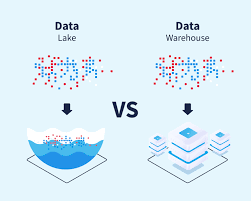
In 2025, the data landscape is more complex and dynamic than ever before. Organizations are no longer just collecting data. They are harnessing it to drive innovation, make real-time decisions, and gain a competitive edge. Central to this transformation are two foundational technologies: data lakes and data warehouses. Understanding their distinct roles, strengths, and how they complement each other is crucial for any business aiming to thrive in the data-driven era.
What Is a Data Lake?
Think of a data lake as a vast, unstructured reservoir where all types of data, structured, semi-structured, and unstructured, flow in without predefined rules. It’s like an open canvas, ready to capture everything from transactional data and sensor logs to social media posts and multimedia content. In 2025, data lakes are not just about storage. They are about flexibility and scalability.
Key Characteristics:
-
Schema-on-Read: Data is stored in its raw form, and structure is applied only when it’s read. This approach allows for rapid ingestion of diverse data types without the need for upfront modeling.
-
Cost-Effective Storage: Leveraging technologies like Hadoop and cloud-native solutions (e.g., AWS S3, Azure Data Lake), organizations can store massive volumes of data at a fraction of the cost of traditional databases.
-
Advanced Analytics Ready: Data scientists and analysts can explore and analyze data using machine learning, AI, and big data processing frameworks like Apache Spark.
Use Cases in 2025:
-
IoT and Sensor Data: Industries like manufacturing and agriculture use data lakes to store and analyze real-time sensor data for predictive maintenance and operational optimization.
-
Social Media and Customer Feedback: Retailers and brands analyze unstructured data from social platforms to gauge customer sentiment and tailor marketing strategies.
-
Genomics and Healthcare Research: Medical researchers store vast amounts of genomic data to identify patterns and accelerate drug discovery.
What Is a Data Warehouse?
In contrast, a data warehouse is a structured repository optimized for querying and reporting. It’s like a well-organized library where data is cleaned, transformed, and stored in predefined schemas, making it ideal for business intelligence (BI) and decision-making processes.
Key Characteristics:
-
Schema-on-Write: Data is processed and structured before it’s stored, ensuring consistency and reliability for analytical queries.
-
Optimized for Performance: With indexing, partitioning, and materialized views, data warehouses are designed to deliver fast query performance for complex analytical workloads.
-
Governance and Compliance: The structured nature of data warehouses makes it easier to implement data governance policies and ensure compliance with regulations.
Use Cases in 2025:
-
Financial Reporting: Banks and financial institutions rely on data warehouses for regulatory reporting, fraud detection, and risk management.
-
Sales and Marketing Analytics: Businesses analyze structured sales data to forecast trends, measure campaign effectiveness, and optimize pricing strategies.
-
Supply Chain Optimization: Manufacturers use data warehouses to track inventory levels, monitor supplier performance, and streamline logistics.
Data Lake vs. Data Warehouse: A Comparative Overview
|
Feature |
Data Lake |
Data Warehouse |
|
Data Types |
Structured, semi-structured, unstructured |
Structured |
|
Schema Approach |
Schema-on-Read |
Schema-on-Write |
|
Storage Cost |
Lower (due to raw data storage) |
Higher (due to processing and storage) |
|
Query Performance |
Variable (depends on processing) |
High (optimized for complex queries) |
|
Ideal Users |
Data scientists, engineers |
Business analysts, decision-makers |
|
Best Suited For |
Advanced analytics, machine learning |
Business intelligence, reporting |
The Emergence of the Data Lakehouse
Recognizing the need to bridge the gap between the flexibility of data lakes and the performance of data warehouses, the concept of the data lakehouse has emerged. A data lakehouse combines the best of both worlds, enabling organizations to store raw data like a data lake while providing the structured querying capabilities of a data warehouse.
Benefits of Data Lakehouses:
-
Unified Storage Platform: Manage both structured and unstructured data in a single system, reducing data silos.
-
ACID Transactions: Ensure data reliability and consistency, even in large-scale analytics environments.
-
Real-Time Analytics: Support for real-time data processing and analytics, enabling timely decision-making.
Popular Data Lakehouse Technologies:
-
Databricks Delta Lake: Built on Apache Spark, it offers ACID transactions and scalable metadata handling.
-
Apache Hudi: An open-source data lake storage framework that provides stream processing capabilities.
-
Apache Iceberg: A high-performance format for large analytic datasets, supporting schema evolution and time travel queries.
Choosing the Right Solution for Your Organization
The decision between a data lake, data warehouse, or data lakehouse depends on your organization’s specific needs, existing infrastructure, and long-term data strategy. Consider the following factors:
-
Data Variety: If your organization deals with a wide range of data types, such as logs, images, and videos, a data lake or lakehouse may be more suitable.
-
Analytical Requirements: For complex analytical queries and BI reporting, a data warehouse or lakehouse can provide optimized performance.
-
Scalability Needs: If you’re dealing with massive volumes of data and require scalable storage, data lakes and lakehouses offer cost-effective solutions.
-
Governance and Compliance: Data warehouses excel in environments where data governance and regulatory compliance are top priorities.
The Future: A Unified Data Strategy
As we move further into 2025, the lines between data lakes, data warehouses, and lakehouses continue to blur. Organizations are adopting hybrid approaches, leveraging the strengths of each to create a unified data strategy. Key trends to watch include:
-
Integration with Cloud Platforms: Seamless integration with cloud services like AWS, Azure, and Google Cloud enables scalable and flexible data architectures.
-
AI and Machine Learning Integration: Incorporating AI and ML capabilities into data platforms allows for advanced analytics and predictive insights.
-
Data Governance Automation: Implementing automated data governance frameworks ensures data quality and compliance across all platforms.
Final Thoughts
In the ever-evolving data landscape of 2025, understanding the distinct roles of data lakes and data warehouses and how they can work together is essential for building a robust data strategy. By aligning your data storage solutions with your organization’s specific needs and objectives, you can unlock the full potential of your data and drive informed decision-making.
If you’re considering a transition to a data lake, data warehouse, or lakehouse, it’s crucial to assess your current infrastructure, data requirements, and business goals. Consulting with data architecture experts can provide valuable insights and help you design a solution tailored to your organization’s unique needs.
Remember, the right data strategy is not about choosing one over the other. It is about leveraging the strengths of each to create a cohesive, efficient, and future-ready data ecosystem.