
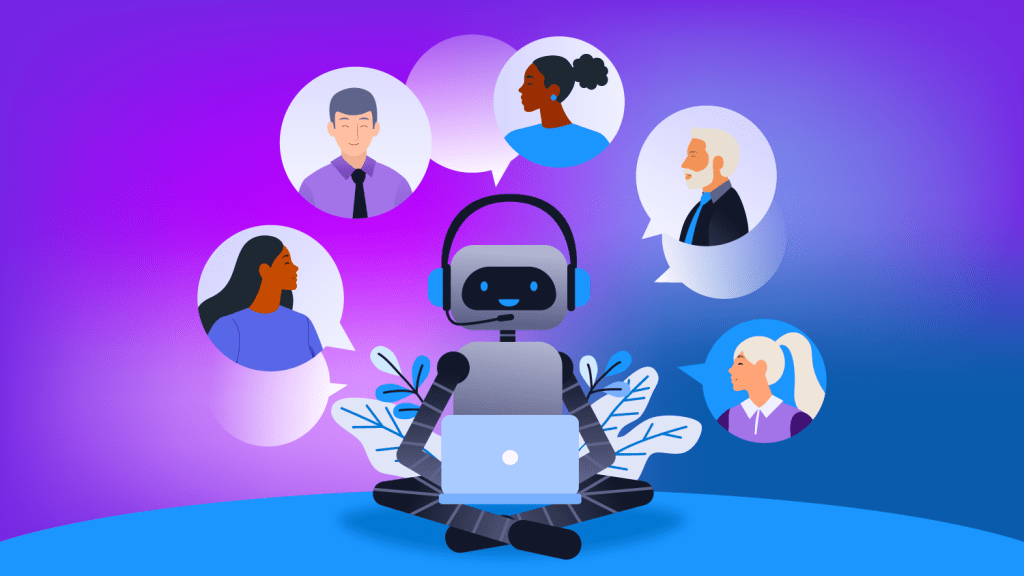
The way people interact with businesses is shifting. Not slowly, but at a pace that feels relentless. Once upon a time, if you had a question, you picked up the phone and sat through music. Then websites came along with static FAQs. Then came the early chatbots, stiff and unhelpful. They responded like answering machines dressed up in text bubbles. Customers hated them, and companies tolerated them because they were cheap.
Now? Things are different. You click onto a website and the chatbot seems to know why you’re there. Maybe you’ve been browsing a specific product for weeks. Maybe you typed something into the search bar and hesitated. Before you even hit enter, the chatbot steps in: “Looking for help with sizing? Want me to show you the reviews?” Suddenly it doesn’t feel like a wall. It feels like the site is actually listening.
That shift is what predictive customer engagement is about. By 2027, 90% of customer interactions will be automated using AI chatbots. A chatbot that waits is reactive. A chatbot that predicts is intelligent. The secret behind the curtain isn’t luck. It’s data science. Statistical models, natural language processing, sentiment detection, pattern recognition. All of it stitched together to create conversations that feel personal without being pushy.
What makes this transformation fascinating is not just the technology, but the way it changes relationships. Customers aren’t just handled. They feel understood. And businesses aren’t just solving problems. They’re building trust at scale.
How Data Science Shapes Intelligent Chatbots
The word “intelligent” gets thrown around a lot. But when you strip it down, intelligence in chatbots comes from data science. Without the math and the models, they’d still be clunky scripts. With it, they start predicting. They start guiding.

Data Collection and Preparation
Every click matters. A person browsing a site at 2 a.m. leaves behind more than tired eyes. Their behavior creates signals. Which page did they open first? How long did they stay? Did they scroll down to the FAQs, or hover on the cart page? Each movement is a breadcrumb.
Alone, those breadcrumbs are meaningless. Together, they create patterns. Data collection is about capturing them all, from CRM records to browsing history to live chat transcripts. But raw data is messy. Typos, duplicate entries, broken timestamps — they all clog the system. Data scientists spend hours cleaning, normalizing, and preparing the information so it can actually be used. Without this groundwork, predictive engagement would collapse.
Predictive Modeling
Once the data is clean, models take over. Some are simple: logistic regression estimating the chance of a customer canceling an order. Others are more complex: gradient boosting machines evaluating dozens of variables at once.
Predictive models look backward to look forward. If 80 percent of customers who hovered on the checkout page for more than three minutes ended up abandoning their carts, then the model knows a current visitor who has done the same thing is likely to leave. That’s the signal the chatbot acts on. It doesn’t wait for the user to cry for help. It steps forward with a nudge.
Understanding Language and Sentiment
Of course, predicting behavior isn’t enough. A chatbot has to carry a conversation. That’s where natural language processing comes in.
Think about how people actually type. Someone might say, “ur site broken,” while another writes, “hello, I think I’m having a technical issue.” They mean the same thing. A chatbot that relies only on keywords would treat those as different requests. An intelligent AI chatbot interprets both as intent: “This person needs tech support.”
Then there’s the emotional layer. Sentiment analysis detects tone. If someone writes in all caps with words like “angry” or “terrible,” the system reads frustration. A predictive chatbot doesn’t respond with a chipper coupon at that moment. It routes the message to a human agent or shifts tone into something more empathetic. This awareness keeps conversations from feeling robotic.
Real-World Uses of Predictive Chatbots
Predictive engagement shows its value most clearly when applied in practical settings. Industries have found unique ways to adapt it, and the differences highlight just how flexible the technology can be.
Retail
Online retail platforms rely heavily on customer behavior patterns. When a buyer hesitates on the checkout page, predictive chatbots step in with contextual prompts such as size guides, warranty details, or information about free returns. Instead of losing a sale, the company creates reassurance at the exact moment of doubt.
Retailers also reduce irrelevant promotions. A shopper with a history of buying accessories receives recommendations in line with that behavior, not random offers. This makes the interaction feel useful rather than distracting. The effect is higher conversion without overwhelming the customer.
Finance
Banks and financial service providers use predictive chatbots to anticipate needs based on recurring patterns. Customers who check balances regularly at month-end can be offered budget summaries or spending alerts. A visitor exploring mortgage calculators may receive steps for pre-qualification or the option to speak with a loan advisor.
Even fraud monitoring benefits. When customers inquire repeatedly about transactions, chatbots detect the risk of concern and escalate the conversation to a fraud specialist instead of recycling generic answers. That saves time and builds trust.
Healthcare
In healthcare, predictive engagement often reduces patient anxiety. A person searching repeatedly for the same symptoms signals uncertainty. The chatbot, instead of serving endless articles, offers direct options like booking a consultation or connecting to a nurse.
Hospitals apply similar logic with lab results and prescriptions. If patients frequently refresh test result pages, the chatbot can explain timelines and notify them when results update. With prescriptions, reminders for overdue refills provide practical support that goes beyond information delivery.
Travel and Education
Travel companies integrate predictive chatbots into planning. A user booking flights may receive hotel and insurance options in the same conversation, creating a smooth planning journey. When ancillary services are introduced naturally, customers accept them as help rather than upselling.
In education, predictive engagement supports both prospective students and parents. A chatbot detects repeated visits to a program page and supplies deeper details such as syllabi, sample lectures, or financial aid options. Parents often look at admission deadlines and requirements, so the system provides dates and contact points. Relevance improves satisfaction and raises enrollment conversions.
Benefits of Predictive Chatbots
The first benefit is consistency. Human service teams can vary in tone, energy, and accuracy. Chatbots maintain a stable voice every time, reinforcing a brand’s personality without fatigue or lapses. This reliability builds familiarity, which customers come to expect.
Scale is another clear advantage. A well-trained predictive chatbot can hold thousands of conversations simultaneously. Waiting lines shrink. Customers get answers instantly, regardless of time zones or peak hours. The system handles the volume that would overwhelm even the largest call centers.
Learning is a quieter but equally important strength. Each conversation becomes training material. The models refine themselves through repeated interactions. Accuracy grows. Suggestions become sharper. Over time, the chatbot develops a form of maturity, moving closer to natural conversation.
Businesses also gain from the feedback loop. What customers ask, hesitate over, or ignore becomes a source of intelligence. Marketing teams discover gaps in messaging. Product teams identify missing features. Even logistics can adjust when demand patterns surface through chatbot queries.
Obstacles to Address
For all the appeal, predictive engagement faces serious challenges.
Privacy sits at the top. Collecting and processing behavioral data can create suspicion. Regulations such as GDPR and CCPA establish boundaries, but beyond legal requirements lies the question of trust. Customers need clarity about what is collected and why. Without transparency, predictive systems risk appearing intrusive.
Bias within models is another obstacle. Algorithms learn from past data. If that data carries skewed patterns, predictions reinforce them. A bank chatbot might unconsciously favor certain customer profiles. A retail system could exclude groups from receiving specific offers. These outcomes may not be intentional, yet the harm is real. Careful auditing and diverse datasets are essential safeguards.
Integration complexity is a technical barrier. Predictive engagement requires connection to CRMs, analytics platforms, support software, and real-time monitoring tools. Stitching these systems together demands expertise and investment. Without proper integration, predictions either lag or miss context entirely.
Finally, there is the matter of trust. If a chatbot appears to know too much, users may pull back. For instance, a chatbot that highlights behavior without explanation can make a customer wonder, “How did it know that?” Businesses need to explain predictions in logical terms. When relevance feels natural and transparent, people accept it. When it feels uncanny, they resist.
Conclusion
Today’s chatbots don’t simply react. They predict. They step forward when hesitation appears, they reassure when confusion grows, and they suggest paths before questions are even formed.
The benefits are hard to ignore. Consistent tone across thousands of conversations. Scalability that human teams could never reach. Learning loops that sharpen accuracy every day. Insights that ripple back into marketing, product design, and service improvement. More importantly, the feeling that a business is paying attention. Not in a creepy way, but in a way that removes friction and creates value in the moment.
Still, the risks remain. Privacy cannot be brushed aside. Bias must be monitored, and transparency must become part of design.
Looking ahead, predictive chatbots will only become more present. Voice systems will blend with text. Emotional awareness will deepen. Cross-channel conversations will flow without interruption. And the handoff between humans and machines will feel seamless rather than jarring. The future of engagement won’t be about choosing one or the other. It will be about designing partnerships between predictive systems and real people, each covering where the other falls short.