

Introduction – Why Manufacturing Sales Are at a Digital Crossroads
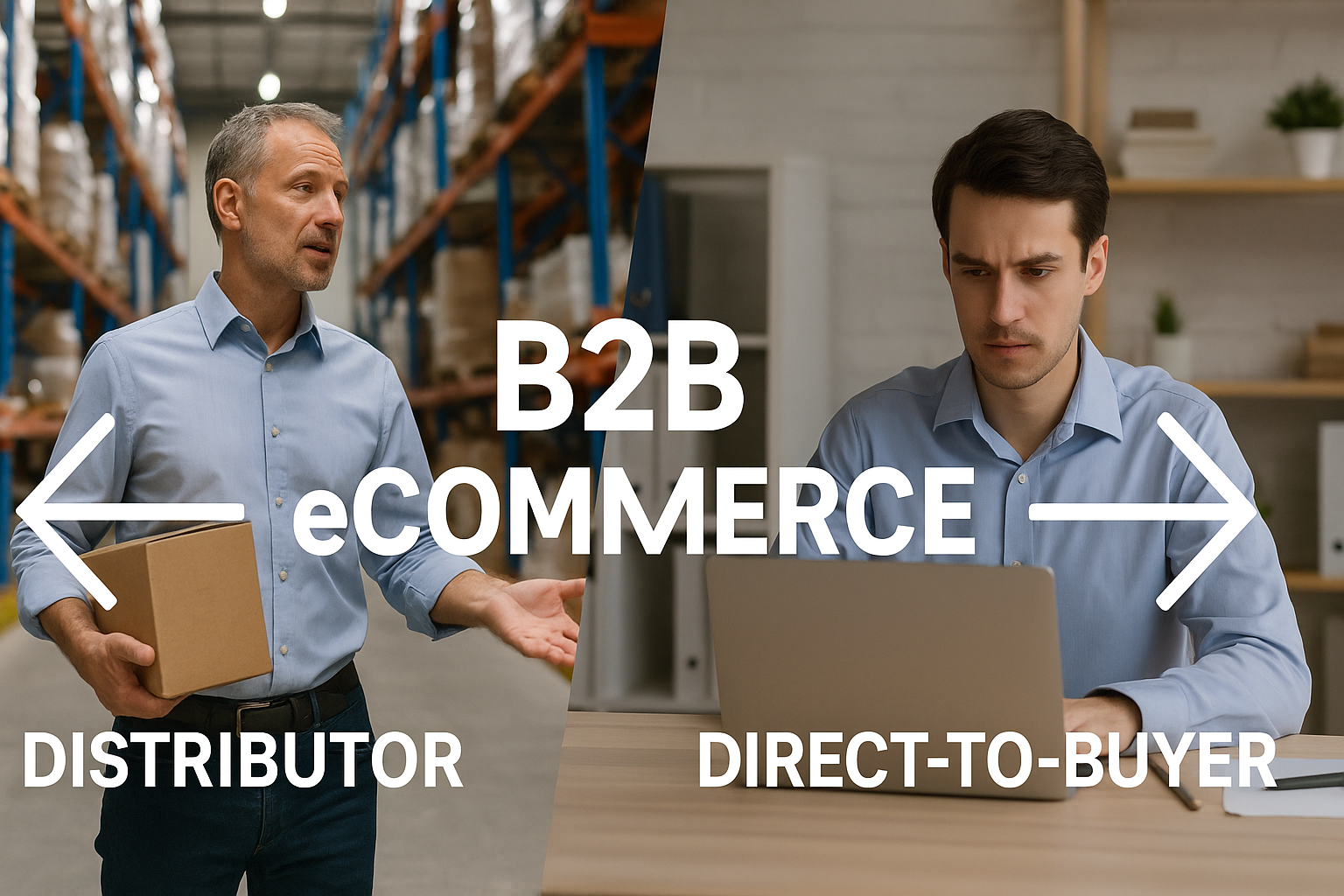
The manufacturing sector is undergoing a profound digital transformation. Traditionally, sales relied heavily on networks of distributors who managed everything from bulk orders to after-sales support. Today, however, manufacturers are increasingly pressured to adopt direct-to-buyer (D2B) sales models through online platforms.
This shift is driven by the growing demand for digital-first experiences, competitive pressure from agile startups, and the realization that direct channels offer valuable customer data and higher margins. But here lies the challenge—how can manufacturers embrace D2B sales without damaging their long-standing distributor relationships?
The answer lies in B2B eCommerce Development. By leveraging the right platform strategy, manufacturers can balance both models, ensuring that distributors remain partners while still creating new opportunities with direct buyers.
The Distributor vs. Direct-to-Buyer Dilemma in Manufacturing
1. Distributors as the Backbone of Traditional Sales
For decades, distributors have played a crucial role in manufacturing supply chains. They provided manufacturers with instant access to large markets, managed regional logistics, offered financing options to buyers, and handled complex after-sales services. Manufacturers benefited from this scalability without having to build their own sales and distribution infrastructure.
2. The Growing Push Toward Direct-to-Buyer Sales
In recent years, buyers—especially smaller businesses—are demanding Amazon-like digital experiences: quick price comparisons, easy ordering, and transparent delivery. Manufacturers see this as an opportunity to cut out intermediaries, improve margins, and collect valuable customer data. Direct digital channels also allow them to experiment with product bundles, targeted promotions, and custom pricing strategies that are harder to achieve through distributors.
3. Where the Conflict Emerges
The tension arises because distributors fear being sidelined. Manufacturers risk losing trust with long-time partners, while buyers often encounter inconsistent experiences depending on whether they purchase through distributors or directly. This not only creates channel conflict but also undermines customer loyalty.
Why Manufacturers Can’t Afford to Ignore This Conflict
Channel conflict is not just an internal issue—it directly impacts customers and competitiveness. When pricing is inconsistent across distributors and direct portals, buyers lose trust. When fulfillment priorities differ, delivery reliability suffers. Worse, competitors with more streamlined eCommerce Development strategies can step in and win over dissatisfied customers.
If left unresolved, the distributor vs. D2B dilemma can result in strained partnerships, lost revenue, and missed opportunities for digital growth. Manufacturers need a way to bring both sides together without compromising either relationship.
B2B eCommerce Platforms as the Neutral Ground
A Centralized Digital Infrastructure
A well-designed B2B eCommerce Development strategy creates a unified platform where both distributors and direct buyers can coexist. Manufacturers no longer have to run parallel systems—distributors access bulk order tools, while buyers get simplified storefronts. Pricing, inventory, and promotions become consistent across the ecosystem.
Customizable Access Levels for Each Stakeholder
Modern eCommerce platforms offer role-based access. This means distributors can log in and view wholesale tiers, credit facilities, and bulk shipping options, while buyers only see retail pricing and straightforward purchase flows. Such segmentation prevents friction and ensures each group feels valued.
Supporting Omnichannel Customer Journeys
Rather than forcing buyers to choose between distributors and direct channels, an integrated platform allows both options. For instance, a buyer may place an order online but have it fulfilled through their preferred local distributor. This way, distributors remain part of the value chain, and buyers enjoy convenience without sacrificing personalized service.
Key Features That Enable Balance Between Distributors and Direct Buyers
To successfully manage both models under one roof, manufacturers need platforms equipped with:
- Advanced pricing engines that support wholesale and retail tiers simultaneously.
- Shared inventory management to prevent conflicts between distributor stock and manufacturer stock.
- Dedicated distributor portals where partners can manage orders, track margins, and handle customer service.
- Seamless storefronts for buyers with user-friendly interfaces that mimic modern retail eCommerce.
- Analytics and reporting tools that allow manufacturers to see how both channels are performing, ensuring fair treatment and informed decision-making.
These features are not just add-ons; they are essential to making distributors feel secure while empowering buyers with choice and transparency.
Real-World Scenarios: Blended Models in Practice
A growing number of manufacturers are adopting hybrid approaches:
- Some allow distributors to fulfill orders placed directly on the manufacturer’s online store, ensuring they still benefit financially.
- Others offer commission-based structures where distributors earn from D2B sales in their region.
- Certain manufacturers release niche products directly online while reserving bulk orders and established lines for distributors.
These scenarios illustrate that compromise is possible when backed by the right digital infrastructure.
Strategic Benefits of Using eCommerce to Resolve Channel Conflict
By embracing B2B eCommerce Development, manufacturers don’t have to choose between distributors and buyers—they can support both. The results include:
- Stronger distributor trust through transparent processes.
- Direct buyer relationships that allow manufacturers to collect customer insights.
- Higher profitability from cutting inefficiencies and tapping into new markets.
- Scalability that ensures future growth without disrupting existing supply chains.
This approach transforms potential conflict into a collaborative, data-driven growth strategy.
Why Technology Partners Are Critical in Implementation
Implementing such a balanced model is not possible with off-the-shelf tools alone. Manufacturers need tailored eCommerce Development that integrates with existing ERP, CRM, and logistics systems. Technology partners specializing in B2B eCommerce Development can help create scalable, secure, and customized platforms designed specifically for manufacturing complexities.
Moreover, aligning with experienced developers ensures the platform grows with the business, supporting global expansion, new product lines, and evolving buyer behaviors.
Conclusion – Turning Conflict Into Collaboration
The distributor vs. direct-to-buyer debate has long divided manufacturers, but it doesn’t have to be a battleground. With the right B2B eCommerce Development strategy, platforms can serve as neutral ground, preserving distributor relationships while unlocking the potential of direct sales.
In a digital-first world, manufacturers who successfully balance both models will not only reduce conflict but also secure a competitive advantage. By approaching eCommerce Development as a bridge rather than a bypass, businesses can ensure growth, resilience, and long-term trust across their supply chains.