
Introduction
The growth of computational technologies has continuously transformed the manner in which applications are developed and deployed across heterogeneous platforms. The advancement of artificial intelligence has become a dominant factor influencing the integration of scalable architectures with interoperable systems. A significant enabler of this trend is the incorporation of AI Agent Development Services, which provide mechanisms for simplifying the creation of intelligent software agents that can adapt across diverse operating environments. The relevance of this concept lies in its ability to reduce operational complexity while improving the efficiency of applications intended to function on multiple devices including web systems, mobile devices, and desktop interfaces.
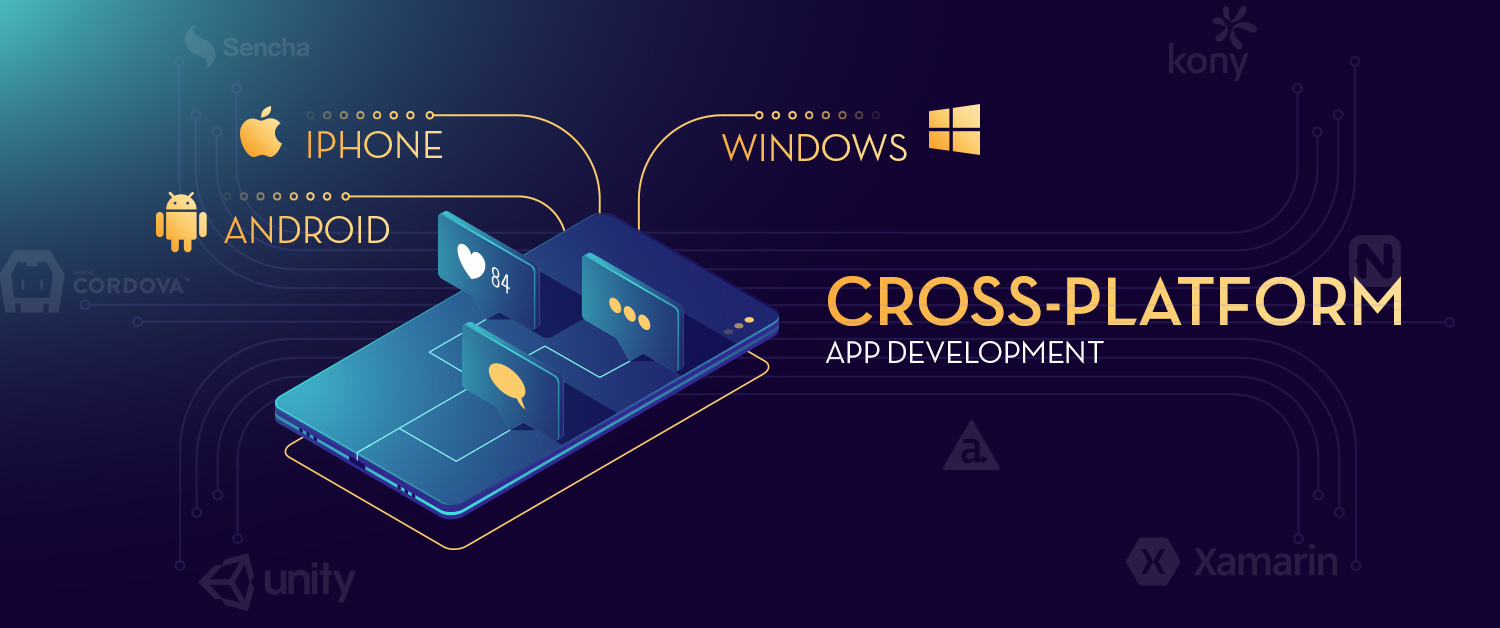
The conceptual framework of application development historically faced challenges in creating seamless interactions across different operating systems. The fragmentation of mobile platforms such as Android and iOS, along with the multiplicity of web environments, required developers to employ distinct tools and practices for each. This led to increased development costs and prolonged deployment cycles. The integration of autonomous agents, designed through systematic services, redefines this paradigm by offering a model of development that emphasizes adaptability, automation, and intelligent task execution. Such a model ensures that applications become more sustainable, cost effective, and accessible across technological boundaries.
The theoretical underpinnings of agent-based systems suggest that an agent is capable of perceiving its environment, processing information, and acting upon that environment to achieve specified objectives. Within the context of cross platform applications, this translates into an ability to recognize device constraints, respond to network variability, and align functionality with user expectations. The use of structured service frameworks for agent development enhances this capacity by embedding modularity and scalability. Consequently, the convergence of artificial intelligence methodologies with service-based development processes yields a highly adaptive and responsive ecosystem for cross platform application creation.
Literature Review
Research within the discipline of intelligent systems reveals a sustained interest in autonomous agents and their role in distributed computing. Theories in multi agent systems indicate that distributed problem solving, negotiation, and coordination between autonomous units can substantially increase computational efficiency. Within the domain of application development, this translates to enhanced collaboration between system components that reside on different platforms.
Studies on cross platform tools demonstrate the prominence of frameworks such as Flutter, React Native, and Xamarin. While these frameworks reduce redundancy in codebases, they also encounter limitations regarding native performance, integration depth, and maintenance of uniform user experiences. The inclusion of intelligent agents aims to overcome these constraints by providing real time adaptability that bridges the gaps left by conventional cross platform frameworks.
The literature on service oriented architecture also plays an integral role in understanding agent development services. Service orientation emphasizes modularity, interoperability, and reusability of components. When combined with intelligent agents, service orientation allows applications to not only function seamlessly across diverse systems but also evolve with changing requirements. This duality of service and intelligence becomes a cornerstone for addressing modern challenges in application development.
Empirical findings suggest that automation supported by artificial intelligence has contributed to reducing software development lifecycles by up to 40 percent in certain contexts. By extrapolation, applying these methods to cross platform application ecosystems offers a similar promise of efficiency gains. Therefore, the current body of literature validates the theoretical proposition that agent-based services function as a transformative force in application engineering.
Methodological Framework
The methodological approach to analyzing how agent development services streamline cross platform applications rests upon three theoretical pillars. The first pillar is computational intelligence, which provides the foundation for machine learning, natural language processing, and decision-making frameworks embedded within agents. The second pillar is modular architecture, which allows for the separation of application logic into interoperable services. The third pillar is adaptive deployment, which emphasizes scalability and continuous alignment with diverse platform requirements.
From a systems engineering perspective, the methodology begins with defining the objectives of cross platform functionality. These objectives include code reusability, uniform user experience, and minimized deployment effort. Next, intelligent agents are designed through structured development services that embed functionalities such as context awareness, predictive analytics, and error correction. Finally, the agents are deployed within modular environments that permit interoperability between platforms without requiring major redesign.
This methodology ensures that application developers are not constrained by the idiosyncrasies of individual platforms but rather empowered by adaptive agents that handle contextual variations. The process reflects a paradigm shift from platform-specific development toward service-mediated intelligence that orchestrates functionality across all environments.
Analysis of Streamlining Processes
Automation of Redundant Tasks
One of the most significant ways in which agent development services streamline application creation is through automation of repetitive tasks. These include testing, debugging, and optimization across diverse platforms. Intelligent agents can execute automated test suites tailored to the unique requirements of each environment, thereby reducing manual intervention. This results in accelerated development cycles and enhanced accuracy.
Real Time Adaptability
Cross platform applications often face challenges such as differing screen resolutions, operating system versions, and hardware specifications. Intelligent agents developed through structured services are capable of adapting in real time by detecting contextual constraints and adjusting functionalities accordingly. This ensures uniformity in user experience while maintaining system efficiency.
Resource Optimization
Another crucial aspect is resource allocation. Intelligent agents can dynamically manage memory, processor usage, and network bandwidth. In environments with constrained resources, such optimization is critical for maintaining performance consistency. Service-based development frameworks provide the necessary infrastructure for embedding these optimization strategies within intelligent agents.
Enhanced Security Mechanisms
The heterogeneity of cross platform ecosystems often exposes applications to varied security vulnerabilities. Agent development services facilitate embedding intelligent security modules that adapt to platform-specific threats. These modules can monitor anomalies, identify intrusion attempts, and initiate self-healing mechanisms. By ensuring security resilience, agents contribute to the trustworthiness of cross platform applications.
Integration with Emerging Technologies
The adaptability of intelligent agents also extends to integration with emerging technologies such as blockchain, cloud computing, and Internet of Things systems. Through modular service frameworks, agents are designed to interface seamlessly with external systems regardless of platform constraints. This broadens the scope of cross platform applications and enhances their relevance in a rapidly evolving technological landscape.
Comparative Evaluation
When contrasted with conventional cross platform frameworks, agent-based development services exhibit distinct advantages. Conventional frameworks emphasize code reuse but often struggle with adaptability. They require continuous manual adjustments to meet platform-specific requirements. In contrast, intelligent agents autonomously adapt, minimizing the necessity for repetitive modifications.
Additionally, the lifecycle management of applications becomes more efficient with agents. While traditional frameworks rely heavily on developer intervention for updates, agent-driven systems incorporate autonomous learning and self-updating capabilities. This ensures sustainability and reduces long-term maintenance costs.
Furthermore, the integration of intelligent agents fosters enhanced user personalization. By analyzing behavioral data and contextual factors, agents tailor the application experience to individual users, regardless of platform. This is a dimension where traditional frameworks fall short, as they generally provide uniform functionality without nuanced adaptability.
Theoretical Implications
The incorporation of agent development services in cross platform applications carries several theoretical implications. Firstly, it validates the theoretical construct of adaptive systems as central to modern software engineering. Secondly, it demonstrates that service orientation, when combined with artificial intelligence, yields an innovative model of sustainable application development. Thirdly, it affirms that distributed intelligence, manifested through agents, is a viable mechanism for overcoming the limitations of fragmented platform ecosystems.
This theoretical expansion suggests a future where platform distinctions diminish in significance. The application of agent-driven methodologies proposes that intelligence becomes the primary determinant of functionality, rather than platform constraints. Such a perspective challenges traditional notions of application engineering and opens avenues for further scholarly inquiry.
Practical Applications
In practical terms, industries that adopt agent development services witness measurable improvements in efficiency and scalability. For instance, the financial sector benefits from cross platform applications that can adapt security protocols in real time. Similarly, the healthcare industry leverages intelligent agents to ensure interoperability between diverse medical platforms and devices.
E commerce systems utilize agents to personalize shopping experiences across web and mobile interfaces, thereby enhancing customer engagement. Educational platforms employ agents to synchronize content across devices, ensuring accessibility for students irrespective of their preferred medium. These practical examples highlight the versatility and transformative potential of agent-driven services in real world contexts.
Challenges and Considerations
Despite the evident advantages, several challenges persist. The design of intelligent agents requires substantial expertise in artificial intelligence, which may limit accessibility for smaller enterprises. The computational overhead of embedding advanced intelligence into agents can also pose challenges for devices with limited resources.
Ethical considerations also emerge, particularly regarding data privacy. Intelligent agents rely heavily on user data for contextual adaptability, which raises concerns about surveillance and misuse of personal information. Regulatory frameworks must evolve in tandem to address these challenges while ensuring that innovation is not stifled.
Another consideration is the cost of transitioning from traditional frameworks to agent-based models. While long-term benefits may outweigh initial investments, organizations must evaluate feasibility carefully. Training, infrastructure upgrades, and change management represent critical aspects of such transitions.
Conclusion
The progression of application development paradigms illustrates a consistent trend toward adaptability, intelligence, and cross platform functionality. By embedding autonomous adaptability into applications, AI Agent Development Services serve as a catalyst for overcoming the historical challenges of platform fragmentation. These services streamline processes by automating redundant tasks, optimizing resources, enhancing security, and integrating emerging technologies.
The theoretical implications suggest that agent-based models redefine the boundaries of application engineering, positioning intelligence rather than platform specificity as the central determinant of software functionality. The practical implications across industries highlight measurable gains in efficiency, personalization, and scalability. Nevertheless, ethical, technical, and organizational challenges require thoughtful consideration to ensure balanced progress.
In conclusion, the intersection of artificial intelligence with service oriented architecture represents a paradigm shift in cross platform development. It enables a future where software systems adapt seamlessly to dynamic environments and evolving user expectations. As organizations and researchers continue to refine these frameworks, the discipline of Ai development will remain at the forefront of innovation, shaping the trajectory of application ecosystems in the digital era.