
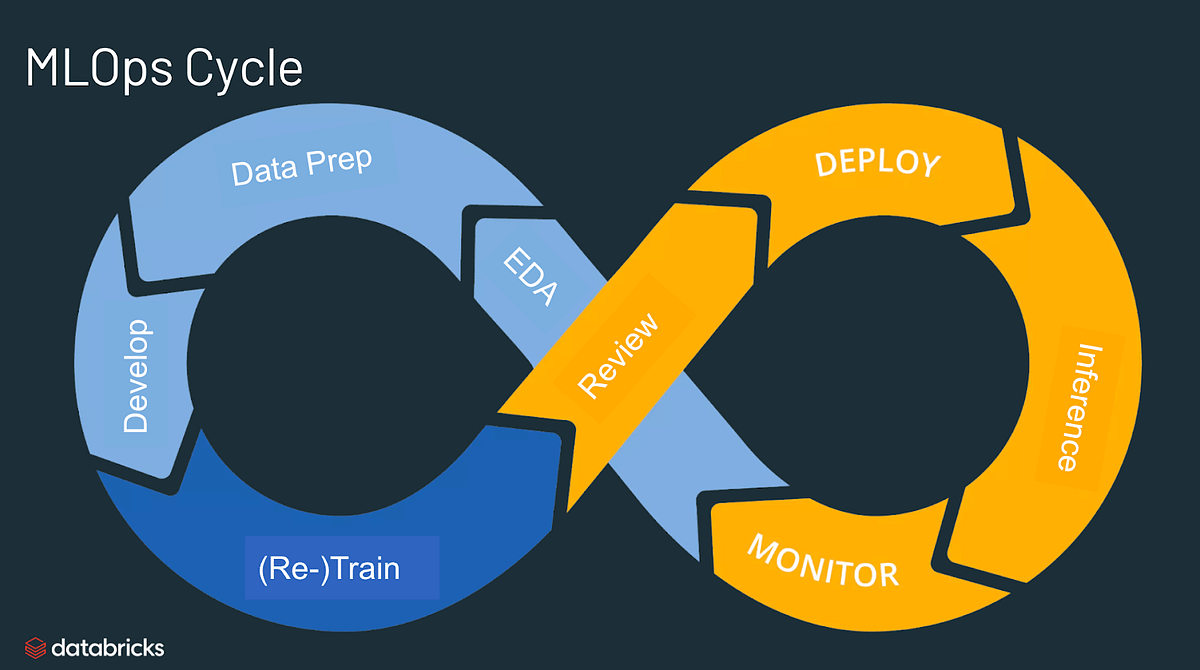
Machine Learning (ML) models no longer live in academic papers. They are driving business-critical applications across industries, from fraud detection in financial services to real-time personalization in e-commerce. Yet, building a model is only the beginning. Deploying it, monitoring its performance, and ensuring it scales reliably under production loads is a far bigger challenge. This is where MLOps comes into play.
MLOps – Machine Learning Operations bridges the gap between ML development and production operations. It streamlines processes, automates repetitive tasks, and ensures that models remain accurate and efficient over time. However, achieving true scalability in MLOps requires the right tools and frameworks. Without them, teams risk drowning in manual processes, version control issues, and infrastructure bottlenecks.
In this article, we’ll explore the essential tools and frameworks that make scalable MLOps pipelines possible, why they matter, and how you can choose the right stack for your organization.
Why Scalable MLOps Pipelines Matter
Before diving into tools, let’s set the context. Why is scalability so critical for MLOps?
Imagine a retail company deploying a demand-forecasting model for inventory optimization. In the pilot phase, it processes 1 GB of data daily, and everything works fine. But as the model goes live across hundreds of stores, the data volume spikes to 100 GB daily. Suddenly, the existing pipeline crumbles under the load. Retraining slows down, deployment lags behind, and prediction latency frustrates end users.
Scalability is about more than handling large data volumes. It’s about:
-
Supporting distributed teams across development, testing, and operations.
-
Automating deployment across environments without error.
-
Managing hundreds of models in production with consistent performance.
-
Ensuring compliance and reproducibility for audits.
A scalable MLOps pipeline isn’t just a tech necessity. It’s a business enabler.
The Core Building Blocks of a Scalable MLOps Stack
Building a reliable MLOps pipeline requires integrating tools across these core stages:
-
Data Management and Versioning
-
Model Development and Experiment Tracking
-
CI/CD for ML (Continuous Integration and Deployment)
-
Model Serving and Deployment
-
Monitoring and Observability
Each stage has its own set of challenges and specialized tools. Let’s examine them one by one.
1. Data Management and Versioning
In ML, data is the foundation. If data changes, models change. Yet, versioning massive datasets is notoriously difficult.
Best-in-Class Tools
-
DVC (Data Version Control): Think Git for data and models. DVC allows teams to version datasets and track experiments without storing heavy data in Git repositories. It uses storage backends like AWS S3 or Google Cloud Storage.
-
LakeFS: Enables Git-like operations for data lakes, which is vital for organizations managing petabyte-scale data.
Why It Matters:
Without robust data versioning, reproducing experiments becomes nearly impossible, especially when models drift. If you can’t explain which dataset version was used to train a model, compliance and debugging turn into nightmares.
2. Model Development and Experiment Tracking
ML model development is inherently iterative. You tweak hyperparameters, try different architectures, and compare results. But what happens when multiple teams run hundreds of experiments in parallel?
Key Tools
-
MLflow: One of the most widely adopted frameworks for experiment tracking. It records metrics, parameters, and artifacts, making collaboration seamless.
-
Weights & Biases (W&B): Goes beyond tracking by offering real-time dashboards, model comparisons, and collaborative experiment reviews.
-
Comet: A similar solution focusing on transparency and governance, critical for regulated industries like healthcare and finance.
Pro Tip:
Choose tools that integrate easily with your existing frameworks like TensorFlow, PyTorch, or Scikit-learn. Disconnected systems create more problems than they solve.
3. CI/CD for Machine Learning
Continuous integration and deployment are staples of software engineering. But ML introduces additional complexity. It’s not just code you’re deploying, it’s code plus data plus models.
Leading Frameworks
-
Kubeflow Pipelines: A Kubernetes-native platform that automates ML workflows. It supports complex DAGs (Directed Acyclic Graphs) and integrates with cloud-native environments.
-
Metaflow: Built by Netflix, Metaflow simplifies ML pipelines with a Pythonic approach and handles scaling behind the scenes.
-
Jenkins + ML Plugins: For teams already using Jenkins, extending CI/CD for ML with plugins can be a pragmatic choice.
Why This Matters for Scale:
Manually deploying models to production is a recipe for disaster. Automated CI/CD ensures that retraining and redeployment happen without human intervention, reducing downtime and errors.
4. Model Serving and Deployment
Getting a model into production isn’t the endgame. How you serve it determines latency, scalability, and user experience.
Top Tools
-
TensorFlow Serving: A flexible serving system for TensorFlow models, optimized for performance.
-
TorchServe: Tailored for PyTorch models, making deployment faster for teams using PyTorch as their primary framework.
-
Seldon Core: A Kubernetes-based platform that can deploy, scale, and monitor thousands of models.
-
BentoML: Provides an easy-to-use framework for packaging and deploying models as APIs or microservices.
The Business Impact:
Imagine a real-time fraud detection system that delays predictions by 2 seconds during high traffic. That’s enough to either approve a fraudulent transaction or decline a legitimate one. Efficient serving isn’t optional, it’s mission-critical.
5. Monitoring and Observability
Models degrade over time. Data drifts. A sudden spike in user behavior post-product launch can break even the most robust model. Monitoring is not a “nice-to-have.” It’s the safety net that keeps your business running.
Key Tools
-
Prometheus + Grafana: For infrastructure-level monitoring, alerting, and visualization.
-
Evidently AI: Specialized in ML monitoring, focusing on data and model drift detection.
-
WhyLabs: Offers real-time observability with anomaly detection and bias monitoring.
Best Practice:
Monitoring should include performance metrics (latency, throughput), prediction quality (accuracy, precision), and data integrity checks. A failure in any one of these can have cascading effects.
Choosing the Right Stack: Avoid the “Shiny Object” Trap
With so many tools available, it’s easy to fall into the trap of adopting everything. That’s a mistake. Every additional tool adds integration overhead and potential failure points. Instead, start by defining your priorities:
-
Volume of Data: Are you dealing with gigabytes or petabytes?
-
Team Size: Do you have one ML team or multiple cross-functional teams? Or Hire Machine Learning Engineers for your team.
-
Regulatory Environment: Do you operate in a highly regulated industry?
-
Deployment Environment: On-prem, cloud, or hybrid?
Your answers will determine whether you need a lightweight solution like MLflow or a full-fledged Kubernetes-native platform like Kubeflow.
Beyond Tools: Building a Culture of MLOps
Tools are only as good as the culture around them. Scalable MLOps isn’t just a tech problem, it’s an organizational mindset. Teams need to:
-
Embrace automation and resist manual “quick fixes.”
-
Document everything, from experiments to deployment logs.
-
Foster collaboration between data scientists, ML engineers, and DevOps.
Without these principles, even the best tools will fail to deliver.
The Call to Action: Start Small, Scale Fast
If you’re starting your MLOps journey, don’t aim for perfection on day one. Begin with a single tool that solves your most pressing problem, maybe experiment tracking with MLflow or data versioning with DVC. Then gradually expand your stack as your needs grow.
The cost of ignoring MLOps is high: stalled projects, failed deployments, and missed opportunities. But the upside is enormous. Scalable MLOps pipelines don’t just make ML operational, they make it a competitive advantage.
So, ask yourself: What’s stopping your models from making it to production at scale? Start solving that today.