
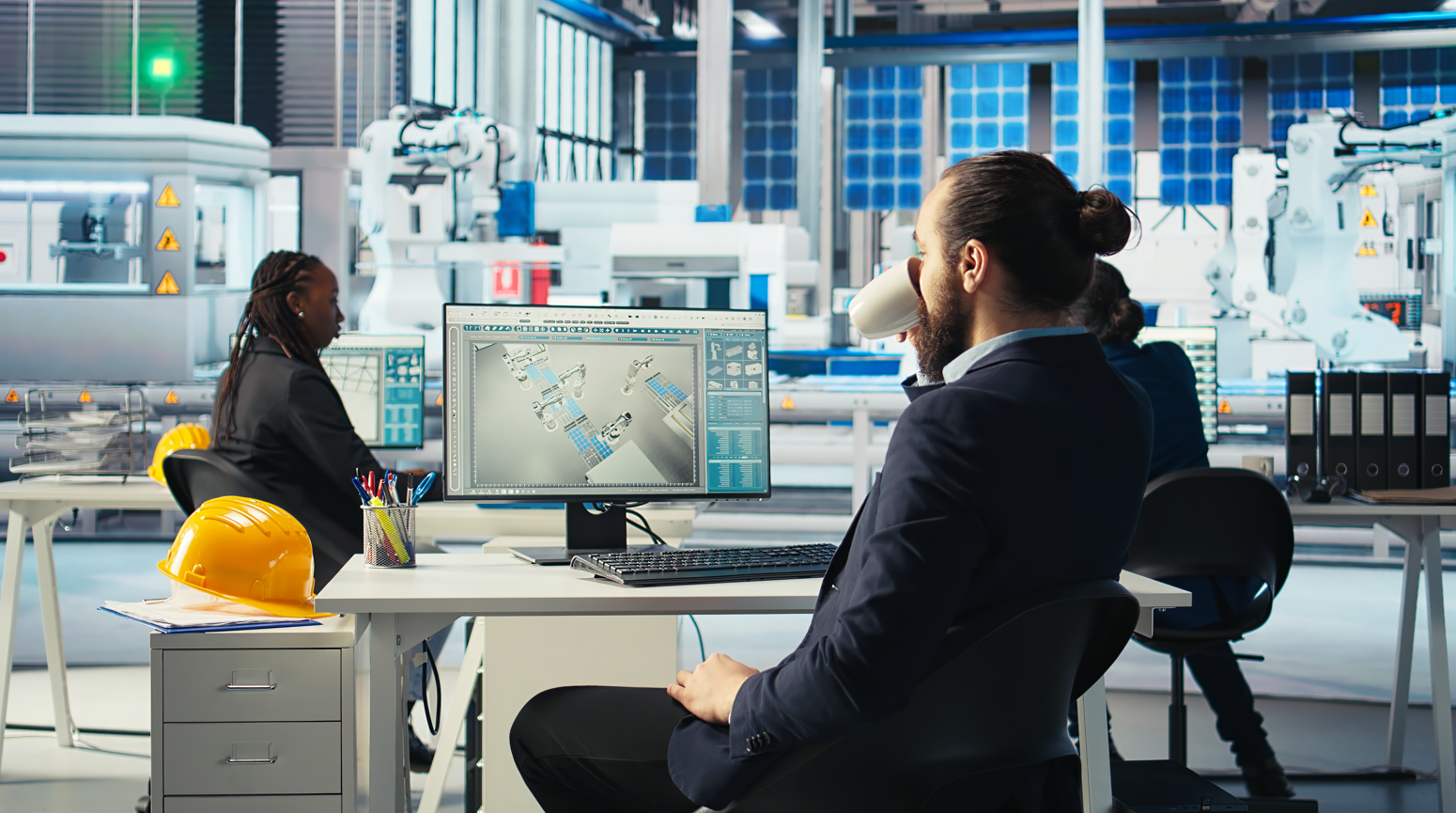
How Computer Vision is Transforming the Future of IndustriesComputer vision quickly was changed from being a field of niche research up to being a transformative technology that powers some of the most groundbreaking innovations across industries. With machines interpreting and processing the visual information that the world has to offer, computer vision becomes the bridge between human perception and machine intelligence. Now it’s perhaps the most critical aspect of artificial intelligence, touching industries as different as healthcare and automotive to retail, agriculture, and security.
Understanding Computer Vision
Indeed, core computer vision can be described as that part of AI as well as machine learning to make computers carry out interpreting, analyzing, and responding to the visual data like images and videos. The entire procedure has several steps to it, and these are included image acquisition, preprocessing, object detection, feature extraction, and interpreting.
Modern-day computer vision systems nowadays are deep learning heavy with CNN mimicking the way images, and anything visual is interpreted in the human brain. This combination is basically the merging of algorithms and data which thus enables a machine to not just “see,” but also understand context, identify objects, and even make decisions.
Key Applications Across Industries
The real power of computer vision is derived from its extreme versatility. In this respect, we shall look at some of the real applications with the most impact:
1. Healthcare and Medical Imaging
Computer vision algorithms help doctors and radiologists with the highly accurate detection of diseases in medicine. Designs for advanced imaging can locate tumors, assess skin conditions, classify signs of diabetic retinopathy among others in retinal scans. These AI-assisted diagnostic systems help in mitigating human errors and enable fast, accurate treatment decisions.
2. Automotive and Autonomous Vehicles
Computer vision is the nerve center of self-driving cars, which depend upon it for safe navigation. Road signs are recognized; pedestrians are detected; distances are measured, and other vehicles are tracked; all based on data coming in from the cameras and sensors into the vision models. This technology constitutes advanced driver assistance systems (ADAS) and enhances road safety even for normal vehicles.
3. Retail and E-commerce
Computer vision finds applications in retail management on inventory, auto-checkout systems, and consumer behavioral observation. With the aid of smart shelves that come with cameras, product depletion can be detected, while cashier-less stores require a vision system to identify and process automatically all items selected by customers.
4. Agriculture and Precision Farming
Farmers apply computer vision to check the health of crops, detect bugs, and automate harvesting. The drone is equipped with a high-resolution camera, and captured aerial imagery will be analyzed for nutrient deficiencies or irrigation problems, with this aiding in increasing yields and saving on resources.
5. Safety and Surveillance
In security, the applications of computer vision include facial recognition for monitoring individuals entering and leaving a particular building, intrusion detection, and real-time monitoring. Intelligent surveillance systems can distinguish authorized activities from suspicious activities – thereby making them important for public safety and even private property security.
Recent Advancements in Computer Vision
In the last decade, many technological progress has accelerated the adoption of computer vision:
Better nerve network architecture: Resanet, items, and models such as vision transformers (VITs) have pushed the limitations of accuracy and efficiency.
Edge Computing: Running Computer Vision Model on Edge devices allows real -time processing without relying on the cloud server, improves speed and privacy.
Synthetic Data Generation: To address the challenge of obtaining large datasets, synthetic image generation and growth techniques have become the mainstream.
3D Computer Vision: Advance in Depth Sensing and Lidar has unlocked new applications in robotics, AR/VR and autonomous navigation.
Challenges in Adoption
Despite its rapid growth, computer vision still still faces obstacles:
Data privacy: The collection of visual data often increases the concerns of privacy, especially in monitoring and facial identification.
Prejudice and fairness: If trained on a biased dataset, models can produce incorrect or discriminatory results.
Computational cost: High-demonstration models often require significant processing power, making them less accessible to small outfits.
Environmental factor: Light conditions,the gorge, and camera quality can affect the accuracy of vision systems.
Future Trends and Opportunities
The future of computer vision will see even greater integration into ordinary life and industrial operations. Some of the trends are listed below:
- Explainable AI in Vision Models – Steps toward transparency have been undertaken for computer vision systems, which will allow the user to comprehend how decisions are made.
- Smoothing operations with the help of IoT sensors and computer vision will usher in kind of intelligent environments from connected factories to intelligent cities.
- The medical domain will benefit from intraoperative vision diagnostics integrating with personalized medicine, real-time monitoring of patients, and predicting potential health risks.
- Computer vision shall elevate the level of realism, immersion, and interaction in augmented and virtual environments.
- Conservation objectives will benefit from vision systems capable of monitoring environmental changes, waste sorting, and renewable energy operations.
Conclusion
Computer vision is no longer restricted to research laboratories, and it is an essential part of the digital transformation of sectors. Now that it can read and act on visual inputs, it proves to be as powerful as many things once thought of only in science fiction. As technology matures, the synergies of computer vision with AI and other fields will open new doors through incredible innovations that change the very fabric of human existence and work. Organizations that adapt this early on will not only have optimal capability through the competition but will also be innovators of the future in intelligent automation.