
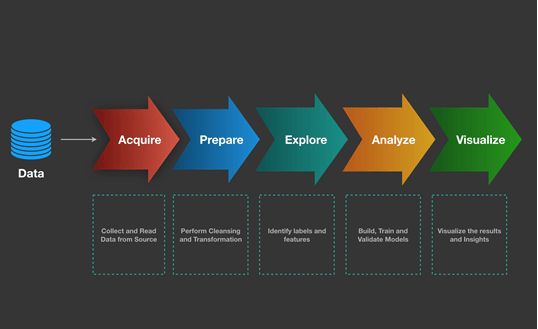
While much attention focuses on increasingly sophisticated machine learning models and generative AI capabilities, a more fundamental shift is occurring in how data scientists acquire and prepare their raw materials. Large Language Model (LLM)-based document processing platforms are emerging as innovation drivers, transforming the traditionally laborious process of extracting structured data from unstructured sources into something approaching effortless automation.
The Traditional Data Acquisition Bottleneck
Every data scientist knows the frustration: you’ve identified a promising dataset locked away in PDFs, regulatory filings, or semi-structured reports. What follows is often a painful journey through manual data entry, brittle regex patterns, or template-based extraction tools that break with every slight format change. This preprocessing phase—unglamorous but critical—can consume 60-80% of a project’s time, leaving precious little for actual analysis and model development.
Traditional Intelligent Document Processing (IDP) solutions promised relief but often delivered their own complexities. These systems typically required extensive training datasets, manual field mapping, and ongoing maintenance as document formats evolved. For many data science teams, especially those working on exploratory projects or dealing with diverse document types, the setup overhead often exceeded the benefits.
The LLM Paradigm Shift
LLM-powered document processing represents a fundamental departure from rule-based extraction methods. Instead of rigid templates and predefined patterns, these systems leverage the same language understanding capabilities that power conversational AI. They can interpret context, understand relationships between data points, and adapt to variations in document structure without explicit programming.
This approach brings several transformative capabilities to data science workflows:
Context-Aware Extraction: Unlike traditional OCR followed by pattern matching, LLM-based systems understand the semantic meaning of text. They can distinguish between a “total amount” and a “partial payment” even when both appear as currency values in similar locations across documents.
Schema Flexibility: Perhaps most significantly, these systems can generate extraction schemas dynamically. A data scientist can upload a sample document—a financial statement, research paper, or regulatory filing—and the system automatically identifies extractable fields without manual configuration.
Multimodal Understanding: Advanced implementations process both text and visual elements, understanding tables, charts, and the spatial relationships between document elements. This eliminates the need for separate tools to handle different document sections.
Practical Implications for Data Scientists
The shift toward LLM-based extraction is already creating new possibilities across various data science applications:
Financial Analysis: Researchers analyzing market trends can now process thousands of fund prospectuses, quarterly reports, or regulatory filings in hours rather than months. The system automatically extracts key metrics—performance indicators, fee structures, risk assessments—while maintaining the flexibility to add new fields as research questions evolve.
Academic Research: Literature reviews and meta-analyses become more comprehensive when researchers can systematically extract data from hundreds of papers. Key findings, methodology details, sample sizes, and statistical results can be captured consistently across diverse publication formats.
Regulatory Intelligence: Industries dealing with complex compliance requirements can monitor regulatory changes by automatically processing policy documents, legal filings, and guidance papers. The extracted data feeds into compliance dashboards and risk models without manual intervention.
Human Resources Analytics: Talent acquisition teams can now systematically analyze thousands of resumes to extract structured data—skills, experience levels, educational backgrounds, career trajectories—enabling sophisticated workforce analytics. Data scientists can build predictive models for hiring success, identify skill gaps across organizations, or analyze talent market trends by processing large volumes of candidate documents automatically.
Alternative Data Sources: Data scientists exploring unconventional datasets—annual reports for ESG scoring, patent filings for innovation metrics, or court documents for legal risk assessment—can now process these sources at scale without specialized domain tools.
Technical Considerations and Limitations
While promising, LLM-based document processing isn’t without considerations for data science teams:
Accuracy vs. Speed Trade-offs: Current systems achieve impressive accuracy rates (typically 90-95% F-scores) without training, but highly specialized domains or critical applications may still require validation workflows. The key insight is that perfect accuracy isn’t always necessary—many data science applications can work effectively with high-quality, consistently formatted data even if some edge cases require manual review.
Cost Implications: Unlike traditional one-time software purchases, LLM-based processing typically involves per-document costs. For large-scale processing, this requires careful consideration of budget allocation and ROI calculations.
Data Privacy and Security: Sending sensitive documents to cloud-based LLM services raises important privacy considerations. Teams working with confidential or regulated data need to evaluate on-premises options or specialized secure processing environments.
The Emerging Workflow
Data science teams are developing new methodologies that leverage these capabilities:
- Rapid Prototyping: Initial data exploration can begin with minimal setup time. Upload a few sample documents, review the automatically generated schema, and start analysis.
- Iterative Refinement: Rather than perfect upfront specification, teams can refine extraction schemas based on initial results and evolving research questions.
- Hybrid Validation: Combine automated extraction with statistical validation techniques to identify outliers or inconsistencies that might indicate extraction errors.
- Version-Controlled Schemas: Treat extraction schemas as code, maintaining versions and allowing collaborative refinement across team members.
Looking Forward
The convergence of advanced language models with document processing represents more than just a productivity improvement—it’s enabling entirely new categories of data science projects. Research questions that were previously impractical due to data acquisition costs are becoming feasible. Smaller teams can tackle analyses that previously required dedicated data engineering resources.
As these systems continue to evolve, we can expect even more sophisticated capabilities: real-time processing of streaming document feeds, integration with knowledge graphs for enhanced context understanding, and specialized models trained on domain-specific document types.
For data scientists, the message is clear: the bottleneck is shifting from data acquisition to data utilization. With structured data extraction becoming increasingly automated, the premium will be on asking better questions, designing more insightful analyses, and translating findings into actionable intelligence. The tools are finally catching up to our ambitions.