
Introduction
In the evolving landscape of human resource management, HRMS software development has emerged as a transformative approach for enterprises aiming to streamline their human capital operations. Businesses today recognize that managing employees, maintaining compliance, and fostering a productive organizational culture require more than traditional manual processes. The integration of digital solutions within human resources empowers enterprises to unify data management, enhance workflow efficiency, and improve strategic decision-making. As organizations continue to expand globally and adapt to changing workforce models, the need for comprehensive and tailored HR technology becomes an essential pillar of sustainable growth.
This academic discussion explores the theoretical and practical aspects of building enterprise-level human resource management systems, addressing the importance of design methodologies, core modules, integration strategies, and future technological influences. By analyzing the structural components and processes involved in creating robust HRMS platforms, this article serves as a comprehensive guide for organizations seeking to implement intelligent solutions for workforce management.
The Theoretical Foundation of Enterprise HRMS Solutions
The design and development of human resource management systems are deeply rooted in organizational theory and management information systems. Human resource management itself encompasses strategic and operational elements including recruitment, payroll, performance appraisal, and employee engagement. Enterprise HRMS solutions provide a digital bridge that connects these components under a unified technological framework.
From a theoretical perspective, modern HRMS solutions align with socio-technical systems theory, where the integration of technology and organizational processes enhances overall efficiency. Enterprises that successfully implement HRMS platforms adopt a holistic approach, combining process automation with data-driven decision-making. This fusion allows management teams to focus on human capital development while minimizing repetitive administrative tasks.
Moreover, HRMS platforms function as decision-support systems, aiding leaders in talent acquisition, retention strategies, and compliance management. The theoretical framework emphasizes that technology in HR is not merely a support mechanism but a strategic enabler that drives organizational competitiveness.
Core Modules of Enterprise HRMS
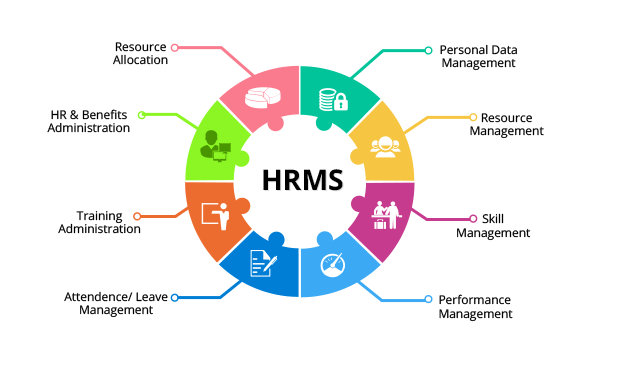
The effectiveness of an HRMS solution lies in its modular design, where each module addresses a critical aspect of human capital management. Common modules include:
- Employee Information Management – This serves as the central repository for all employee data, enabling efficient data retrieval and reducing redundancy.
- Payroll and Compensation – Automates salary processing, tax calculations, and benefits management to ensure accuracy and compliance.
- Attendance and Leave Management – Offers tools for tracking work hours, approving leave requests, and monitoring absenteeism trends.
- Recruitment and Onboarding – Facilitates talent acquisition processes by integrating job postings, applicant tracking, and orientation workflows.
- Performance Management – Supports evaluation of employee performance through goal-setting, appraisals, and feedback mechanisms.
- Training and Development – Focuses on upskilling employees through structured learning paths and competency assessments.
Each module contributes to creating an interconnected ecosystem that enhances organizational transparency, reduces manual intervention, and delivers actionable insights to HR leaders.
Strategic Considerations in HRMS Development
Enterprises planning to develop HRMS solutions must adopt a structured methodology that balances functionality, scalability, and security. Key considerations include:
- Requirement Analysis – Identifying the unique needs of the organization is critical to defining the scope of HRMS features.
- Technology Stack Selection – Choosing programming languages, databases, and frameworks that support modular growth and integration.
- Data Security and Compliance – Ensuring adherence to data privacy regulations and protecting sensitive employee information from breaches.
- Integration Capabilities – Designing HRMS platforms that can interact seamlessly with payroll systems, enterprise resource planning tools, and third-party applications.
- User Experience Design – Prioritizing intuitive interfaces to encourage adoption among HR personnel and employees alike.
Enterprises that meticulously plan these stages increase the likelihood of deploying HRMS solutions that not only meet operational needs but also evolve alongside organizational growth.
Role of Emerging Technologies
The continuous evolution of technology reshapes the way HRMS platforms are conceived and implemented. Several trends currently influence enterprise-level HRMS development:
- Artificial Intelligence – Enhances recruitment by automating resume screening, predicting employee attrition, and providing personalized learning recommendations.
- Cloud Computing – Facilitates remote access, scalability, and reduced infrastructure costs, making cloud-based HRMS an attractive choice for enterprises.
- Data Analytics – Empowers HR departments to leverage predictive insights, identify workforce trends, and improve decision-making.
- Mobile Accessibility – Encourages employee self-service through mobile-friendly platforms that allow access to payroll, leave requests, and performance dashboards.
- Integration of IoT and Biometric Systems – Optimizes attendance management and workforce monitoring for large-scale operations.
These advancements signify that HRMS solutions are no longer limited to administrative automation but are evolving into intelligent platforms that actively shape workforce strategies.
Importance of Custom Development
While off-the-shelf HRMS products provide generic solutions, enterprises often benefit from tailored systems. Here, custom software development becomes a crucial factor. Tailored HRMS solutions address organization-specific workflows, comply with regional regulations, and offer flexibility for future expansions.
Customization also enhances integration with other enterprise solutions, such as accounting, ERP, and project management platforms. The development process involves gathering precise requirements, creating architecture that reflects the organization’s hierarchy, and implementing features that address unique operational challenges. This approach empowers enterprises to maintain a competitive advantage by aligning HR technology with strategic goals.
Enhancing Accessibility Through Multi-Platform Solutions
Modern HRMS platforms are increasingly designed to operate seamlessly across devices and platforms. Organizations are exploring mobile app development and web app development as core components of their HRMS strategies.
- Mobile App Development – Enables employees to interact with HRMS features from anywhere, facilitating tasks such as leave approvals, payroll viewing, and attendance marking.
- Web App Development – Provides browser-based accessibility, ensuring cross-platform usability without the need for extensive installations.
The combination of mobile and web interfaces strengthens the digital ecosystem of HR operations, promoting engagement and productivity. Multi-platform accessibility also aligns with hybrid workforce models, where remote and on-site employees require unified access to HR services.
Implementation Challenges and Solutions
Despite its benefits, implementing enterprise HRMS solutions poses several challenges:
- Data Migration – Transferring existing records to a new system without data loss or inconsistency.
- User Adoption Resistance – Convincing employees to transition from manual or legacy processes to automated platforms.
- Integration Complexity – Ensuring seamless connectivity with multiple internal and external applications.
- Cost Management – Balancing the investment in development with projected long-term returns.
Successful implementation strategies involve conducting pilot testing, offering comprehensive user training, and establishing feedback mechanisms to refine system performance. Additionally, ensuring robust cybersecurity measures mitigates the risks associated with handling sensitive employee data.
Measuring the Impact of HRMS Solutions
The effectiveness of enterprise HRMS platforms can be evaluated through multiple performance indicators:
- Reduction in Administrative Workload – Automated processes free HR staff to focus on strategic initiatives.
- Improved Data Accuracy – Centralized data management reduces duplication and errors.
- Faster Decision-Making – Analytics-driven insights enable proactive workforce planning.
- Enhanced Employee Satisfaction – Self-service portals and mobile access contribute to a more engaged workforce.
Over time, these metrics translate into cost savings, higher retention rates, and stronger organizational performance. Enterprises that continuously monitor and optimize their HRMS platforms maximize the value of their technology investment.
Future Outlook for Enterprise HRMS
The future of enterprise HRMS will be defined by increasing automation, intelligent analytics, and global scalability. As organizations expand into new markets, the need for multilingual support, region-specific compliance, and modular scalability will intensify.
Artificial intelligence will likely play a greater role in predictive HR analytics, while blockchain may revolutionize credential verification and secure employee data storage. Moreover, the rise of gig and hybrid workforces will drive demand for adaptable HRMS platforms that cater to nontraditional employment structures.
Conclusion
Enterprises operating in a digitally driven economy can no longer rely solely on conventional human resource practices. Implementing comprehensive HRMS solutions ensures that workforce management evolves into a strategic, data-driven function. Through careful planning, robust development practices, and alignment with emerging technologies, enterprises can build HRMS platforms that enhance efficiency, employee satisfaction, and long-term organizational growth.
By embracing tailored solutions through HRMS software development, supported by custom software development, mobile app development, and web app development, enterprises are empowered to achieve operational excellence in human capital management. As digital transformation continues to redefine business landscapes, HRMS platforms will remain a pivotal component of enterprise success.