
Machine learning models are used in all major sectors such as finance, healthcare, social media platforms, etc. It has become a crucial component of all modern organizations.
As per Statista report, the market size of machine learning is anticipated to grow to US $568.32bn during 2031 at a CAGR of 32.41%.
With the adoption of smart technologies by businesses, it is important to know the various forms of machine learning in order to make effective decisions. Therefore, there are two dominant approaches in the machine learning environment: supervised and unsupervised learning.
Each method offers unique benefits and serves different purposes in fetching knowledge from data. Here, we will compare these two machine learning model types, highlights the key differences of “AI supervised vs unsupervised learning”, and explores how they are applied in real-world scenarios.
An Overview of Supervised Learning
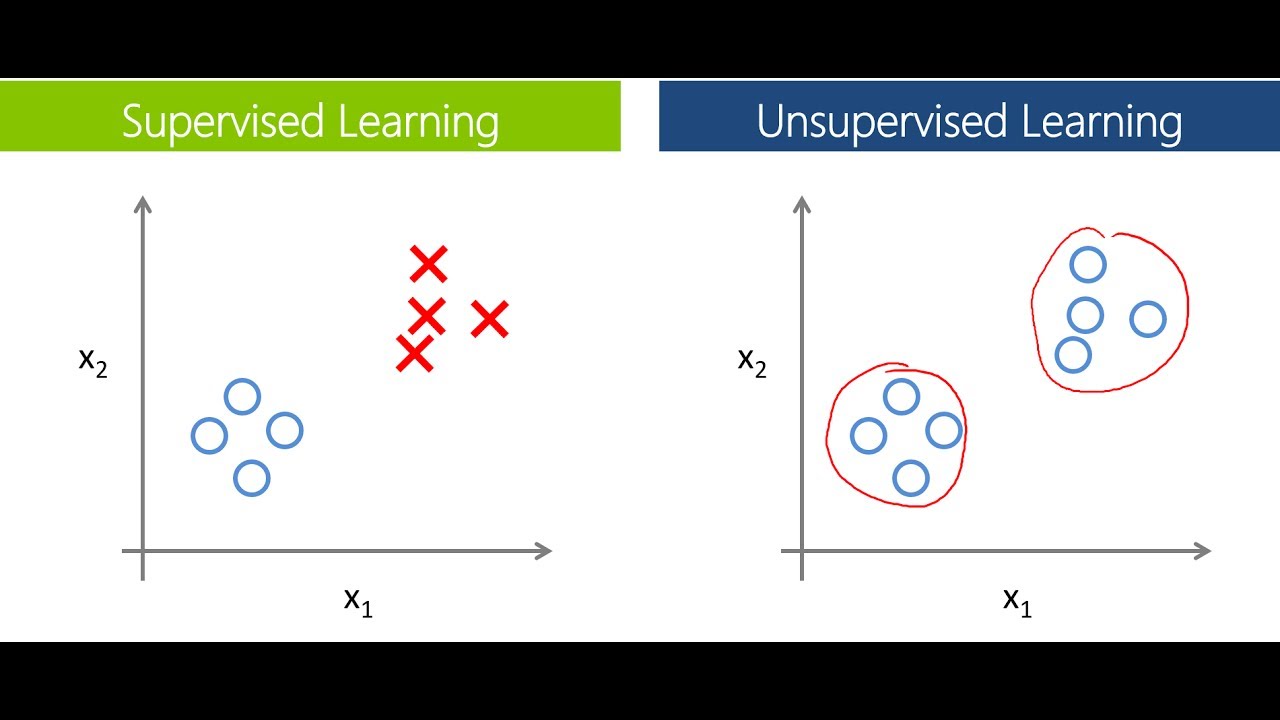
Supervised learning uses labeled data to train models. This means each input in the training dataset comes paired with the correct output.
This method requires human involvement to create these labeled datasets. Experts must classify or assign values to data points before the learning process begins.
The labeled data serves as the “supervision” that guides the learning process. The model learns from these examples to predict outputs for new, unseen data points.
Think of supervised learning like studying with an answer key. The model learns from examples where the correct answers are already provided.
How It Works
The supervised learning process follows a structured approach in machine learning development:
- A dataset with labeled examples is collected and prepared
- The model examines these examples during training
- It identifies patterns linking inputs to their correct outputs
- Loss functions measure prediction errors
- The model adjusts its parameters to reduce these errors
- This process repeats until the model achieves acceptable accuracy
During the training process, the model improves its prediction accuracy. It learns to make accurate predictions on new data.
The goal is to minimize the difference between predicted outputs and actual labels. This difference, measured by loss functions, guides the model’s learning process.
When properly trained, a supervised model can take new inputs and predict outputs with high accuracy.
Common Algorithms in Supervised Learning
Supervised learning relies on well-defined algorithms that use labeled data to make accurate predictions. Some of the most widely used techniques are discussed below:
Classification Algorithms
- Logistic Regression: Makes binary predictions based on linear relationships
- Decision Trees: Creates a tree-like model of decisions based on feature values
- Naïve Bayes: Uses probability principles based on Bayes’ theorem
- Random Forest: Combines multiple decision trees for better accuracy
- Support Vector Machines (SVM): Find optimal boundaries between classes
- Neural Networks in Supervised Learning: Models inspired by human brain structure
Regression Algorithms
- Linear Regression: Predicts continuous values based on linear relationships
- Polynomial Regression: Handles non-linear relationships between variables
- Decision Tree Regression: Uses tree structures to predict continuous values
Each algorithm has its pros and cons. This makes them suitable for different kinds of problems and datasets.
Key Applications of Supervised Learning
Supervised learning plays a crucial role in solving real-world problems with precision and efficiency. Let’s look at its key applications given below:
- Image and Speech Recognition: Supervised learning is used by computer vision systems to detect objects, humans, and scenes within images. Siri and Alexa utilize supervised models for voice assistants.
- Spam Detection: Email providers screen out unwanted mail with supervised models trained on spam and legitimate emails as examples.
- Medical Diagnosis: Healthcare professionals use supervised models to help identify diseases from patient data, medical images, and test results.
- Financial Predictions: Investment banks and financial institutions forecast share prices and determine financial risks through supervised models trained on past market trends.
- Natural Language Processing: Supervised learning methods are highly dependent on text classification, sentiment analysis, and language translation.
- Self-driving Cars: Autonomous cars employ supervised models to detect road signs, pedestrians, and other cars.
An Overview of Unsupervised Learning
Unsupervised learning operates on raw, unlabeled data. The algorithm searches through the data for underlying patterns without direction.
In contrast to supervised learning, no example needs to be labeled in this methodology. The system learns to structure and arrange data independently.
This method excels at discovering relationships and structures that humans might miss. It finds natural groupings or associations within complex datasets.
Unsupervised learning is similar to visiting a new city without a map. The algorithm has to find the layout and landmarks by itself.
How It Works
Unsupervised learning follows a discovery-oriented process:
- Raw, unlabeled data is collected
- The algorithm searches for patterns, similarities, or differences
- It groups similar data points or identifies relationships
- The model creates its own structure based on the data
- Results are evaluated based on internal criteria rather than against known answers
These algorithms find natural structures within data. They group similar items together or identify relationships between variables.
The process often involves dimensionality reduction, density estimation, or cluster analysis. These techniques help reveal hidden patterns in complex datasets.
Since there are no labeled examples to guide learning, unsupervised algorithms use internal metrics to evaluate how well they’ve organized the data.
Common Algorithms in Unsupervised Learning
Unsupervised learning finds hidden patterns in data without predefined labels. The algorithms behind it power everything from customer segmentation to anomaly detection.
Clustering Algorithms
- K-Means: Divides data into K clusters based on similarity
- Hierarchical Clustering: Creates a tree of clusters at different levels
- Gaussian Mixture Models (GMM): Uses probability distributions to form clusters
- DBSCAN: Forms clusters based on data density
Association Algorithms
- Apriori Algorithm: Discovers frequent itemsets in transactional data
- Market Basket Analysis: Finds relationships between products purchased together
- FP-Growth: Efficiently identifies frequent patterns in datasets
Dimensionality Reduction
- Principal Component Analysis (PCA): Reduces data dimensions while preserving variance
- t-SNE: Visualizes high-dimensional data in lower dimensions
- Autoencoders: Neural networks that learn compressed representations of data
These algorithms serve different purposes in finding structure within unlabeled data.
Applications of Unsupervised Learning
Businesses use unsupervised learning to uncover trends, group similar customers, and detect unusual behavior, making it a valuable tool for data-driven decision-making. Let’s look at the key applications given below:
- Customer Segmentation: Marketing teams use clustering to group customers based on purchasing behavior, demographics, and preferences for targeted campaigns.
- Anomaly Detection: Financial institutions identify unusual transactions that might indicate fraud using models that recognize patterns deviating from normal behavior.
- Recommendation Systems: Services like Netflix, Spotify, and Amazon group similar products or content to suggest items users might enjoy based on past preferences.
- Biological Data Analysis: Researchers use clustering to analyze DNA sequences, identify genetic patterns, and discover new biological categories.
- Market Research: Companies discover market segments and consumer behavior patterns through unsupervised analysis of purchasing data.
- Network Analysis: Security systems detect unusual network traffic patterns that might signal cyber attacks or system failures.
Key Differences Between Supervised and Unsupervised Learning
While supervised learning works with labeled data for precise outcomes, unsupervised learning explores raw data to identify patterns.
Understanding the differences while comparing “AI supervised vs unsupervised learning” helps in choosing the right method for various challenges.
| Feature | Supervised Learning | Unsupervised Learning |
| Data Type | Labeled | Unlabeled |
| Human Intervention | High (requires labeled data) | Low (learns from raw data) |
| Output | Predictive (classification/regression) | Descriptive (clustering/association) |
| Common Use Cases | Fraud detection, medical diagnosis, image recognition | Customer segmentation, recommendation systems |
| Complexity | Generally simpler, requires pre-labeled datasets | More complex, requires pattern discovery |
Data Type
- Supervised: Requires labeled data with clear input-output pairs
- Unsupervised: Works with unlabeled data, finding natural patterns
Human Intervention
- Supervised: Needs significant human effort to label training data
- Unsupervised: Requires minimal human input beyond initial setup
Output
- Supervised: Produces specific predictions or classifications
- Unsupervised: Reveals hidden structures or relationships
Common Use Cases
- Supervised: Prediction tasks with clear right/wrong answers
- Unsupervised: Exploration tasks seeking unknown patterns
Complexity
- Supervised: Conceptually simpler but requires more data preparation
- Unsupervised: More complex to validate but needs less data preparation
Evaluation
- Supervised: Can measure accuracy against correct answers
- Unsupervised: More difficult to evaluate; relies on internal metrics
Training Process
- Supervised: Learning stops when prediction error minimizes
- Unsupervised: Learning continues until structures stabilize
Computational Resources
- Supervised: Often requires more computing power for training
- Unsupervised: May need more resources for exploring complex data spaces
Which is the Right Approach for Your Business?
Choosing one among AI supervised vs unsupervised learning depends on your data, goals, and industry. Each approach has its strengths, and the right choice can significantly impact business success.
When to use supervised learning
- You have access to labeled data
- Your goal involves prediction or classification
- You need high accuracy for specific outcomes
- The problem has clear right or wrong answers
- You can define what success looks like
- Your business needs depend on specific predictions
Supervised learning works well for:
- Spam filtering
- Disease diagnosis
- Credit scoring
- Sales forecasting
- Customer churn prediction
When to use unsupervised learning?
- You have mostly unlabeled data
- You want to discover hidden patterns
- Your goal involves exploration rather than prediction
- You’re looking for previously unknown groupings
- You want to reduce data dimensions
- You need to identify unusual data points
Unsupervised learning shines in:
- Market segmentation
- Social network analysis
- Recommendation systems
- Anomaly detection
- Feature extraction
Top Decision Factors To Know
The right choice depends on your specific business needs, usage of machine learning services, data availability, and the questions you’re trying to answer. Yet, there are some key factors to know, as discussed below:
- Available data: The presence or absence of labels often determines your approach
- Business goals: Prediction vs. exploration
- Resources: Time and budget for data labeling
- Problem complexity: Known categories vs. unknown patterns
Future of Machine Learning: Combining Supervised and Unsupervised Approaches
The future lies in blending supervised and unsupervised techniques to create smarter, more adaptable systems that improve decision-making and drive innovation across industries.
Let’s have a look what the future holds for machine learning:
Semi-supervised Learning
Semi-supervised learning explained here bridges the gap between supervised and unsupervised methods. It uses a small amount of labeled data alongside a large amount of unlabeled data.
This approach addresses the common challenge of having limited labeled examples. It leverages the patterns found in unlabeled data to improve learning from the few labeled examples.
Many real-world applications benefit from this hybrid approach. Medical image analysis, speech recognition, and content categorization all use semi-supervised techniques.
This method reduces the need for extensive data labeling while maintaining good prediction accuracy.
Reinforcement Learning
Reinforcement learning does things differently. It learns from trial and error, getting a reward or penalty for its actions.
In contrast to both supervised and unsupervised learning, reinforcement models learn by interacting with their surroundings. They act and adapt through feedback.
This strategy fuels autonomous vehicles, playing computers, robotics, and adapting systems. It learns best behaviors by trying them multiple times with feedback.
Reinforcement learning excels in scenarios where the best sequence of decisions must be learned through experience.
Hybrid Models
The most cutting-edge ML applications combine multiple learning approaches. These hybrid models leverage the strengths of different methods for more powerful results.
Some systems use unsupervised learning for feature extraction before applying supervised techniques. Others use reinforcement frameworks with supervised components.
Healthcare, finance, and autonomous systems increasingly rely on these combined approaches. They offer better performance than any single method alone.
As ML technologies mature, these hybrid approaches will likely become the standard for complex applications.
Conclusion
Supervised and unsupervised learning are the two fundamental approaches to extracting value from data. Each offers unique strengths that suit different business needs.
Supervised learning excels when you have labeled data and need specific predictions. On the other hand, unsupervised learning shines when exploring raw data to discover hidden patterns. But the future is to blended methods that leverage the benefits of many learning styles.
When deciding between these methods, think about your business objectives and particular use case. The proper choice relies upon what questions you must answer as well as the resources you possess. So, make the smart choice by hiring top machine learning experts.