
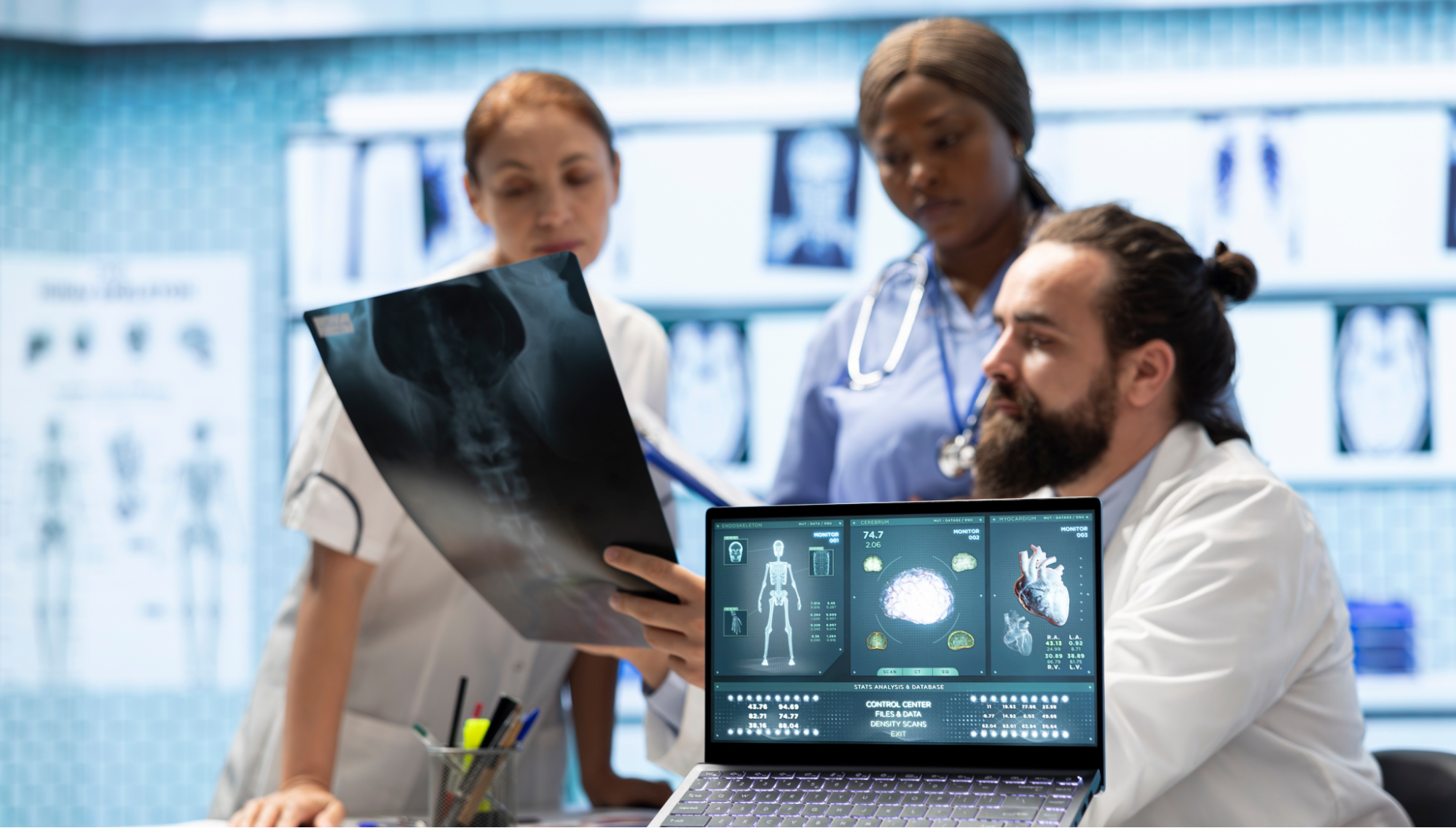
AI is reshaping clinical documentation, and the future looks incredibly promising. As technology continues to evolve, AI has the potential to make documentation faster, more accurate, and less time-consuming, allowing healthcare professionals to focus on patient care. But what does the future hold for AI in this space?
In this blog, we’ll explore the latest trends and predictions for AI in clinical documentation. We’ll explore how these advancements will impact the healthcare industry, improve workflows, and ultimately enhance patient outcomes, ensuring your practice stays ahead of the curve in this fast-evolving field.
The Evolution of Clinical Documentation
The journey of medical documentation has been long and winding. Understanding where we’ve been helps us appreciate the revolutionary nature of where we’re heading.

From Paper Charts to Digital Overload
Remember the days of illegible doctor handwriting? Paper charts were the standard for centuries. The transition to Electronic Health Records (EHRs) promised efficiency but delivered something else entirely. Many physicians now spend more time documenting than doctoring, with some studies showing that doctors spend nearly two hours on EHR tasks for every hour of direct patient care.
Enter AI clinical documentation, which promises to revolutionize the process by making it faster, more accurate, and less time-consuming, allowing doctors to spend more time with their patients.
The Burnout Crisis
The documentation burden has contributed significantly to physician burnout. Roughly 42% of physicians report feeling burned out, with administrative tasks being the primary culprit. The healthcare system has inadvertently turned doctors into highly paid data entry specialists.
Enter First-Generation AI Assistance
The first wave of AI in clinical documentation focused on transcription, converting speech to text. While helpful, these tools still require significant human oversight and editing. They were stepping stones to something greater.
The evolving documentation landscape has created fertile ground for innovative AI solutions to address these persistent challenges. Now, let’s examine how modern scribe tool technologies are transforming this space.
How AI Clinical Documentation Works Today
Today’s AI clinical documentation systems go far beyond simple transcription, leveraging sophisticated technologies to create intelligent documentation assistants.
Natural Language Processing Capabilities
Modern AI clinical documentation systems utilize advanced NLP to understand medical terminology, clinical context, and the nuances of healthcare conversations. These systems can differentiate between patient history, assessment, and treatment plans, organizing information appropriately.
Speech Recognition Advancements
Current systems achieve accuracy rates approaching 95% for medical terminology, a dramatic improvement from earlier technologies. As one physician using an ai note taking app remarked, “It finally understands the difference between ‘hypertension’ and ‘hypotension’ without me having to correct it constantly.”
Machine Learning and Adaptive Algorithms
What makes today’s systems truly revolutionary is their ability to learn. The best ai note taking app solutions adapt to individual physician speaking patterns, specialty-specific terminology, and institutional documentation requirements.
As these core technologies continue to evolve, we’re witnessing the emergence of increasingly sophisticated solutions transforming healthcare workflows. Let’s explore the leading platforms reshaping clinical documentation today.
Top AI Note Taking Solutions Transforming Healthcare in 2025
The market for AI documentation tools is growing rapidly, with solutions targeting different aspects of the healthcare documentation challenge.
Enterprise-Grade AI Documentation Platforms
Leading healthcare systems are implementing comprehensive AI documentation solutions that integrate with existing EHR systems. These enterprise platforms offer end-to-end documentation support, from capturing the patient encounter to finalizing billing codes.
Specialty-Focused Solutions
Recognizing that a cardiologist’s documentation needs differ from a psychiatrist’s, developers have created specialty-specific AI notes systems. These tailored solutions understand the unique terminology and documentation requirements of each medical specialty.
Accessibility Through Free Options
While enterprise solutions dominate large healthcare systems, smaller practices benefit from ai note taker free options that provide basic documentation support without significant investment. These entry-level solutions often offer limited features but still deliver meaningful time savings.
The comparison table below highlights key differences between leading documentation solutions:
| Feature | Enterprise Solutions | Specialty Solutions | Free AI Note Takers |
| Cost | $500-1000 per provider monthly | $200-400 per provider monthly | $0 with limitations |
| EHR Integration | Comprehensive | Limited to major EHRs | Often minimal or absent |
| Specialty Customization | Moderate | High | Minimal |
| Accuracy Rate | 95%+ | 90-95% | 80-85% |
| Regulatory Compliance | Comprehensive | Focused on specialty requirements | Basic |
While today’s solutions are impressive, the next wave of ambient clinical intelligence represents a quantum leap in capability. Let’s explore this emerging frontier.

Ambient Clinical Intelligence: The Next Frontier
As impressive as current scribe tool technology is, ambient clinical intelligence promises to deliver a completely hands-free documentation experience.
Passive Documentation Without Disruption
Ambient systems use wall-mounted or device-integrated microphones to capture patient-provider conversations without requiring activation commands or wearable devices. The technology works silently in the background, generating documentation automatically.
Enhancing the Patient-Provider Experience
With ambient technology, providers can maintain natural eye contact and engage more deeply with patients instead of being distracted by typing or dictating. This shift allows healthcare professionals to focus fully on their patients, creating a more connected and personalized experience.
By reducing the time spent on documentation, doctors can build stronger relationships with patients, leading to higher satisfaction and better overall care.
Real-World Implementation Success Stories
Early adopters report remarkable outcomes. “I was skeptical at first,” says Dr. Sarah Johnson, “but now I finish my notes before leaving the exam room. I haven’t taken work home in months.”
The potential of ambient intelligence extends beyond simple documentation, pointing toward a future where multiple inputs create comprehensive clinical records. This leads us to explore multimodal documentation systems.
Multimodal AI Documentation Systems
Tomorrow’s AI notes systems will integrate multiple data streams for unprecedented documentation richness and accuracy.
Beyond Voice: Visual and Contextual Inputs
Future systems will incorporate visual data from the exam room, recognizing procedures performed, physical exam findings, and even patient emotional responses.
Computer Vision Applications
Advanced computer vision will document visible symptoms, wound measurements, skin conditions, and procedure steps without requiring manual entry.
Enhanced Clinical Context
By combining multiple data types, documentation will include not just what was said but the full context of care, including non-verbal cues, physical findings, and ambient data from medical devices.
These multimodal capabilities represent just the beginning. As AI continues to evolve, the emergence of autonomous documentation agents will further transform healthcare workflows.
Integration with Clinical Workflows
Even the most advanced AI documentation technology delivers limited value if it doesn’t integrate seamlessly with existing workflows.
EHR Integration Challenges and Solutions
Interoperability remains a significant hurdle, though standardization efforts are improving. Leading ai note taking app providers are developing universal connectors that work across multiple EHR platforms.
Mobile and Wearable Documentation Interfaces
Documentation is increasingly moving to mobile devices and wearables, allowing providers to review and approve notes from anywhere. This mobility enhances flexibility and supports modern healthcare delivery models.
Team-Based Documentation Coordination
Modern AI documentation platforms support collaborative care models, allowing multiple providers to contribute to a single note while tracking contributions for billing and regulatory purposes.
The ultimate measure of any healthcare technology is its impact on outcomes—both clinical and financial. Let’s examine how AI documentation is delivering measurable benefits.
Key Takeaways on the Future of AI Documentation
The transformation of clinical documentation through AI represents one of the most significant shifts in healthcare practice in decades. As we’ve seen, these technologies are not just changing how notes are created, they’re fundamentally altering clinical workflows, patient experiences, and provider satisfaction.
What Healthcare Leaders Should Know
The shift toward AI-powered documentation is inevitable and accelerating. Organizations that embrace these technologies gain competitive advantages in provider recruitment, retention, and operational efficiency. The question is no longer if but when and how to implement these solutions.
Resources for Further Exploration
For healthcare organizations interested in exploring AI documentation options, numerous implementation guides, vendor comparisons, and case studies are available through major healthcare IT organizations. Industry conferences increasingly feature dedicated tracks on documentation automation and ambient technologies.
FAQs on Your AI Documentation
-
What makes AI-powered documentation different from traditional transcription services?
Unlike simple transcription, AI clinical documentation understands medical context, organizes information into appropriate sections, and can extract structured data for analytics and billing while adapting to individual provider patterns.
-
How accurate are today’s AI clinical note-taking solutions?
Leading AI documentation systems achieve 95% accuracy for medical terminology and continue improving through machine learning. Specialty-specific solutions typically perform better in their focused domains.
-
How does AI documentation impact medical-legal liability?
While AI documentation can improve note completeness and accuracy, providers maintain legal responsibility for their documentation. Most systems include verification workflows to ensure providers review and approve all AI-generated content.