
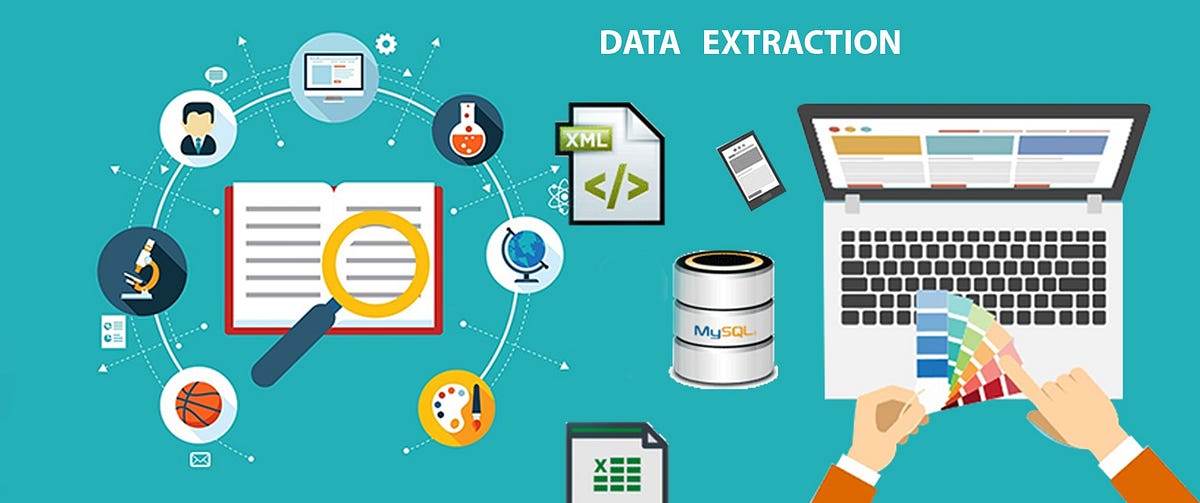
Entrepreneurs are constantly in search for new customers, employees, competitors, and service providers. For their businesses to expand, they require data. To increase the efficiency of marketing channels, close more deals, or cut costs, business owners gather information. However, the time required to manually collect, compile, and enter data is excessive and could be better used for more important tasks. This is when entrepreneurs begin searching for data extraction services.
AI is the top investment goal for modern enterprises, according to a recent IDC survey, and it makes sense. AI has changed how businesses function on many levels, from improving customer experiences and accelerating automation to boosting decision-making. One of the most fascinating fields where AI is having an effect is data extraction. Businesses can now easily extract insightful information from unstructured files due to AI-powered technologies, which expedite procedures and open up new business prospects. Investigating how AI is altering our perspective on data is trending right now!
Introduction to AI Data Extraction
Using Artificial Intelligence (AI) technology to collect and analyze data from multiple sources is known as AI data extraction. Unstructured data, which can include text, photos, and other non-tabular formats, is very useful for gleaning insights.
Importance of AI for Data Extraction
Businesses are dealing with more and more unstructured data, including emails, reports, and contracts, and manual data extraction methods are not keeping up. By eliminating the possibility of human error and expediting crucial operations, artificial intelligence (AI) provides a more precise and effective way to process data. By automating data extraction, businesses may increase productivity and cut expenses while freeing up their workers to work on higher-value tasks.
AI’s capacity for adaptation is what makes it unique. Artificial Intelligence can assess and extract data from a variety of formats and adjust to new document structures as they appear, unlike traditional approaches. AI is a vital tool for companies trying to optimize their processes and make choices more quickly because of its capacity to adapt to changing data requirements.
Benefits of AI-Based Data Extraction
-
Enhanced productivity
Large amounts of data is processed using AI systems quickly. According to the survey, 87% of businesses worldwide think AI-driven technology will give them a competitive edge. For example, AI can examine hundreds of invoices in a matter of minutes, whereas manual analysis would normally take days. Critical information is rapidly understood and extracted by methods like natural language processing (NLP), which greatly speeds up and improves the efficiency of the data processing pipeline as a whole.
-
Cost Savings
AI greatly reduces labor expenses by automating repetitive data extraction processes. According to a recent PwC study, companies can save 30–40% of the time they would otherwise spend on these procedures by using even the most basic AI-based extraction approaches. Organizations can maximize return on investment (ROI) on human expenses by reallocating resources from manual chores to more strategic initiatives.
-
More Adaptability
Organizations can process a variety of data types effectively because of AI data extraction’s ability to handle different document formats. AI algorithms are capable of precisely extracting important information from scanned photos, PDFs, and structured databases. For example, AI reliably extracts important information from documents in various formats, such as policy numbers and claim amounts, in the insurance industry.
What is the Process of AI Data Extraction?
AI data extraction incorporates multiple important procedures that transform raw data into usable insights. Here is at how it works:
Data Collection: The first step in the process is to collect data from a variety of sources, including databases, applications, and systems like CRMs and ERPS. The majority of this data, particularly documentation like invoices, contracts, emails, and reports, are in an unstructured format.
Preprocessing: After collecting the data, it must be sorted and cleaned. In this step, noise and unnecessary information that can obstruct the extraction process are eliminated. To guarantee consistency across various data kinds, standardizing formats is also crucial.
Data Extraction: AI data extraction is the process of identifying, categorizing, and extracting data from unstructured files using natural language processing. According to the user-defined logic, the AI determines the nature of information and saves it as metadata.
Data Validation: After the data has been extracted, it is essential to confirm its accuracy in order to preserve its integrity. To make sure the extracted output is correct and comprehensive, organizations might use pre-established criteria and data quality checks.
Integration and Storage: To make the data available for analysis and decision-making, the extracted data must be integrated into databases or systems that already exist.
How Does Data Extraction Help Businesses to Boost Growth and Drive Efficiency?
AI data extraction is revolutionizing a number of industries by improving productivity and simplifying procedures. These applications demonstrate how AI data extraction is adding value across several industries.
Healthcare: Improving Patient Data Management
In the medical field, having fast access to patient data is essential. AI data extraction makes it possible for providers to generate comprehensive patient profiles by automating the process of gathering data from lab tests and medical records. In the end, this instant access enhances patient care by facilitating precise diagnosis and prompt therapies.
Finance: Improving the Processing of Invoices
Effectively handling bills and receipts is essential for financial institutions. AI data extraction reduces processing times and errors associated with manual data entry by automating data retrieval from financial documents. By improving regulatory compliance, this technology frees up firms to concentrate on strategic financial choices.
Insurance: Simplifying the Claims Procedure
Customer satisfaction in the insurance industry depends on prompt and precise claims handling. Retrieving pertinent information from claims forms and associated documentation is automated via AI data extraction. This improves the client experience, lowers errors, and speeds up the claims processing process.
Conclusion
Experts expect that the requirement for data extraction services will continue to expand in 2025 and beyond. More and more firms choose to acquire organized, understandable data from a source instead of trying to build up the extraction process on their own.
The market for data extraction services will grow quickly, giving companies new prospects. Entrepreneurs can now obtain more from social media than just a database of personal contacts or leads thanks to increasingly advanced data collection and analysis software. Machine learning, natural language processing, and sentiment analysis are being used more and more by data extraction service providers to forecast patterns in customer behavior.
CRM and ERP developers will need to improve as new data types become accessible to business owners. They will offer new third-party connectors or integrated modules for customer decision management to businesses.