


The hospitality industry is more competitive than ever. Hotels face mounting pressure to maximize revenue while delivering unforgettable guest experiences. Yet, many traditional revenue management methods fail to adapt to rapidly changing market dynamics. Enter data-driven revenue management—a transformative approach that blends technology and analytics to optimize pricing, predict demand, and improve profitability.
Today, technology is reshaping how hotels operate. Data-driven strategies are no longer optional; they’re essential for survival in a world where precision, speed, and personalization win.
The Shift to Data-Driven Revenue Management
Revenue management has come a long way. Traditional methods relied heavily on historical data and manual processes. While effective in their time, they were static and reactive, often missing opportunities created by real-time market shifts.
Data-driven methods use cutting-edge algorithms and real-time analytics to revolutionize this approach. These systems dynamically adjust prices based on demand, seasonality, and competitor activity. For example, hotel price monitoring tools allow properties to stay competitive by identifying optimal pricing strategies in a constantly fluctuating market.
With automation and insights, hotels can respond faster, capture more bookings, and maximize revenue—no matter the circumstances.
Key Components of Data-Driven Revenue Management
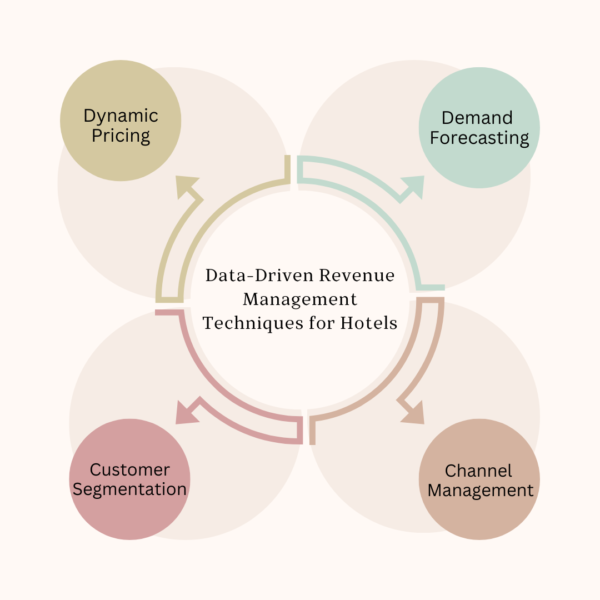
Dynamic Pricing
- Pricing is no longer set in stone. Using dynamic pricing models, hotels can adjust rates in real time based on market conditions.
- Machine learning tools further refine this process, identifying trends and making accurate pricing recommendations.
The following case study demonstrates how important dynamic pricing is for hotel revenue and growth:
Case Study of a Boutique Hotel’s Revenue Increase with Dynamic Pricing: A boutique hotel chain facing stagnant revenues and declining occupancy due to competition and outdated pricing strategies implemented a dynamic pricing model. This strategic shift led to a 15% rise in occupancy and a 20% increase in Revenue per Available Room (RevPAR), underscoring the importance of adapting to market demands. (source: Flevy)
Demand Forecasting
- By analyzing historical data, booking patterns, and external factors like weather or events, hotels can predict demand with surprising accuracy.
- For example, a festival in the city might trigger a spike in room demand, while offseason periods may require discounts to fill vacancies.
Customer Segmentation
- Not all guests are the same. Business travelers may prioritize convenience, while leisure travelers value cost. Grouping customers by preferences allows for tailored promotions and pricing.
- Segmentation also helps identify high-value repeat customers, ensuring their loyalty through exclusive perks.
Channel Management
- Revenue isn’t just about price; it’s about distribution. By optimizing listings across OTAs, direct booking platforms, and other channels, hotels can strike a balance between occupancy and profitability.
- Prioritizing direct bookings can further enhance revenue by reducing reliance on commission-heavy third-party platforms.
Enhancing Guest Experience Through Data
Data isn’t just about pricing; it’s also about delivering better guest experiences. Analytics help hotels understand customer preferences, enabling personalization that leaves lasting impressions.
For example:
- A returning guest might be offered a complimentary room upgrade or loyalty perks.
- AI-driven tools, like chatbots and recommendation engines, enhance service by providing instant responses and tailored suggestions.
When guests feel valued, loyalty grows, resulting in repeat bookings and positive reviews.
Strategies for Maximizing Revenue
Ancillary Services
- Offering spa packages, dining deals, and excursions can generate additional income while enriching the guest experience.
- These extras often have higher profit margins than standard room bookings.
Length of Stay Policies
- Minimum and maximum length-of-stay rules help optimize occupancy during peak and off-peak seasons.
- For instance, requiring a three-night minimum during a holiday weekend can increase overall revenue.
Peak vs. Off-Peak Forecasting
- Strategic promotions during slow periods ensure rooms aren’t sitting empty. Conversely, premium pricing during peak demand captures higher profits.
The Role of Technology in Revenue Management
Automation is a game-changer for hotel revenue managers. Tools like Duetto and IDeaS take the guesswork out of pricing and forecasting, allowing teams to focus on strategy rather than spreadsheets.
Case studies have demonstrated these tools’ effectiveness:
Resort Chain’s Conversion Growth through Integrated Pricing and Marketing Data: Hotel Casa Dorada Los Cabos, Resort & Spa, a luxury destination, partnered with Duetto to enhance its revenue management. By leveraging Duetto’s GameChanger and ScoreBoard solutions, the resort optimized its pricing strategy and improved operational efficiency, resulting in a significant boost in occupancy. (source: Hotel Tech Report)
IDeaS Boosts Comwell Hotels’ Revenue with Dynamic Pricing Solutions:
Comwell Hotels, a leading Danish hotel chain, partnered with IDeaS to transform their revenue management approach. By implementing IDeaS’ innovative tools, they optimized pricing strategies, improved RevPAR, and navigated market challenges effectively. (Source: IDeaS)
Such tools don’t just streamline processes—they deliver measurable ROI.
Balancing Automation with Human Expertise
While technology provides invaluable data, it’s not infallible. Human intuition is critical for interpreting nuanced market trends and making strategic decisions that algorithms might overlook.
For example:
- A revenue manager might override automated pricing during a local event to account for an unexpected surge in VIP bookings.
- Human insight also ensures that promotions align with a hotel’s brand and guest expectations.
Automation and human expertise work best as complementary forces, not replacements for one another.
Benefits of Adopting Data-Driven Revenue Management
Embracing data-driven strategies delivers tangible benefits:
- Optimized Pricing: Revenue grows through dynamic adjustments that reflect real-time demand.
- Better Guest Satisfaction: Personalized offers create memorable experiences.
- Sustained Competitiveness: In a crowded market, staying agile and data-focused ensures long-term success.
Challenges and Future Trends
Even with its benefits, data-driven revenue management isn’t without challenges. Data privacy is a growing concern, requiring careful handling of guest information to maintain trust.
Looking ahead, trends like AI-enhanced demand forecasting and profit-based KPIs (like TRevPAR) will shape the industry. Hotels must also prepare for a shift from occupancy-focused metrics to holistic profit management.
Conclusion
Data-driven revenue management is reshaping the hospitality industry, offering new ways to optimize profits and improve guest satisfaction. However, success lies in blending cutting-edge technology with the human touch.
Hotels that embrace these strategies will thrive in the competitive landscape, delivering value for guests while maximizing revenue. It’s time to leverage the tools and insights available—and step confidently into the future.