
Managing medical records is complex and time-consuming, even with advanced systems in place. However, Digital Asset Management (DAM) offers a solution for healthcare data integration and optimized record management. By leveraging DAM, healthcare providers can quickly access essential records, such as electronic health records (EHR), which reduces administrative burdens and improves operational efficiency—saving both time and resources.
Organizing digital assets like medical documents is vital for high-quality patient care. Digital Asset Management in healthcare provides hospitals with the tools to streamline workflows, improve collaboration, and ensure compliance with patient privacy regulations.
This article explores the key benefits and features of DAM in healthcare, along with the emerging trends shaping its use in the industry.
Understanding Digital Asset Management (DAM) in Healthcare Industry and Hospitals
Digital Asset Management (DAM) in healthcare provides a structured system for storing, retrieving, and managing digital assets such as medical images, patient records, and other essential documents. DAM systems ensure that hospitals can maintain version control and improve medical records management while safeguarding healthcare data security and maintaining compliance with regulations like HIPAA.
In addition to simplifying record management, DAM plays a crucial role in data governance and archiving, helping hospitals manage valuable digital assets for long-term use. This streamlined process improves patient care and enhances the efficiency of day-to-day operations.
Healthcare Data Compliance: Security and Privacy
With the increased use of electronic health records (EHR) and the integration of digital tools, protecting sensitive patient information has become more important than ever. Healthcare data compliance is essential to ensure that patient information is handled securely and in line with regulations.
Key components of healthcare data compliance include:
- Data Security: Ensuring that only authorized personnel can access patient information through encryption and secure access controls.
- Privacy Regulations: Complying with industry standards, such as HIPAA, to protect sensitive health data.
- Risk Assessment: Regularly assessing systems for potential security vulnerabilities to prevent data breaches.
By following these best practices, healthcare providers can mitigate risks associated with unauthorized access to sensitive information.
The Importance of Healthcare Data Compliance & Management
Data compliance ensures that patients’ information is protected and ethnically used. Here’s how Digital asset management in healthcare ascertains data compliance.
Protecting Patient Privacy
The most crucial concern in healthcare is maintaining confidentiality. Compliance with healthcare data regulations ensures that personal health information remains secure from unauthorized access or disclosure. This helps build trust between both the parties; patient and healthcare providers.
Preventing Data Breaches
Data breaches have become increasingly common across industries. In the healthcare sector, a breach can have severe consequences as it involves highly sensitive information:
- Medical History
- Diagnoses
- Treatments
Protecting data ensures safety, reduces the risk of cyberattacks, and safeguards patient records.
Meeting Regulatory Requirements
Digital asset management adheres to strict regulations to avoid failure. Two-way authentication protects data from unauthorized access. Implementing encryption protocols further enhances security measures by safeguarding sensitive information stored within the digital asset management system. Regular audits and compliance checks ensure that all regulatory requirements are continuously met and any potential risks are promptly addressed.
Enhancing Data Quality
Compliance measures often include guidelines on proper documentation and recordkeeping practices. By adhering to these protocols, healthcare providers can improve the accuracy and completeness of patient data, leading to better decision-making, improved care coordination, and reduced medical records.
Key Features and Functionalities of Medical Records Management System
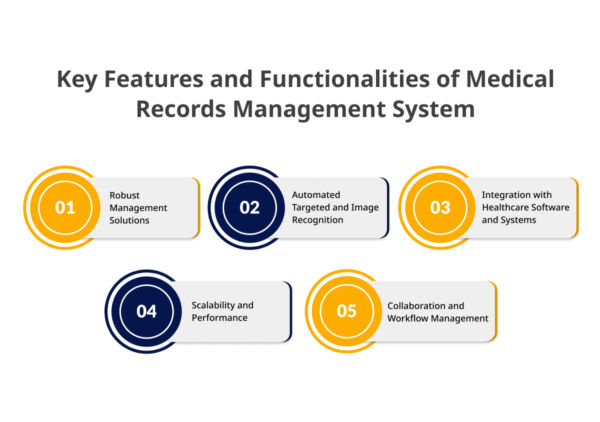
Planning a medical record management system in premises allows you to speed up the process leveraging the features and functionalities of the solution. Here’s an overview of some crucial features and functionalities that can streamline your operations:
Robust Management Solutions
Robust solutions ensure that patient information is protected from unauthorized access, complies with legal regulations, and is readily available to authorized personnel. Features such as encryption, access control, and audit trails are essential to maintaining the integrity and confidentiality of medical records.
Automated Targeted and Image Recognition
Automated targeted and image recognition technologies enhance the efficiency of processing medical records. This functionality allows for the automatic extraction and indexing of relevant information from documents, including handwritten notes and images. By leveraging advanced optical character recognition (OCR) and image analysis, these systems can quickly convert paper records into digital formats, reducing manual data entry and improving accuracy.
Integration with Healthcare Software and Systems
A seamless integration with existing healthcare software and systems is vital for a cohesive medical records management solution. This feature ensures that your Digital asset management in healthcare can interface with electronic health records (EHR) systems, billing software, laboratory information systems (LIS), and other essential applications. Integration facilitates smooth data exchange, minimizes duplication of effort, and supports a unified view of patient information across different platforms.
Scalability and Performance
Scalability and performance are critical considerations for any medical records management system. Scalability ensures that the system can grow and adapt to increasing volumes of data and users without compromising performance. High performance ensures that records are accessed and processed quickly, even during peak usage times. These features are essential for handling large datasets, supporting multiple users, and maintaining system efficiency as your organization expands.
Collaboration and Workflow Management
Effective collaboration and workflow management features are key to optimizing the use of medical records. These functionalities support coordinated efforts among healthcare professionals by enabling real-time access to patient information, sharing of documents, and tracking of tasks. Workflow management tools help streamline processes such as patient admissions, treatment planning, and discharge procedures, ensuring that all team members are aligned and informed. Here’s an overview of some crucial features and functionalities that can streamline your operations:
Benefits of Digital Asset Management in the Healthcare
DAM solutions have greatly benefited the healthcare and hospital sectors. Here are several benefits that the healthcare industry can have with this solution:
Simplifying Processes in Medical Imaging
Healthcare data analytics is simply a DAM solution. Professionals can access and analyze medical images more efficiently leading to better diagnoses, faster treatment planning and rewarded patient outcomes.
Optimizing and Distributing Educational Materials
This allows hospitals to manage and distribute educational videos, documents and other materials. This feature facilitates training programs, helps disseminate knowledge to staff and patients and fosters continuous learning within the organization.
Ensuring Compliance with Privacy Regulations
The management solution ensures compliance with privacy regulations. They provide secure storage, access control, and audit trails, leading the healthcare industry and hospitals to secure patient data and avoid legal and reputational risks.
Enhancing Cross-Department Collaboration
Medical records management system collaborates between different departments within a hospital. For instance, clinicians can share and collaborate on medical images with radiologists, surgeons and other specialists, facilitating multidisciplinary collaboration and comprehensive patient care.
Enabling Secure Sharing with External Partners
The healthcare industry and hospitals often need to share records with external partners, such as physicians, research institutions or medical device manufacturers. DAM systems offer protected sharing, ensuring that sensitive data and intellectual property are protected during collaborations.
Secure Medical Supply Management with Blockchain Technology
Blockchain technology can strengthen supply chain integrity considering its distribution. By leveraging blockchain technology with healthcare software, organizations can establish a robust system for effectively tracking and managing products, thereby mitigating the risk of fraud or data manipulation.
Look for healthcare software development solutions that are leading the market with state-of-the-art technology and seamless healthcare data integration. To ensure the blockchain-based healthcare solution meets the custom needs of the healthcare industry, it complies with regulatory requirements and seamless integration with existing systems.
Conclusion
Digital Asset Management in healthcare is revolutionizing the way medical records and digital assets are managed. By improving data security, enhancing collaboration, and ensuring compliance with privacy regulations, DAM systems allow healthcare organizations to operate more efficiently and deliver better patient care.
As healthcare continues to evolve, adopting Digital Asset Management Solutions will be critical for staying ahead. For healthcare providers looking to enhance their operations, investing in Healthcare Software Development Solutions that include DAM is essential for long-term success and compliance with industry standards.