
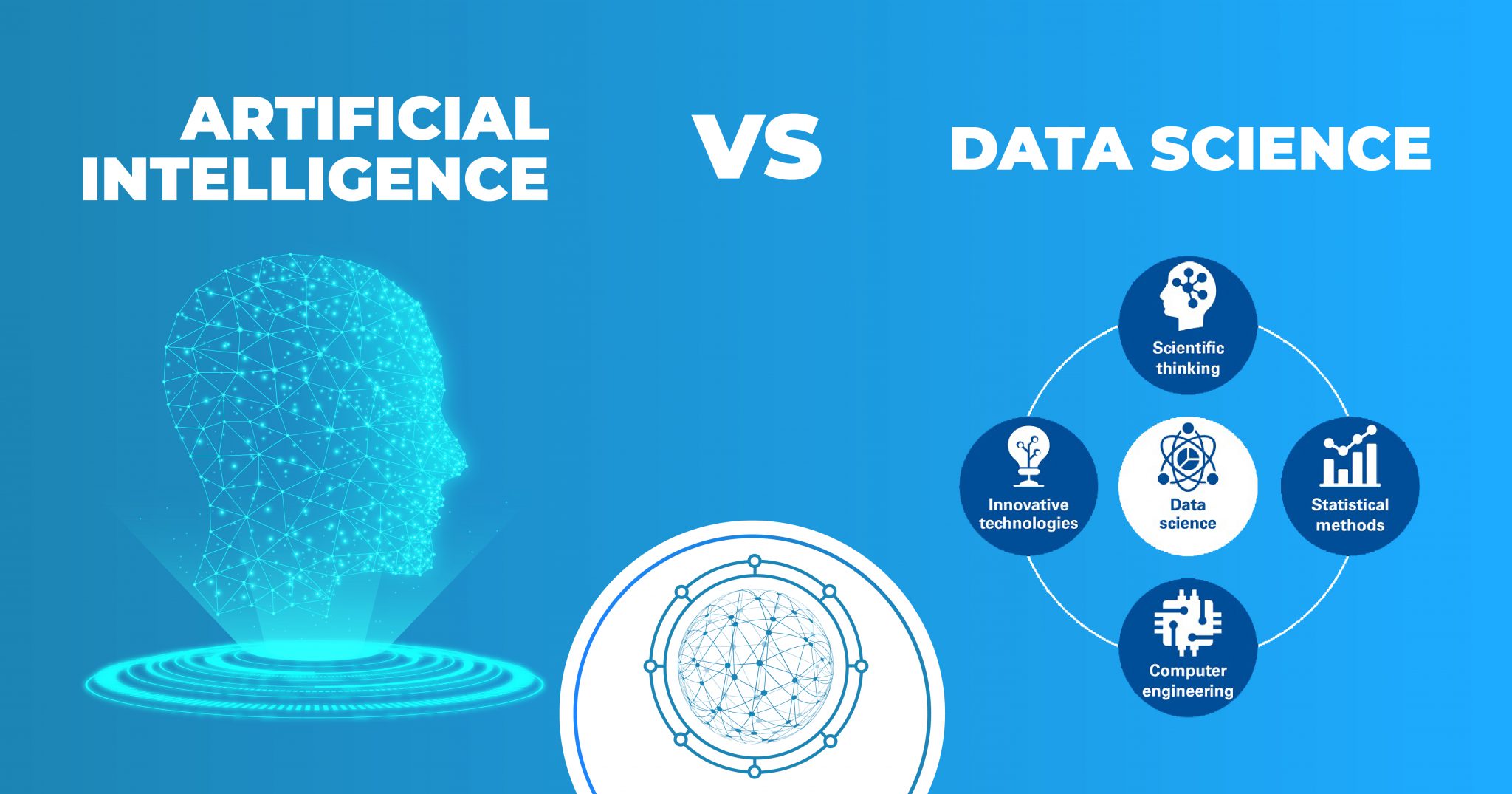
Data science and artificial intelligence are the two most important technologies in the world today. While data science makes use of artificial intelligence in its operations, it does not completely represent AI.
I will be talking about the comparison between data science and artificial intelligence. So without any further ado let’s take a look at today’s agenda.
We will start this article by first understanding what data science is. Then, we will understand artificial intelligence as well. Moving ahead you will explore the differences between data science and artificial intelligence and finally we will conclude this session by understanding which one you should go for.
Data Science
Data science is the most trending technology that has conquered industries worldwide. It has brought about a fourth industrial revolution in today’s world.
This revolution is a result of the massive explosion in data and the growing need for industries to rely on data to create better products. We have become part of a data-driven society. Data has become a dire necessity for industries as they need it to make careful decisions.
Data science involves various underlying fields like statistics, mathematics and programming. Therefore a data scientist needs to be proficient in these areas to understand trends and patterns in the data. This demanding skill set gives data science a steep learning curve.
Furthermore a data scientist must possess knowledge of various steps and procedures, such as data extraction, manipulation, visualisation and maintenance, to forecast the occurrence of future events.
A data scientist should also have a solid understanding of machine learning algorithms. These algorithms are essential building blocks of artificial intelligence. Industries require data scientists to make necessary data-driven decisions. They help assess the industry’s performance and suggest changes to improve it.
Data scientists also collaborate with product development teams to tailor products that appeal to customers by analysing their behaviour.
Artificial Intelligence
What is artificial intelligence? AI is the intelligence possessed by machines. It is modelled after the natural intelligence found in animals and humans. AI uses algorithms to perform autonomous actions similar to those performed in the past that were successful.
Traditional AI algorithms are often given explicit goals as seen in path-finding algorithms. However, contemporary AI algorithms like deep learning recognize patterns and discover goals embedded in the data.
Artificial intelligence also incorporates several software engineering principles to develop solutions to real-world problems. Recently technology giants like Google, Amazon and Facebook have leveraged AI to create autonomous systems.
How Data Science and AI differ from each other
We have selected different features to compare data science and artificial intelligence.
- Scope:
AI is limited to the implementation of machine learning algorithms. In contrast data science covers a broader range of operations involving data. - Types of Data:
AI works with standardised data, represented as vectors and embeddings. Meanwhile, data science handles various data types including structured, semi-structured and unstructured data. - Tools:
AI tools include ChatGpt, Gimmi, Mahout, Shogun, TensorFlow, PyTorch and Scikit-learn.
In data science, popular tools are SPSS, SAS, Python, and R. - Applications:
AI applications are found in healthcare, transportation, robotics, automation and manufacturing.
Data science applications are prominent in internet search engines like Google, Yahoo, and Bing, as well as in marketing, banking, advertising, and more.
Let’s conclude this session by discussing which field you should pursue.
Although data science and artificial intelligence share some similarities, AI still has vast unexplored potential. On the other hand, data science has already made a significant impact in the market.
Data science transforms raw data into meaningful insights through visualisation and analysis. Meanwhile AI creates new products that surpass previous ones and automates processes with minimal human intervention.
Data science plays a crucial role in business as it allows companies to make informed decisions leading to substantial benefits. Companies working with AI offer various job opportunities, such as NLP scientists, machine learning engineers and deep learning scientists.
Key operations on data are performed using data science algorithms implemented in languages like Python and R. As a result, organisations rely on data scientists to process and analyse data helping them make critical business decisions.
Through these points, I hope you now have a clearer idea of which field to choose.
With that, we come to the end of today’s article on Data Science vs Artificial Intelligence. I hope you had a great time learning and understanding the topic.