

What is the functioning principle of AI detectors?
Have you ever thought about how to distinguish between content written by humans and content generated by machines on the internet? AI detectors play a critical role in that aspect.
AI detectors are instruments created to detect material produced by AI algorithms. Due to the rise in AI utilization for producing text, images, and videos, there is a rising demand for methods to assist us in distinguishing between human and AI-generated content.
But what is the exact mechanism behind their functioning? Let’s discuss that.

What is the operational mechanism behind AI content detectors?
A frequently asked query in the realm of AI detection is: What is the mechanism behind AI detectors?
AI content detectors utilize a range of methods and technologies for assessing and categorizing content. Let’s simplify the process by breaking it down into easier terms.
Processing of language using the capabilities of artificial intelligence (AI)
NLP is an essential part of AI content detectors. NLP utilizes algorithms for processing and comprehending human language. Through the utilization of NLP, AI detectors are able to:
AI detectors analyze sentence structure to check for grammar and flow of natural language. Human writing typically contains specific subtleties and differences that are lacking in AI-generated text.
Recognize Patterns:

NLP algorithms have the ability to detect patterns commonly found in AI-generated text, such as repetitive formats or unnatural wording.
Models of machine learning
Machine learning algorithms are trained using extensive datasets that contain a mixture of content created by humans and content generated by artificial intelligence. These models are able to distinguish between the two by identifying slight variations. Important actions to take are:
- Phase of Training: In this stage, the model encounters numerous instances of text written by humans and AI. It becomes skilled at recognizing characteristics that differentiate the two forms of content.
- Evaluation Phase: The model is subsequently tested on undisclosed data to assess its precision. This assists in refining the model for improved effectiveness.
Extraction of Features
AI detectors extract different characteristics from the text in order to achieve precise classifications. A few of these characteristics comprise:
Lexical characteristics such as the frequency of words, vocabulary selection, and stylistic elements can vary between human and AI writing.
Analyzing the organization of words and phrases to form correctly structured sentences is called Syntactic Features.
Comprehension of semantic characteristics aids in recognizing the message’s purpose and its consistency with human communication norms.
Techniques for Deep Learning.
Sophisticated AI detectors utilize deep learning methods like neural networks in order to enhance precision. These methods include:
These computational models called Neural Networks are inspired by the human brain and can identify intricate patterns in data.
Transformer Models, such as GPT-3, are utilized not just for content creation but also for identifying AI-generated text by contrasting it with established human writing.
Cross-referencing and examining context.
To improve dependability, AI sensors frequently compare content with current databases and evaluate the surrounding context.
Plagiarism Detection: AI detectors can determine if parts of a text are plagiarized or heavily influenced by other sources by comparing them to a large database of existing content.
Examining the context aids in assessing if the material is suitable for its intended purpose, whether it be for an academic essay, a news story, or a personal blog entry.
Are AI Detectors Effective in Reality?
There has been much discussion about how well AI detectors work due to the quick progress in AI text creation technologies.
Assessing the effectiveness of AI detectors entails examining their precision, constraints, and the circumstances in which they are utilized.
AI detectors’ precision
The precision of AI detectors can differ depending on various factors like the complexity of the detector, the caliber of training data, and the nature of the content being examined. Presented below are a few important highlights:
High Precision in Regulated Conditions: AI detectors can achieve high accuracy rates in environments with carefully curated and extensive training data. Some detectors boast accuracy rates of over 90% in distinguishing AI-generated text from human-written text, for instance.
Issues with vague material: Accuracy tends to diminish when dealing with ambiguous or creatively written content. AI-created text that closely resembles human writing can at times avoid being noticed.
Constraints of AI detectors
Even though AI detectors have impressive abilities, they are still subject to limitations that can impact how well they function.
AI detectors can mistakenly identify human-written text as AI-generated (false positives) and fail to recognize AI-generated text (false negatives). This becomes especially difficult with complex text or when artificial intelligence algorithms are employed to rephrase human-authored material.
Relying on Training Data: The efficiency of AI detectors is greatly dependent on the high quality and varied training data they use. If the training data contains bias or is not comprehensive, the detector’s performance may suffer.
As AI models for generating text advance, they are able to create content that is harder to differentiate from human writing. The detectors need to quickly adjust to new techniques and patterns due to the ongoing evolution.
10 Best AI Detectors Available Online
Undetectable.ai:
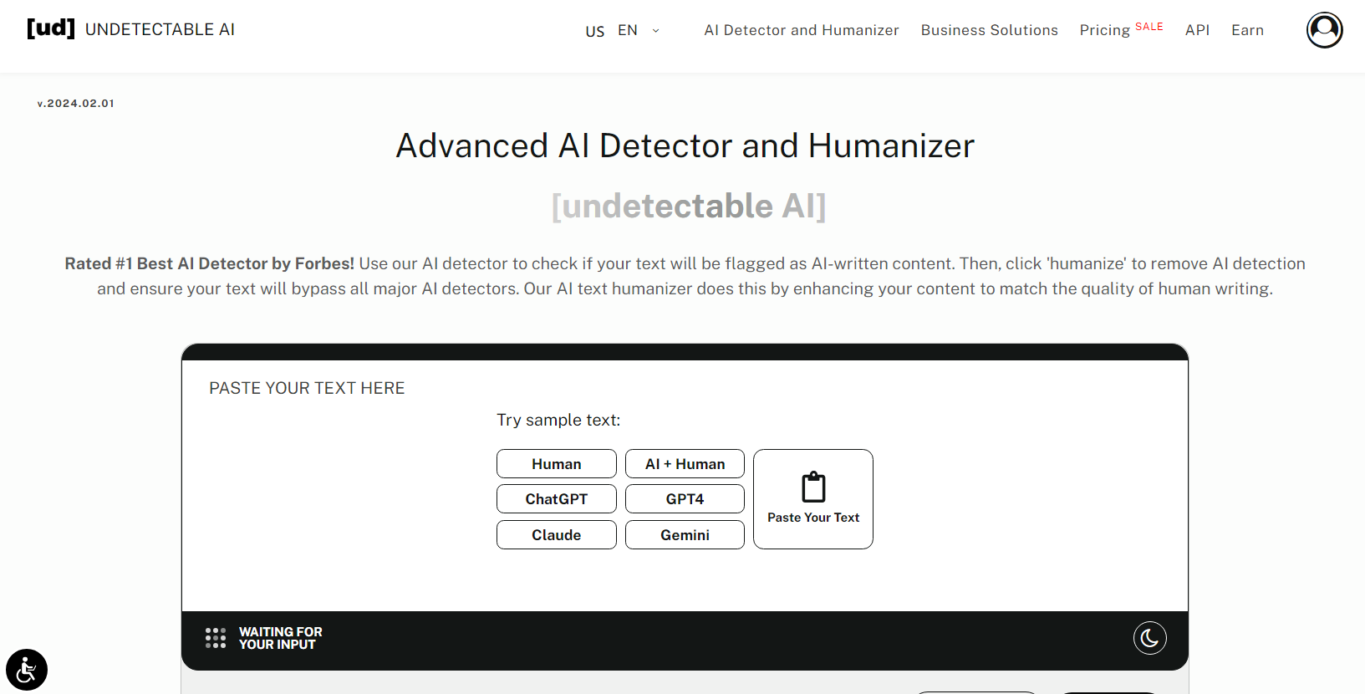
- Overview: Regarded as the best overall AI detector, Undetectable.ai uses advanced machine learning to identify and humanize AI-generated content, making it nearly indistinguishable from human writing.
- Key Features:
- Money-back guarantee.
- Successfully passes over 95% of AI detection tests.
- Produces high-quality, error-free, and credible content.
- Includes a typing and paraphrasing assistant.
- Pros:
- Enhances content quality and saves time.
- Can transform AI-generated content into human-like text.
- Cons:
- May raise ethical concerns and potentially violate terms of service.
- Pricing: $5/month (long-term) or $14.99/month (monthly).
GLTR (Giant Language Model Test Room):
- Overview: Developed by MIT-IBM Watson AI Lab and Harvard NLP, GLTR offers a visual analysis of the probability that text was AI-generated, serving as an educational tool.
- Key Features:
- Visual analysis of word prediction probabilities.
- Open-source and available for public use.
- Provides detailed insights into text structure.
- Pros:
- Educational and open-source.
- Offers detailed visual analysis.
- Cons: Requires technical knowledge to interpret results.
- Pricing: Free and open-source.
Originality AI:

- Overview: A comprehensive AI detection tool that accurately identifies AI-generated content using machine learning and natural language processing. It’s widely used by educational institutions and content creators.
- Key Features:
- Provides detailed reports on content originality.
- Offers high accuracy in detecting AI-generated text.
- Supports batch analysis for large text volumes.
- Easy to integrate into existing workflows.
- Pros:
- High accuracy.
- Capable of batch analysis.
- Simple integration.
- Cons: The pay-per-credit pricing model can become expensive for frequent users.
- Pricing: $0.01 per credit, with each credit checking 100 words.
Turnitin:

Overview: A well-known plagiarism detection tool in academia, Turnitin has expanded to include AI writing detection, ensuring academic integrity.
Key Features:
- Access to a vast database of academic papers and internet content.
- Utilizes advanced algorithms for detecting AI-generated text.
- User-friendly with detailed reports.
- Seamlessly integrates with learning management systems.
Pros:
- Reliable and widely trusted.
- Comprehensive plagiarism and AI detection.
- Excellent integration with academic systems.
Cons: Custom pricing can be costly for smaller institutions; mainly designed for academic use.
Pricing: Custom pricing based on institution size and usage.
Copyleaks:
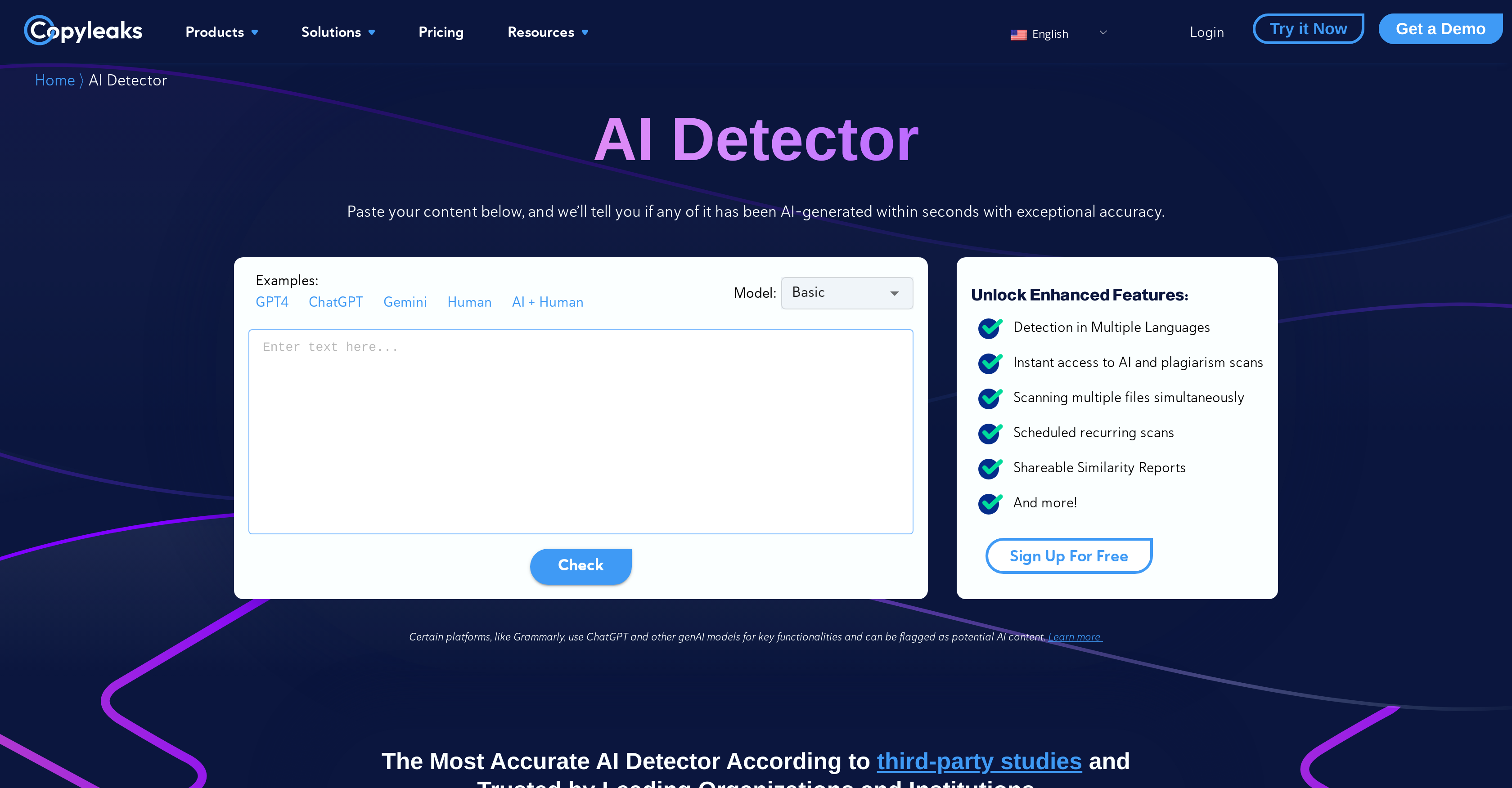
- Overview: Originally a plagiarism detection tool, Copyleaks now also detects AI-generated text using advanced machine learning algorithms. It’s highly accurate and supports multiple languages.
- Key Features:
- Access to an extensive database for content cross-referencing.
- Advanced AI detection algorithms.
- Multi-language support.
- Seamless integration with various platforms.
- Pros:
- Supports a wide range of languages.
- Offers detailed and accurate detection.
- Good integration capabilities.
- Cons: Pricing may be high for individual users.
- Pricing: Starts at $10.99/month for individuals, with custom pricing for enterprises.
ZeroGPT:
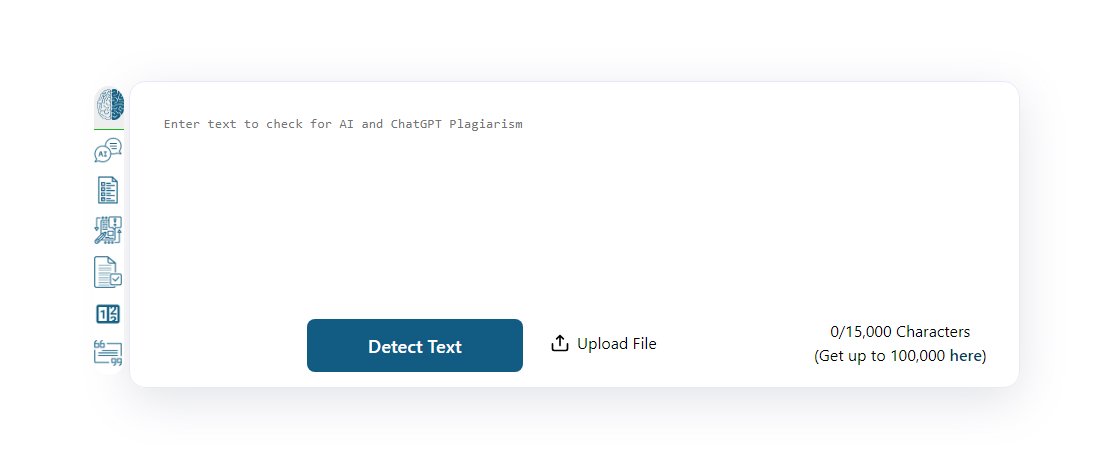
Overview: A specialized AI checker focused on detecting content generated by GPT models. gpt zero provides a “human content score” and is popular among freelancers. While primarily an AI checker, it also serves as a basic grammar checker, ensuring that content is not only original but also well-structured.
Key Features:
- Specific algorithms tailored to detect GPT-generated content.
- High accuracy in detecting AI-generated text.
- Free to use with a user-friendly interface.
- Basic grammar checker functionality to enhance content quality.
Pros:
- Tailored specifically for GPT model detection.
- Free and accessible online.
- High accuracy.
- Includes basic grammar checking.
Cons:
- Limited to detecting GPT-generated content and offers basic features compared to paid tools.
- The grammar checker features are less advanced compared to dedicated grammar tools.
Pricing: Free to use.
Sapling:
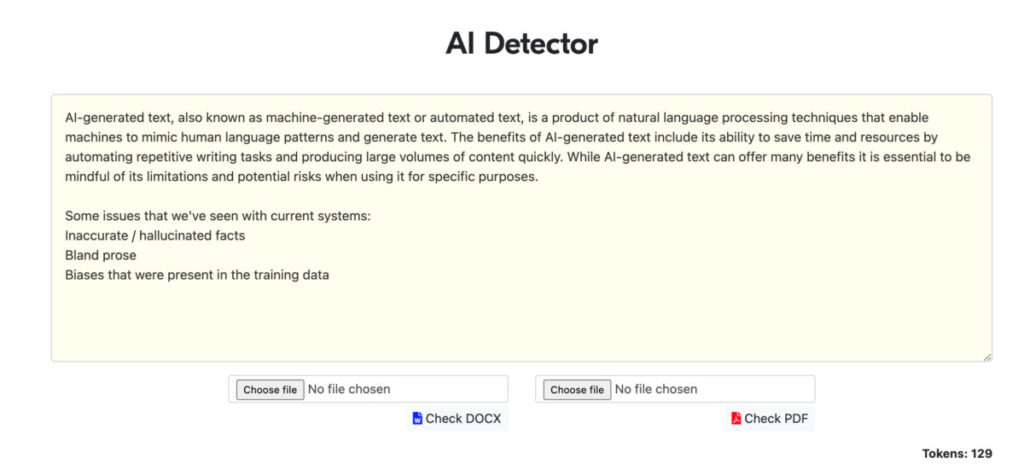
- Overview: Sapling is an AI detector designed specifically for agencies, offering real-time detection of AI-generated content. It’s commonly used to ensure the integrity of documents and PDFs.
- Key Features:
- Real-Time Detection: Identifies AI-generated content as you write.
- Platform Integration: Compatible with popular writing and editing platforms.
- Content Suggestions: Provides recommendations to enhance content authenticity.
- User-Friendly Interface: Designed to be simple and intuitive.
- Pros:
- Real-time detection capabilities.
- Easy integration with various writing platforms.
- Offers content improvement suggestions.
- Cons:
- Limited to supported platforms.
- Higher cost for advanced features.
- Pricing: Free tier available; paid plans start at $25/month.
Crossplag:
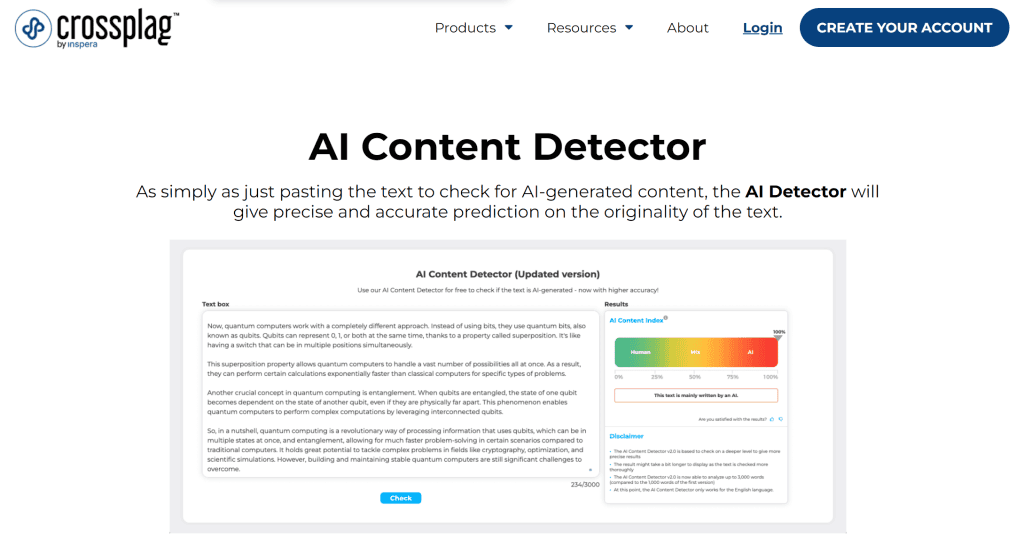
- Overview: Crossplag is a robust AI content detection tool tailored for academic and professional use. It’s particularly effective in detecting AI-generated content and is widely used by content creators to ensure the integrity of their work.
- Key Features:
- Multi-Format Support: Capable of handling various document formats, making it versatile for different use cases.
- Detailed Reports: Offers in-depth similarity and originality reports, providing comprehensive insights into the content.
- LMS Integration: Seamlessly integrates with learning management systems, enhancing its utility in educational settings.
- User-Friendly Dashboard: Designed for ease of use, with a dashboard that offers comprehensive analytics and reports.
- Pros:
- Supports multiple document formats.
- Provides detailed and thorough reporting.
- Integrates well with LMS platforms, making it ideal for educational institutions.
- Cons:
- Pricing may be high for individual users, potentially limiting its accessibility.
- Pricing: Starts at $10/month for individual users, with custom pricing available for institutions.
Content at Scale AI Detector:
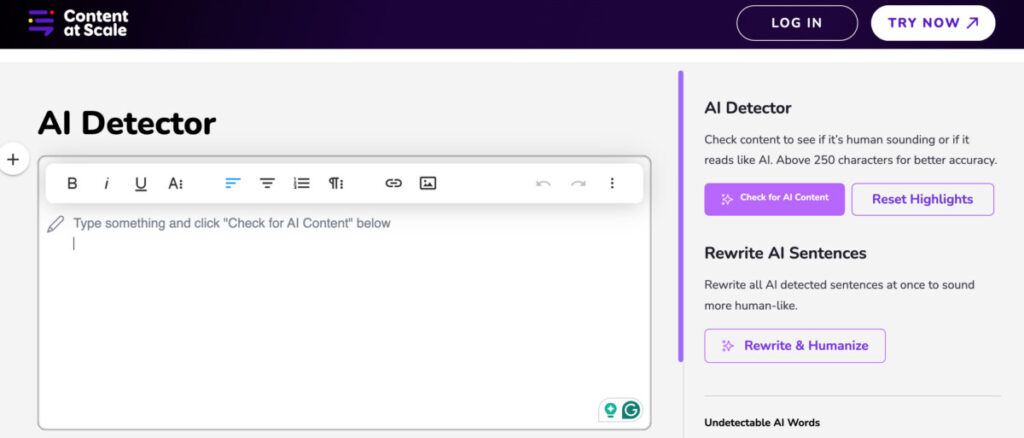
- Overview: This AI detection tool is designed specifically for content creators and SEO professionals, helping to ensure that content remains original and free from AI-generated text, thereby enhancing its credibility and search engine performance.
- Key Features:
- Comprehensive Analysis: Provides a detailed analysis of text content to verify originality and detect AI-generated sections.
- SEO Integration: Includes tools to optimize content for better search engine rankings.
- Detailed Reports: Clearly highlights any AI-generated portions within the content, making it easy to identify and address.
- User-Friendly Interface: The platform is easy to navigate, offering clear and actionable results.
- Pros:
- Integrates with SEO tools for optimized content creation.
- Offers thorough content analysis to maintain originality.
- User-friendly design enhances ease of use.
- Cons:
- Custom pricing may be a barrier for smaller users or individual content creators.
- Pricing: Custom pricing is available based on user needs and requirements.
Winston AI:
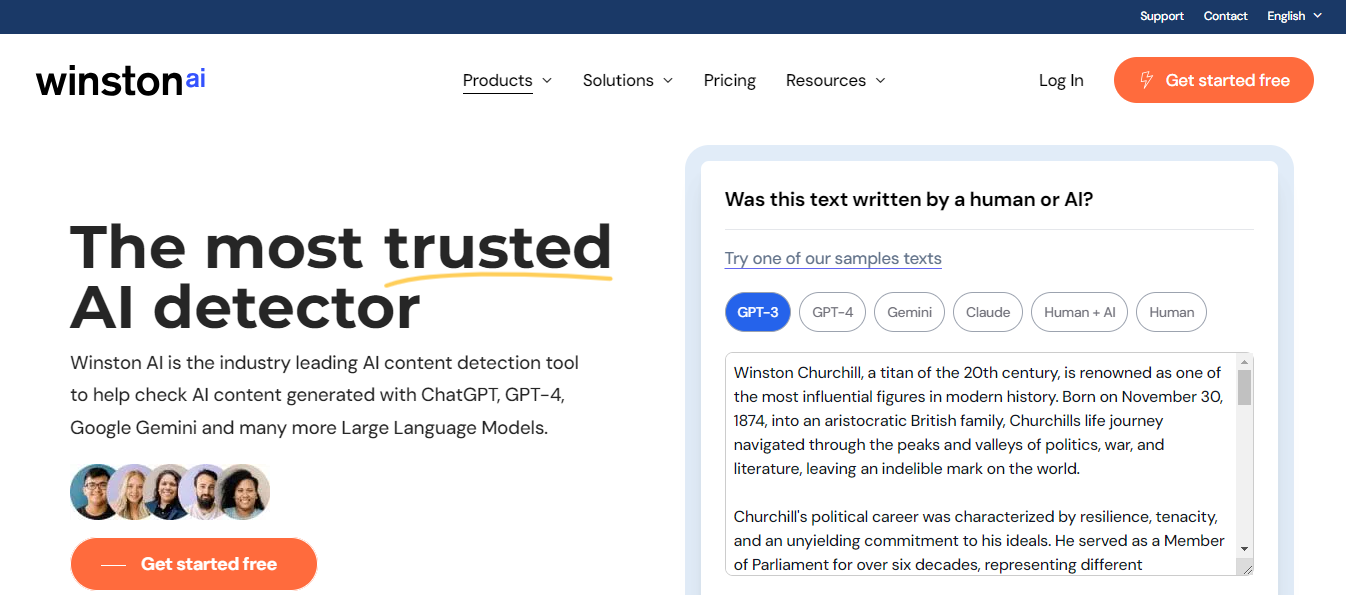
- Overview: Winston AI is a powerful tool that offers advanced AI detection capabilities, making it a top choice for content creators, educators, and businesses aiming to ensure the authenticity of their content.
- Key Features:
- High Accuracy: Employs sophisticated algorithms to detect AI-generated text with high precision.
- User-Friendly Interface: Designed for ease of use, with clear and detailed reports that are easy to interpret.
- Real-Time Detection: Provides immediate feedback while writing, helping users to maintain content originality on the go.
- Integration: Seamlessly integrates with various writing and editing platforms, enhancing workflow efficiency.
- Pros:
- Offers high accuracy and reliability in detecting AI-generated content.
- The user-friendly interface makes it accessible to a wide range of users.
- Real-time detection and feedback help maintain content integrity during creation.
- Cons:
- Pricing may be high for smaller users or individuals.
- The free tier has limited features, which might not meet all users’ needs.
- Pricing: A free tier is available, with paid plans starting at $12/month.
Conclusion
AI detectors are essential for distinguishing between human and AI-generated content, using advanced techniques like natural language processing and machine learning. While they are highly effective, their accuracy can vary, and they face challenges as AI technology evolves. Understanding their strengths and limitations is crucial for leveraging these tools effectively in maintaining content integrity.