

In the digital age, data is a critical asset for businesses and individuals alike. However, much of the world’s information is still trapped in physical documents, making it difficult to access, analyze, and utilize. This is where Optical Character Recognition (OCR) technology comes into play, offering a powerful solution for converting printed and handwritten text into digital data. With OCR, you can easily convert an image to text, making data extraction seamless and efficient.
What is OCR Technology?

Optical Character Recognition (OCR) is a technology that converts different types of documents, such as scanned paper documents, PDFs, or images taken by a digital camera, into editable and searchable data. OCR software analyzes the structure of the document image and extracts the text from it, enabling users to edit, search, and store the text digitally. Essentially, OCR acts as an image to text converter, allowing for easy text extraction from various types of documents.
How Does OCR Work?
OCR technology works by scanning the text of a document and translating the characters into code that can be used for data processing. The process involves several steps:
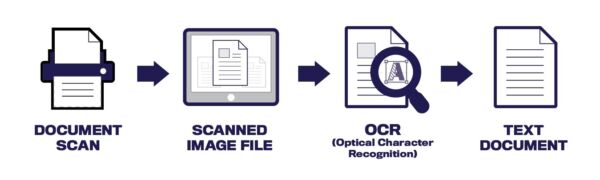
- Image Preprocessing: The document image is enhanced to improve readability, including noise reduction and correction of any distortions.
- Text Recognition: The OCR software identifies patterns and shapes in the image that correspond to letters, numbers, and other characters, effectively converting the image to text.
- Post-Processing: The recognized text is compared against a lexicon or dictionary to correct any errors and improve accuracy.
Applications of OCR Technology
OCR technology has a wide range of applications across various industries:
- Document Digitization: Businesses can digitize large volumes of paper documents, making them easily accessible and searchable through image to text conversion.
- Data Entry Automation: OCR can automate the extraction of data from forms, invoices, receipts, and other documents, reducing manual data entry and minimizing errors.
- Archiving and Compliance: Organizations can archive documents digitally for compliance purposes, ensuring quick retrieval and secure storage by converting image to text.
- Accessibility: OCR technology can convert printed books and documents into digital formats that can be read aloud by screen readers, enhancing accessibility for visually impaired individuals.
- Translation Services: OCR can be used in conjunction with translation software to convert foreign language documents into the desired language after extracting text from the image.
Benefits of OCR Technology
The adoption of OCR technology offers numerous benefits:
- Increased Efficiency: Automating the data capture process saves time and resources, allowing employees to focus on more value-added tasks.
- Improved Accuracy: OCR reduces the risk of human error in data entry, ensuring higher data accuracy by effectively extracting text from images.
- Cost Savings: By digitizing documents, businesses can reduce the costs associated with physical storage and document retrieval.
- Enhanced Productivity: OCR enables quick and easy access to information, boosting productivity and decision-making through efficient text extraction.
- Sustainability: Reducing reliance on paper documents contributes to environmental sustainability efforts.
Challenges and Future Trends
While OCR technology has come a long way, it still faces some challenges:
- Handwritten Text Recognition: Recognizing handwritten text accurately remains a complex task due to variations in writing styles.
- Language and Font Variability: OCR systems must be able to handle different languages and font types, which can impact accuracy.
Looking ahead, advancements in artificial intelligence and machine learning are expected to further enhance OCR capabilities. Improved algorithms and the integration of natural language processing (NLP) will enable more accurate and context-aware text recognition, making image to text conversion even more reliable.
Conclusion
OCR technology is a game-changer in the realm of data capture and document management. By transforming printed and handwritten text into digital data, OCR opens up new possibilities for efficiency, accuracy, and accessibility. As technology continues to evolve, the potential applications and benefits of OCR are bound to expand, making it an indispensable tool for businesses and individuals alike. Whether you need to extract text from an image or convert an image to text, OCR technology offers a robust and reliable solution.