
The most effective method for testing performance in continuous integration
We believe that an effective continuous integration pipeline is essential for producing high-quality software while keeping competitive in today’s technological landscape. Why? Because continuous integration allows you to concentrate on the changes that are given. As a result, it gives value to users sooner by testing ideas more quickly, eliminating regression issues, and expediting software delivery.
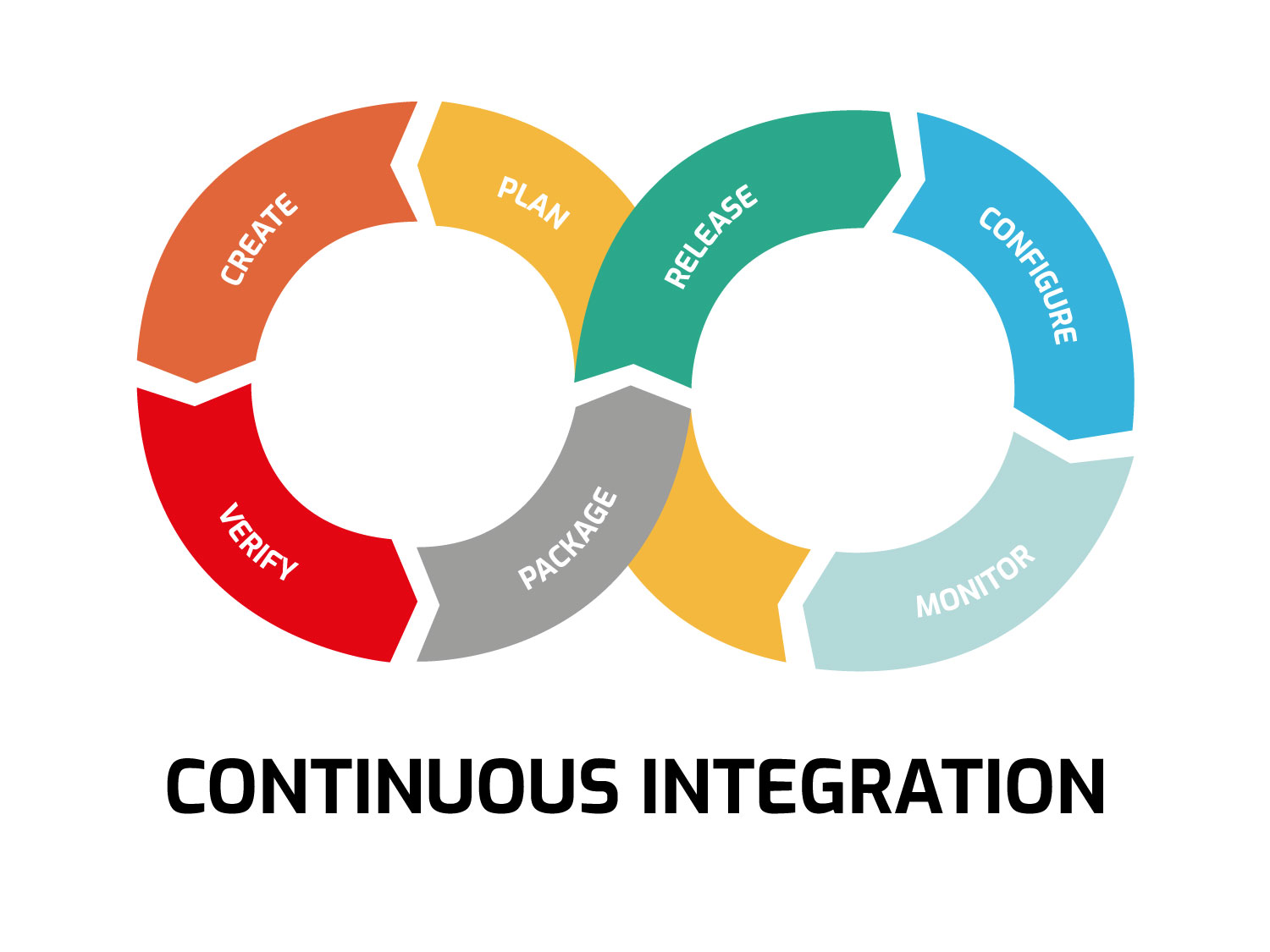
Continuous integration is the practice of continuously (preferably hourly or daily) integrating additions and modifications in an efficient manner by automating tests that verify the software’s appropriate operation after each change. The inverse would be to only integrate at specific points in time (often after days, weeks, or months of development) when major features or modules are complete, followed by integration testing, which is normally done manually or semi-manually, and correcting any potential problems.
There are numerous software quality assurance operations to prioritise in order to achieve an efficient continuous integration pipeline.
Continuous integration technologies enable you to define a sequence of jobs that will be done automatically, achieving the greatest level of testing maturity according to our maturity model. Without a question, Continuous Performance Testing is at the heart of this strategy. It is, in fact, required to make it possible.
Continuous Performance Testing is an essential component for having dependable and highly performant web pages and applications of all types. And to ensure that the user experience does not suffer over time as new features are added.
What exactly is Continuous Performance Testing (CPT)?
In general, it is the method used to assess the quality of a system in terms of performance when using a continuous integration strategy. It consists of running continuous tests, similar to those used to check the functionality of the application, but with a focus on the application’s performance within the parameters regarded as acceptable for that system. Or, at the very least, that it has not degraded in comparison to the prior version.
Is This the Best Method for Testing Performance?
When working in continuous integration, this is the best technique to execute performance testing. Why? Because, unlike “traditional” performance testing, it focuses on assessing performance degradations between system versions rather than generating data for a single version that can quickly become obsolete.
Furthermore, this sort of testing tries to automate the execution of repetitive tests that would otherwise have to be done “manually” in accordance with continuous integration best practices. This helps the tester to focus on more difficult or crucial tasks, allowing him to use his full human capacity.
However, this does not mean that just continuous performance testing is required; traditional software testing is also required for big releases with significant changes or that are likely to bring some performance problems. All of this while taking into account the specific requirements of each release and the planned occurrences.
How do you include continuous performance testing into your development pipeline?
First and foremost, the testing approach to be used must be defined. Among other things, consider what functionalities will be tested, what data will be required, what load or scenarios will be executed for each test, how and when they will be executed, what metrics will be obtained from the results, and how the results will be displayed.
It is critical to note that this entire process, which I have summarised, takes time to analyse, work, and move back and forth, just like any other project. It is not always as simple as I describe, and it may be required to reverse certain selections, test different possibilities, or remove previously defined items from the scope.
At the end of the day, rather than attempting to adhere to a formal CI/CD performance testing approach, the main thing is to tailor this technique to my needs or those of my organisation, and to embrace those practises that truly offer value.
What are the advantages of performing continuous performance testing?
On the one hand, there are the general benefits of performance testing, such as lowering the chance of discovering problems with the system’s performance once it is put into production. This decreases the possibility of these issues affecting users, as well as the image of the generated product and the business.
On the other hand, there are unique advantages to executing this type of testing with a CI/CD approach: discovering and correcting deviations in the product as early as possible. This lowers the need for developers to switch between contexts. When working in sprints, the context frequently shifts from one sprint to the next.
If defects are not noticed in a timely manner, the developer may be working on something else at the moment, making it more difficult for him to focus on the problem again.
Among the specific advantages of performance testing in CI/CD are the increased collaboration between developers and performance testers, the promotion of interdisciplinary teams, and the generation of a performance benchmark for the system’s most critical functionalities.
Is there anything negative about ongoing performance testing?
The biggest downside I see right now is that this style of testing does not completely replace “traditional” performance testing. The knowledge produced by the two ways is mutually beneficial. Then there’s the question of whether it makes sense to run “traditional” performance tests in a CI/CD scheme, but that’s a topic for another day.
Is it more or less expensive?
This question has a huge “it depends” response. It is determined by the project, the firm, the application’s quality and stability requirements, and the company’s existing image. It is determined by the maturity of the team, the importance of the quality performance level for the system, and the firm. Above all, it is determined by what is regarded expensive and what is considered inexpensive.
For example, someone may think it costly in terms of time and money to go to the doctor on a regular basis for check-ups, but if we don’t do it and end up sick with something complicated that we might have avoided with those consultations, it ends up being quite expensive.
In general, it is more expensive in the short term because it demands an initial adequate investment. However, properly done, it is far cheaper and more profitable in the long run.
In GrotechMinds manual software testing course and manual testing classes, we explore the variations that are critical between verification and validation testing. With a focus on manual and automation software testing, our complete manual testing full course equips you with the knowledge needed to discern between these two essential testing concepts. Join us to enhance your understanding of verification and validation in the world of software testing.