
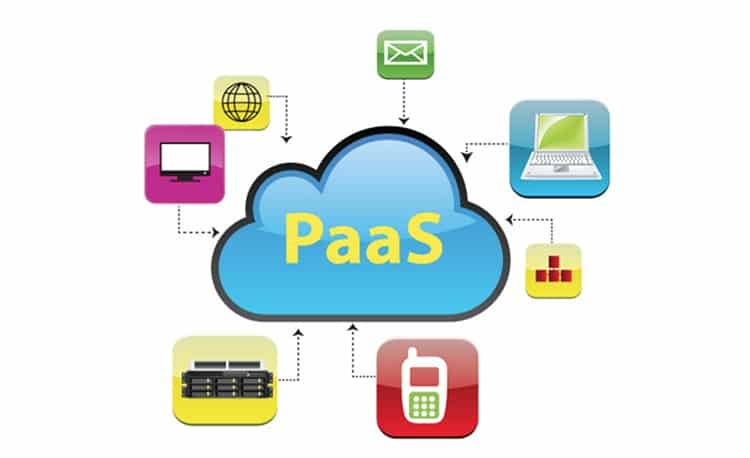
Are you interested in learning the ways to monetise the Platform as a Service and get the utmost benefits from it? You are at the right place. This article will guide you in developing a practical strategy for monetising PaaS with a cloud-based retail solution. First, we need to explore what is PaaS and how it works; after that, we will discuss the benefits and strategy for monetising PaaS with a cloud-based solution. Let’s explore our topic further.
What is PaaS?
PaaS stands for Platform as a Service, and it is a type of cloud computing service mode. PaaS offers an efficient cloud platform that can develop, run, manage and deploy several apps. It allows the developers to develop several applications and saves them from the nuisances of updating and maintaining the development tools and the operating system during the process. A third party delivers the complete PaaS platform, including the operating systems, servers, middleware, storage, development tools and more, using cloud services.
Why Do Businesses Choose To Use PaaS Platforms?
PaaS assists hundreds of businesses online to avoid the expenses and hassle of installing software or hardware to host or develop custom new applications. It helps development teams to buy everything that they require to develop custom apps. PaaS lets the development teams buy the development tools, infrastructure, operating systems and much more. It has facilitated the business of several service providers as the process of app development becomes faster, more secure and simpler with the use of PaaS. It shields the developers from worrying about other factors and helps them focus on their application design and code.
How Does Paas Work?
PaaS (Platform as a Service) is generally delivered across the internet as a secure online platform which can be accessed by the developers from anywhere, regardless of their geographical locations. It allows the developers to work on projects online and collaborate with other members working on the same or similar projects. The developers directly build the custom and new applications using Platform as a Service and deploy such applications right after they are made. It proves the efficiency of PaaS systems.
The following is how PaaS solutions can be used for software development and application-specific purposes:
Cloud Infrastructure
Examples of these include data centres, network equipment, servers and storage-related solutions.
User Interface
Platform as a Service also offers a GUI (Graphic User Interface), a CLI (Command Line Interface), and an API interface. In some instances, these three can be used.
Middleware Software
Here, PaaS solutions provide frameworks, development kits (SDK), operating systems, libraries and much more.
How Can a Business Start Monetising PaaS?
Several online service providers, such as Wasabi, Cloudways, and Zoho Creator (which can prove of great help to many businesses as well as companies offering academic writing services), can start monetising PaaS for their benefits. Businesses can easily monetise PaaS by developing custom applications, and it does not matter if you develop such apps for yourself or other clients. Here are a few examples of how monetising PaaS (platform as a Service) has proved a successful idea:
- AWS Elastic Beanstalk helps developers in scaling, building and deploying custom apps, API infrastructure, websites, and more.
- Red Hat OpenShift is used by developers to build, manage and deploy custom apps.
- Heroku also lets the developers build certain data-driven apps within the specified framework and it makes monetising PaaS easy.
Monetisation Strategy:
A monetisation strategy is a plan which is developed to earn money and generate revenue using your platform (PaaS in our case), content, sources or audience. Some of the most common monetisation strategies include selling ad space, selling access to the platform, in-app purchases and many more. A good monetisation strategy will be flexible and will be directed towards achieving the ever-evolving goals of the company. A PaaS monetisation strategy should not be too rigid or strict.
Monetising PaaS Strategies:
Here is a detailed introduction of some of the strategies that we can use to monetise the Platform as a Service model. Let’s explore these strategies elaborately.
Pay-as-you-go Model
This monetisation strategy offers the clients to pay for the PaaS solutions only when the need arises. It means that the user will have to pay when he needs access to PaaS at some particular point in time. If he needs access again, he will pay for it again. This monetisation strategy helps businesses online to diversify their clientele and enhance it, which ultimately results in the maximisation of profits.
Premium Model
If you want to charge higher prices than your competitor businesses in the market, you will need to use a premium pricing strategy for monetising PaaS. By using this strategy, you will set high prices for your software usage from the start and would not consider low prices for your initial services. You will need to ensure that the prices you charge for the services are justified by the high-quality user experience at your Platform as a Service model.
Partnership/Sponsorship Model
In this model, you collaborate with another service provider or ISVS (Independent Software Vendor) to maximise the benefits your business provides to the end users and hence accelerating the revenue generated. This strategy is widely used for improving the customer experience, increasing the clientele and maximising your profits.
Subscription Business Model
It is one of the most effective strategies for software monetisation as it is widely tested for generating lots of revenue for business owners. It charges an access fee on regular intervals such as on a monthly or yearly basis. A business can use a subscription model to enhance customer revenue along with the revenue generated by introducing updates, improvements and more in the applications.
Conclusion:
In this article, we have discussed the effective strategies for monetising PaaS in great detail and have shed light on the basic uses of several models. After reading this comprehensive guide, you will be able to know more about Platform as a Service solution and maybe think of acquiring one for your personal uses.